7 Best Ophthalmoscopes of 2026
Dr. David Taylor reviews the best ophthalmoscopes for eye exams. Compare top direct and PanOptic models by light source, apertures, and clinical value.
Updated
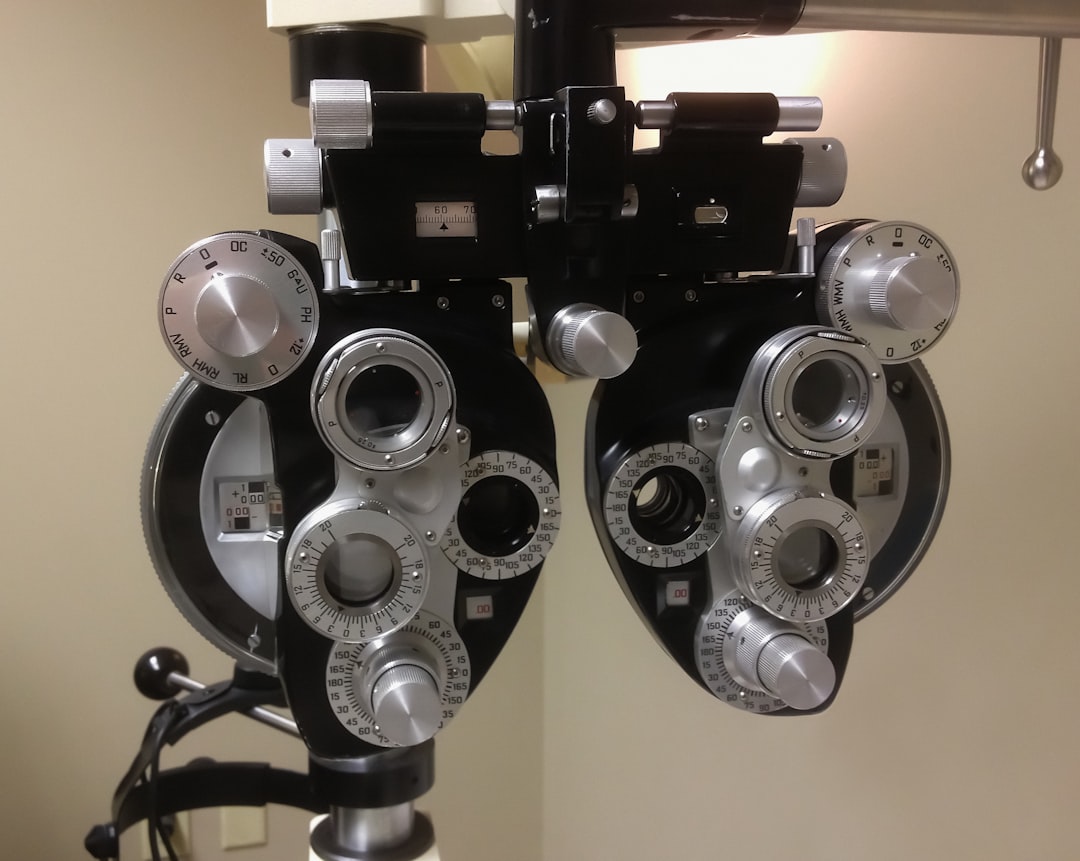
Ophthalmoscopy is one of the most diagnostically powerful examinations in all of medicine. A two-minute fundus exam can reveal early diabetic retinopathy before a patient reports any visual symptoms, expose the papilledema of raised intracranial pressure, or confirm hypertensive retinal changes that inform cardiovascular risk stratification. Despite this clinical weight, the instrument itself is remarkably accessible — a handheld light-and-lens system available on Amazon in configurations ranging from student-ready pocket kits to full professional diagnostic sets. In 2026, we reviewed seven of the best ophthalmoscopes available, covering institutional-grade instruments for attending physicians, rechargeable 3.5V sets for residents and advanced practice providers, and pocket-sized kits for students learning the technique.
Our evaluations draw on published product specifications, Amazon review analysis, and the clinical perspective of Dr. David Taylor, who has performed and taught fundus examinations across primary care, emergency medicine, and subspecialty settings for over a decade. We evaluated each product on illumination quality, aperture selection, diopter range, handle system reliability, and overall value for the intended clinical role. For a complementary look at the otoscope side of these diagnostic sets, see our best otoscopes guide, and for complete multi-instrument kits, our best diagnostic sets review covers everything from blood pressure cuffs to reflex hammers.
How We Selected These Ophthalmoscopes
We focused on ophthalmoscope-containing diagnostic sets and standalone ophthalmoscopes available on Amazon with verified active listings, covering the four main clinical tiers: full professional rechargeable sets from Welch Allyn, rechargeable 3.5V LED sets from ADC, pocket 2.5V sets for students and trainees, and the KaWe German import option. We gave particular weight to instruments with documented use in US medical education settings — particularly those compatible with or identical to instruments used in USMLE clinical skills examinations. Illumination voltage and quality were treated as the primary differentiating factor, followed by aperture coverage, diopter range, and handle system robustness.
1. Welch Allyn 97-MDS-CMN Standard Diagnostic Set — Best Overall
The Welch Allyn 97-MDS-CMN is the standard against which every other professional ophthalmoscope diagnostic set is measured in the United States. The coaxial ophthalmoscope head included in this set is the identical model used in USMLE clinical skills assessments — a fact that makes it familiar to virtually every American medical graduate and a clinically natural choice for attending physicians and residency programs equipping their trainees. The coaxial optical design aligns the illumination and viewing paths to eliminate corneal reflection, producing a cleaner view of the optic disc and posterior pole than offset-illumination designs. Six apertures — including a red-free filter for retinal vessel contrast, a cobalt blue filter for corneal fluorescein evaluation, a slit beam for disc elevation assessment, and a fixation target — cover every routine clinical scenario.
The MacroView otoscope head included in this set is equally noteworthy. Its 2x wider field of view of the tympanic membrane compared to a standard otoscope head makes it the reference-quality ear examination instrument for primary care, pediatrics, and emergency medicine. The NiCad rechargeable handle delivers consistent 3.5V output across the full charge cycle, ensuring that the fundus illumination you see at the start of a clinic day is the same brightness you see at the end. For any clinician building a professional diagnostic kit that will serve through residency and into attending practice, this is the instrument we recommend first.

Welch Allyn 97-MDS-CMN Standard Diagnostic Set with Coaxial Ophthalmoscope, MacroView Otoscope and Nickel Cadmium Rechargeable Handle
by Welch Allyn
The USMLE standard — Welch Allyn coaxial optics with MacroView otoscope in a complete rechargeable diagnostic set.
Pros
- Coaxial ophthalmoscope is the exact model used on the USMLE clinical exams — familiar to every US medical student and resident
- 6 apertures and 28 focusing lenses covering +40 to -25 diopters deliver a comprehensive fundus view in dilated and undilated patients
- NiCad rechargeable handle maintains consistent 3.5V output across the full charge cycle — no brightness fade during exams
- MacroView otoscope head included provides 2x larger tympanic membrane field of view for complete ENT and eye diagnostic capability
Cons
- Premium Welch Allyn pricing puts this set well above the budget of most students and early residents buying their first personal kit
- NiCad battery chemistry is older technology — Li-ion handles charge faster and hold charge longer, though NiCad remains reliable
2. Welch Allyn Premium Diagnostic Set with PanOptic Ophthalmoscope — Upgrade Pick
This premium Welch Allyn set represents the most clinically comprehensive ophthalmoscopy configuration available in a handheld diagnostic instrument. It pairs the standard coaxial ophthalmoscope head with the PanOptic ophthalmoscope — a different instrument that uses an expanded optical system to provide a 5x wider field of view of the fundus. In practical terms, the PanOptic reveals up to 25% of the retina in a single field, compared to roughly 10 degrees with a standard direct scope. This dramatically shortens the time required to locate the optic disc in a cooperative but undilated patient, follow the four primary vascular arcades, and complete a systematic fundus survey. For primary care physicians who perform fundus exams quarterly or less frequently, the PanOptic’s forgiving entry geometry and wide view meaningfully improve the odds of a clinically useful examination.
The Li-Ion Smart Handle doubles the runtime of the NiCad handle in the standard set — delivering 120 minutes of continuous use per charge. For a hospitalist or internist who may round on multiple services before returning to their office, this translates to a full morning of exams without recharging. The investment is substantial, and solo practitioners or outpatient-only clinicians will find the standard set adequate for their needs. But for academic medical center faculty, multi-specialty group practices, or ophthalmology departments wanting a complete bedside and clinical exam toolkit in a single carry case, this set delivers the broadest diagnostic coverage of any product reviewed.

Welch Allyn Premium Diagnostic Set with Coaxial Ophthalmoscope, PanOptic Ophthalmoscope, MacroView Otoscope and Lithium Ion Rechargeable Handle
by Welch Allyn
The premium upgrade — dual ophthalmoscope heads including the wide-field PanOptic for the most comprehensive retinal coverage available.
Pros
- PanOptic ophthalmoscope provides a 5x wider field of view than a standard direct scope — capturing up to 25% of the retina without dilation
- Coaxial head included as a second ophthalmoscope gives this set maximum clinical versatility for both routine and advanced retinal screening
- Li-Ion Smart Handle delivers 120 minutes of continuous use per charge — twice the runtime of conventional NiCad handles
- Three-head diagnostic set covers all primary care examination needs in a single carrying case for multi-site clinicians
Cons
- Highest price point of any set reviewed — a significant institutional-level investment not justified for single-clinician outpatient practices
- PanOptic head requires a short learning curve; the wider field of view demands slightly different entry angle and patient distance
3. ADC Diagnostix 5110NL Pocket Diagnostic Set — Budget Pick
American Diagnostic Corporation has built a strong position in the US medical education market by offering clinical-quality instruments at prices that medical students can actually afford. The Diagnostix 5110NL pocket diagnostic set is the product that exemplifies this position. It ships with both otoscope and ophthalmoscope heads, a shared AA battery handle, and a hard case — everything a first-year medical student needs to begin learning the technique of direct ophthalmoscopy and ear examination. The AdLED lamp carries a lifetime warranty, which means this is genuinely the last bulb you will ever buy for this instrument.
The clinical limitations of the 2.5V system are real and should be understood before purchase. The AdLED illumination is noticeably dimmer than the 3.5V instruments reviewed above — undilated fundus exams in a room with any ambient light are challenging, and cooperative patients in a dim exam room are usually required. For the clinical scenarios where this scope is primarily intended — supervised rounds, skills lab practice, office-based screening with a compliant patient — these limitations are entirely acceptable. Students who discover through clinical training that they perform fundus examinations frequently and independently should plan to upgrade to a 3.5V set before entering residency. For a complementary instrument, pair this kit with a quality stethoscope to complete the core physical diagnosis toolkit.

ADC Otoscope/Ophthalmoscope Diagnostic Set, Pocket Size, LED Lamp, 2.5V, Hard Case, Diagnostix 5110NL, Black
by ADC (American Diagnostic Corporation)
Best value complete diagnostic kit — LED-lit pocket set for students and trainees at an accessible price with a lifetime lamp warranty.
Pros
- LED lamp carries a lifetime warranty — no bulb replacement costs for the life of the instrument
- 5 aperture selections and 19 viewing lenses from -20 to +20 diopters cover the core requirements for fundus screening
- Compact pocket size fits a white coat pocket — practical for students rotating across multiple clinical departments
- Includes both otoscope and ophthalmoscope heads with a shared handle, making it the most cost-effective complete diagnostic kit reviewed
Cons
- 2.5V AdLED illumination is noticeably dimmer than 3.5V instruments — undilated fundus exams require a darkened room and cooperation
- Lens range of -20 to +20 diopters will not accommodate examination of patients with high myopia or hyperopia beyond these limits
4. ADC Diagnostix 5480L Portable Rechargeable Set — Runner-Up
The ADC Diagnostix 5480L is the most technically capable diagnostic set in the ADC lineup, and the one that competes most directly with the Welch Allyn standard set on clinical specifications. The coaxial ophthalmoscope head provides 29 viewing lenses ranging from -35 to +40 diopters — a wider range than the Welch Allyn 97-MDS-CMN’s +40 to -25 diopters, an advantage for clinicians who regularly examine patients with high myopia or high hyperopia. The 24 aperture and filter combinations include all clinical necessities and then some, with a polarizing filter option that further reduces retinal surface reflections in patients with lens abnormalities.
The PMV otoscope head is the premium ADC otoscope — offering a panoramic, magnified view with twice the field of view and 66% greater magnification (11mm field of view, 5x magnification) compared to a standard otoscope head. For pediatricians, family medicine physicians, and urgent care providers who perform large numbers of ear examinations, this otoscope head represents a genuine clinical upgrade. The rechargeable Li-ion handle provides 6.5 hours of continuous use, which covers a full clinic day for most practitioners. The primary trade-off versus Welch Allyn is institutional familiarity — ADC has excellent build quality and a strong warranty program, but Welch Allyn’s service network, parts availability, and name recognition in US hospitals and medical schools remains unmatched.

ADC Portable Diagnostic Set Plug-in Rechargeable, with PMV Otoscope and Coax Ophthalmoscope, LED Lamps, 3.5V, Hard Case, Diagnostix 5480L
by ADC (American Diagnostic Corporation)
Widest diopter range and aperture coverage reviewed — the ADC rechargeable set for high-volume primary care practices.
Pros
- 29 viewing lenses from -35 to +40 and 24 aperture/filter combinations give this the widest diagnostic range of any set reviewed
- Rechargeable Li-ion handle provides 6.5 hours of continuous LED operation — ideal for high-volume exam rooms and multi-patient clinic days
- PMV otoscope head delivers panoramic magnified view with twice the field of view of a standard otoscope — exceptional value in a diagnostic set
- Aspherical condenser lens reduces corneal reflection, improving the fundus view in cataract patients and those with anterior segment pathology
Cons
- ADC brand recognition is lower than Welch Allyn in hospital and teaching settings — replacement heads and service support less widely available
- Wall-plug rechargeable design means the handle must be returned to a charger between exams — less flexible than AA battery backup options
5. ADC Diagnostix 5410L Portable Set
The ADC Diagnostix 5410L occupies a practical mid-tier position in the ADC lineup: it delivers the same 3.5V AdLED coaxial ophthalmoscope and the same wide -35 to +40 diopter lens range as the premium 5480L, but pairs a standard otoscope head rather than the PMV panoramic otoscope, bringing the price meaningfully lower. For clinicians whose primary instrument need is a high-quality ophthalmoscope with the convenience of a built-in otoscope for routine screening — NPs and PAs in internal medicine, urgent care physicians, and general practitioners who see primarily adult patients — this trade-off is entirely rational. The PMV otoscope’s wider field view is most valuable in pediatric ear exams and in practitioners who perform high volumes of ear examinations; for adult-focused practices, the standard otoscope head is clinically sufficient.
The Li-ion handle performance matches the 5480L exactly — 6.5 hours of continuous use, plug-in wall charging, and consistent 3.5V output across the full battery cycle. The zippered hard case provides good protection for transport between clinic sites. If you are choosing between the 5410L and 5480L and your patient population is primarily adult, the 5410L provides equivalent ophthalmoscope capability at a lower cost.

ADC Diagnostix 5410L Portable Diagnostic Set with Standard Otoscope and Coax Ophthalmoscope, LED Lamps, 3.5V, Hard Case, Black
by ADC (American Diagnostic Corporation)
Full 3.5V LED coaxial ophthalmoscope performance at a step below the premium PMV set — the mid-tier ADC value pick.
Pros
- 3.5V LED coaxial ophthalmoscope provides bright, high-contrast fundus illumination with a lifetime lamp warranty at a mid-tier price point
- 29 viewing lenses from -35 to +40 diopters matches the 5480L's diopter range at a lower cost by pairing a standard rather than PMV otoscope
- Rechargeable Li-ion C-handle offers 6.5 hours of runtime — suitable for a full outpatient clinic day without recharging
- Compact zippered hard case with dedicated instrument slots protects heads and handle during transport between practice sites
Cons
- Standard otoscope head offers a smaller field of view than the PMV otoscope in the 5480L — a meaningful trade-off for pediatric ear exams
- ADC's institutional footprint is smaller than Welch Allyn's — factor in service availability if purchasing for a multi-clinician practice
6. ADC Diagnostix 5112NL Pocket Ophthalmoscope
The ADC Diagnostix 5112NL serves a specific but real clinical need: a standalone ophthalmoscope for clinicians who already own an otoscope from another system and need an ophthal-only instrument. Physicians who own a Welch Allyn otoscope but want a dedicated ophthalmoscope for on-call use, residents who carry an ophthalmoscope head in a white coat pocket for neurology rotations, and nurse practitioners who perform fundus exams in a separate workflow from ear exams are the natural buyers here. The pocket-sized footprint and hard case make it genuinely portable, and the lifetime AdLED lamp warranty eliminates one maintenance variable.
The 2.5V illumination and -20 to +20 diopter range are the limiting factors relative to a 3.5V instrument — the same constraints that apply to the 5110NL pocket set. For any clinical role where fundus examination is a regular, independent part of the workday, a 3.5V 5410L or 5480L set is the better investment. But as a secondary instrument, a portable carry-anywhere ophthalmoscope, or a student’s first personal device, the 5112NL delivers genuine clinical utility at a low price point.

ADC Ophthalmoscope, Pocket Size, LED Lamp, 2.5V, Hard Case, Diagnostix 5112NL
by ADC (American Diagnostic Corporation)
Compact standalone ophthalmoscope for clinicians who need ophthal-only coverage — LED lit with a hard case for on-call portability.
Pros
- Ophthalmoscope-only design eliminates the cost of an otoscope head for clinicians who already own an otoscope from another brand
- LED lamp with lifetime warranty provides consistent illumination at 2.5V without halogen bulb replacement costs
- 5 aperture selections and 19 viewing lenses in a pocket-sized footprint meet the minimum requirements for fundus screening
- Hard case protects the head during transport — especially practical for on-call residents carrying the scope between wards
Cons
- 2.5V LED illumination limits undilated exam quality compared to 3.5V instruments — not suited to routine undilated screening
- Ophthalmoscope head only — no otoscope head or shared handle included, requiring a separate ADC handle purchase for new users
7. KaWe COMBILIGHT C10/EUROLIGHT E10 Kit — Runner-Up
KaWe is a German medical instrument manufacturer with decades of experience in precision diagnostic optics, and the COMBILIGHT/EUROLIGHT combination kit provides a non-US-brand option for students and clinicians who prefer European-made instruments or who are training for clinical practice outside the United States. The EUROLIGHT E10 ophthalmoscope head covers the core clinical range of +/-20 diopters with six diaphragms — matching the aperture count of the Welch Allyn standard set. The interchangeable handle accommodates both the E10 ophthalmoscope and C10 otoscope heads, and the kit ships with a spare bulb and hard case that make it genuinely field-ready from the first day of ownership.
The primary limitation relative to the ADC and Welch Allyn options is illumination technology: the 25V vacuum bulb provides slightly lower brightness than the AdLED lamps in the ADC instruments. Replacement bulbs are also less readily available in US medical supply chains than Welch Allyn or ADC consumables — a practical consideration for clinicians purchasing for long-term use in US clinical settings. For students in international medical programs, clinicians who trained in Europe and are familiar with the KaWe instrument ecosystem, or practitioners who want brand diversity in their diagnostic kit, the COMBILIGHT set is a credible and well-made choice.

KaWe COMBILIGHT C10/EUROLIGHT E10 Ophthalmoscope/Otoscope Basic Kit, Includes Spare Bulb and Case
by KaWe (HealthSmart)
German-made KaWe diagnostic kit — solid European optics with a spare bulb included for students seeking brand diversity.
Pros
- German-manufactured KaWe optics offer a credible European alternative to US-dominant brands, with precision lens grinding and solid build quality
- EUROLIGHT E10 ophthalmoscope covers +/- 20 diopters with 6 apertures including filters for a complete fundus screening toolkit
- Interchangeable handle design accommodates both the C10 otoscope and E10 ophthalmoscope heads — compact two-in-one instrument kit
- Spare bulb and hard case included at no extra cost — practical field readiness for students and international clinicians
Cons
- 25V vacuum bulb illumination is dimmer than LED and AdLED alternatives at the same operating voltage — slightly lower brightness floor
- KaWe replacement bulbs are less widely available in US medical supply chains than Welch Allyn or ADC consumables
How to Choose the Best Ophthalmoscope
The most important practical consideration beyond the buying guide factors above is the relationship between your own refractive error and the instrument’s lens range. When using a direct ophthalmoscope, you compensate for both the patient’s refractive error and your own by rotating the lens wheel. A clinician wearing -4.00 glasses starts the exam at the -4 mark before adjusting for the patient. If the combined correction needed exceeds the instrument’s range, you cannot bring the fundus into sharp focus. Clinicians with significant prescriptions should wear contact lenses during fundus exams whenever possible, or choose an instrument with the widest available diopter range.
A second consideration often overlooked by students is that the quality of the examiner matters more than the quality of the instrument — up to a point. An experienced examiner using an ADC pocket set will consistently obtain a more informative fundus view than a novice using a premium PanOptic scope, because technique (approach angle, pupil distance, patient positioning, and room lighting) determines the quality of the view at least as much as the instrument. If you have not performed direct ophthalmoscopy in the past few months, reviewing the examination technique before reaching for the scope is more valuable than upgrading equipment.
Buyer's Guide
Selecting an ophthalmoscope means matching light source voltage, head configuration, and handle system to your specific clinical role — from medical student to practicing ophthalmologist.
Voltage and Illumination Quality
The single most important variable in ophthalmoscope performance is the voltage and illumination quality of the handle system. A 3.5V handle paired with a high-quality LED or halogen head delivers the bright, consistent light needed to visualize the fundus through an undilated pupil in routine clinical conditions. Pocket-style 2.5V instruments are meaningfully dimmer — adequate for supervised teaching with dilated pupils, but challenging for independent undilated exams. Any clinician who performs fundus examinations as a routine part of clinical practice should invest in a 3.5V instrument.
Direct vs. PanOptic Ophthalmoscope
Standard direct ophthalmoscopes produce a narrow, high-magnification view of the fundus — excellent for detailed disc and macula evaluation. The Welch Allyn PanOptic provides a 5x wider field, making it easier to locate structures, follow vessels, and complete the exam quickly even in partially dilated pupils. Primary care physicians who examine fundi infrequently benefit most from the PanOptic's forgiving wider view. Ophthalmology trainees and those performing regular systematic exams often prefer the direct instrument for its precise, high-magnification views. The best diagnostic sets include both configurations for maximum versatility.
Aperture Selection and Filters
Apertures control the size, shape, and spectral quality of the light beam entering the patient's eye. At minimum, an ophthalmoscope for clinical use should offer a large standard aperture, a small aperture for undilated pupils, a red-free filter to enhance contrast of retinal vessels and detect early hemorrhages, and a cobalt blue filter for corneal fluorescein evaluation. More apertures — slit beams for assessing disc elevation, fixation targets, micro-spot apertures — add versatility for systematic retinal examination. Instruments with 24+ aperture and filter combinations provide the widest diagnostic coverage.
Diopter Range
The rotating lens wheel compensates for the refractive error of both the patient and the examiner. A range of +20 to -20 diopters covers most clinical encounters in a general population. However, clinicians who regularly examine patients with high myopia or high hyperopia should prioritize instruments with a wider range of -35 to +40 diopters. Clinicians who wear strong spectacle prescriptions themselves should verify that the instrument's range accommodates their own refractive error, or plan to wear contact lenses during examination.
Handle System and Power Source
Professional ophthalmoscope heads require a compatible handle from the same brand ecosystem — Welch Allyn, ADC, and KaWe handles are not interchangeable. Most clinical-grade sets include a rechargeable handle: NiCad handles are reliable but use older chemistry; Li-ion handles charge faster, hold charge longer, and maintain more consistent output across the discharge cycle. For students and on-call residents, integrated pocket handles using AA batteries are a practical compromise that trades brightness for portability. Choose your brand ecosystem early and purchase compatible accessories within that system.
Diagnostic Set vs. Standalone Ophthalmoscope
Most clinicians purchase a diagnostic set — a combination ophthalmoscope and otoscope sharing a common handle — rather than a standalone ophthalmoscope. This approach is more cost-effective per instrument and consolidates the two most commonly used diagnostic heads into one carrying case. Standalone ophthalmoscope heads are appropriate for clinicians who already own an otoscope from a compatible brand, or for ophthalmologists who do not routinely use an otoscope. If you are building your first diagnostic kit from scratch, a complete diagnostic set is the superior value in virtually every scenario.
Final Verdict
For clinicians building or upgrading a professional diagnostic kit, the Welch Allyn 97-MDS-CMN Standard Diagnostic Set is our clear best overall recommendation. Its coaxial ophthalmoscope — the USMLE standard — paired with the MacroView otoscope and a reliable NiCad rechargeable handle gives every primary care physician, resident, and specialist the tools needed for comprehensive fundus and ear examination. It is the instrument we would recommend to a colleague asking which set to buy and use through the rest of their clinical career.
For medical students and early trainees who need a complete diagnostic kit at an accessible price, the ADC Diagnostix 5110NL delivers genuine clinical quality — LED illumination with a lifetime warranty, five apertures, and both otoscope and ophthalmoscope heads — at a fraction of the professional set cost. Clinicians who need the widest diopter range and maximum aperture coverage in a rechargeable format should consider the ADC Diagnostix 5480L, which technically exceeds the Welch Allyn standard set on lens range and aperture count while adding the PMV panoramic otoscope to the kit. Whatever instrument you choose, the most productive investment alongside any ophthalmoscope is regular practice — the fundus examination is a skill that rewards consistency. Consult your clinical training program or supervising physician for guidance on which instrument best matches your institution’s equipment standard and clinical training requirements.
Frequently Asked Questions
What is a direct ophthalmoscope and what does it examine?
What is the difference between a direct ophthalmoscope and a PanOptic ophthalmoscope?
Do you need to dilate the patient's pupils to use a direct ophthalmoscope?
What is the difference between a 2.5V and 3.5V ophthalmoscope?
What is a coaxial ophthalmoscope and why does it matter?
What ophthalmoscope do I need as a medical student?
How do I clean and maintain an ophthalmoscope?
Related Articles
About the Reviewer

Dr. David Taylor, MD, PhD
Drexel University College of Medicine (MD), Indiana University School of Medicine (PhD)
Dr. David Taylor is a licensed physician and medical researcher who founded BestRatedDocs in 2016. With an MD from Drexel University and a PhD from Indiana University School of Medicine, he combines clinical expertise with a passion for health technology to provide evidence-based product recommendations. Dr. Taylor specializes in health informatics and regularly evaluates medical devices, diagnostic equipment, and therapeutic products to help healthcare professionals and patients make informed decisions.