7 Best Bluetooth Thermometers of 2026
Dr. David Taylor reviews the best Bluetooth thermometers with app connectivity. Compare smart thermometers for fever tracking, baby monitoring, and continuous logging.
Updated
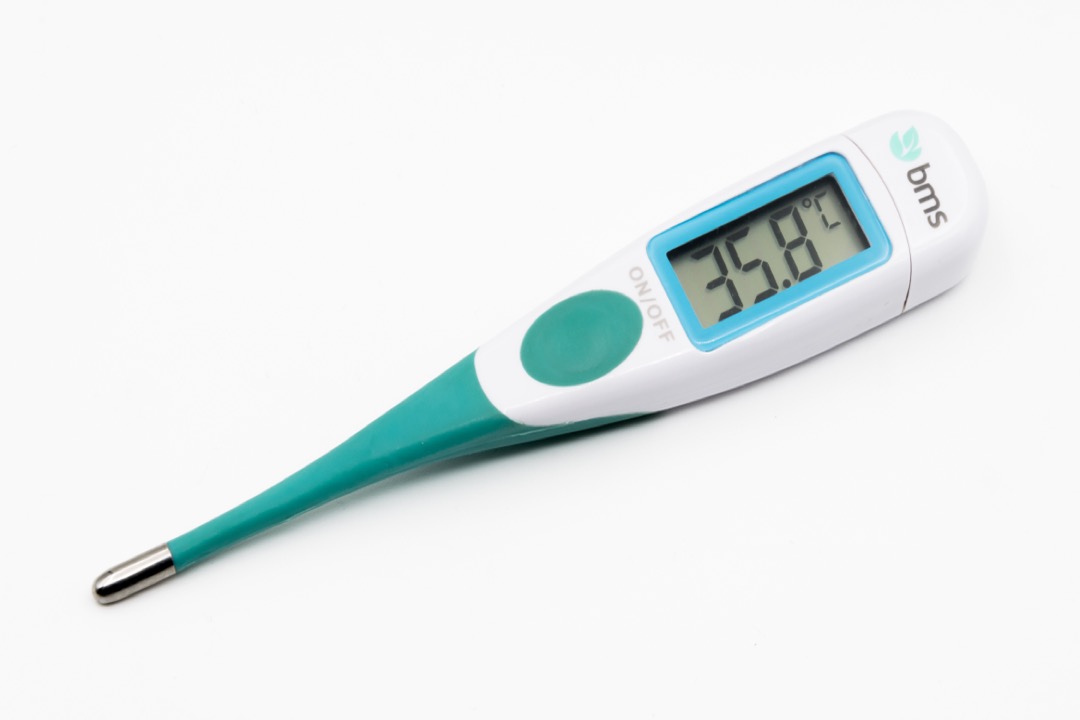
Smart thermometers with Bluetooth connectivity represent one of the most practical advances in home health monitoring of the past decade. Rather than jotting fever readings on a notepad or relying on memory when speaking with a physician, Bluetooth thermometers log every reading automatically — with timestamps, trend lines, and multi-family-member profiles — all accessible from a smartphone app. In 2026, we reviewed seven of the best-selling Bluetooth thermometers on Amazon, covering forehead, ear, oral, axillary, temporal, and continuous-monitoring patch designs to help you find the right model for your household.
Our evaluations draw on analysis of tens of thousands of verified Amazon reviews, published product specifications, FDA clearance records, and the clinical perspective of Dr. David Taylor, MD. We paid particular attention to how each thermometer performs during the most stressful use case: a sick child at 2 a.m., a parent operating on minimal sleep, in low light, with a child who will not hold still. Real-world usability under those conditions is the true test of whether a Bluetooth thermometer earns a place in your medicine cabinet.
| Product | Price | Buy |
|---|---|---|
| Kinsa QuickCare Smart Thermometer for FeverBest Overall | $19.99 | View on Amazon |
| iProven DMT-489 Forehead and Ear Thermometer with BluetoothBudget Pick | $49.99 | View on Amazon |
| Withings Thermo Smart Temporal ThermometerPremium Pick | $99.95 | View on Amazon |
| Femometer Smart Basal Body Thermometer | $26.99 | View on Amazon |
| Braun No Touch + Forehead Thermometer with BluetoothRunner-Up | $59.99 | View on Amazon |
| ROLI Health Smart Thermometer Patch (TempTraq) | $14.99 | View on Amazon |
| Vicks SmartTemp Bluetooth Thermometer | $24.99 | View on Amazon |
How We Selected These Bluetooth Thermometers
We reviewed the top-selling Bluetooth-enabled thermometers on Amazon with a minimum of 3,000 verified ratings, supplemented by one continuous-monitoring patch product that fills a clinically distinct use case with no direct competitor. For each model, we analyzed Amazon review patterns for recurring accuracy complaints, app reliability issues, and disconnection problems. We compared stated specifications against user-reported real-world performance, and we verified FDA 510(k) clearance status for clinical use claims. Products were selected to represent the full range of Bluetooth thermometer types: forehead infrared, tympanic ear, temporal artery, oral basal, and wearable continuous-monitoring designs.
1. Kinsa QuickCare Smart Thermometer for Fever — Best Overall
The Kinsa QuickCare is the most-reviewed Bluetooth thermometer on Amazon by a significant margin, and that review depth makes it the most confidence-inspiring general-purpose smart thermometer for families. The 8-second underarm reading is not the fastest in the category — infrared forehead models read in under 2 seconds — but the axillary measurement site is the most universally accessible for all ages without technique sensitivity, and 8 seconds is fast enough to stay ahead of a squirming child.
What distinguishes the Kinsa from every other Bluetooth thermometer in this review is the public health intelligence layer built into its app. Kinsa operates a real-time illness tracking network — when many Kinsa users in a ZIP code are logging fever readings simultaneously, the app maps those outbreak clusters and shares anonymized trend data. During cold and flu season, this gives parents early warning that illness is circulating at their child’s school before a fever appears. Kinsa also provides guided care recommendations within the app based on the user’s age profile and symptom inputs, which can help parents triage whether a fever warrants an urgent care visit or watchful waiting.
The Kinsa does not function well as a standalone device without a phone. Every reading requires an active Bluetooth connection to log, which is the primary limitation compared to models with on-device memory. For households where the thermometer is always used in close proximity to a smartphone, this is a minor inconvenience. For others, it may be a deciding factor.
Kinsa QuickCare Smart Thermometer for Fever
by Kinsa
Most-reviewed Bluetooth thermometer on Amazon — fast, app-connected, and free illness tracking.
Pros
- Reads accurately in 8 seconds from the axillary position, faster than most oral Bluetooth thermometers
- Kinsa Health app tracks fever history with timestamps and symptom logging across multiple family members
- Real-time illness tracking map shows local outbreak trends, giving clinical context to individual readings
- Works with iOS and Android; app is free with no subscription required
Cons
- Requires smartphone nearby at all times — the thermometer has no standalone memory without app connection
- Axillary readings run 0.5 to 1°F lower than rectal values; clinically important to note for infants under 3 months
2. iProven DMT-489 Forehead and Ear Thermometer with Bluetooth — Budget Pick
The iProven DMT-489 is the most versatile budget Bluetooth thermometer reviewed, offering both forehead infrared and tympanic ear measurement in a single device at a price that undercuts most comparable dual-mode competitors. The 35-reading on-device memory is a meaningful practical feature: the thermometer logs readings independently of the phone, making it useful in a nursery where the phone stays on the other side of the house at night.
The backlit display is brighter and easier to read in dim conditions than most competitors at this price, an ergonomic detail that matters at 3 a.m. The Bluetooth sync to the iProven app is reliable on both iOS and Android in our review analysis, though the app itself offers fewer features than Kinsa or Withings — it logs readings and manages profiles competently, but lacks the community health tracking or ecosystem integration of more sophisticated platforms.
The ear mode is worth noting carefully. Tympanic thermometers require proper canal alignment to read the eardrum rather than the canal wall — a consistent technique issue flagged in Amazon reviews across every brand that offers tympanic measurement. Users who learn the correct technique report high satisfaction; those who do not may see variable readings. For young children with small ear canals, the forehead mode is often more reliable in practice.
iProven DMT-489 Forehead and Ear Thermometer with Bluetooth
by iProven
Best budget dual-mode Bluetooth thermometer with on-device memory and a 1-second forehead scan.
Pros
- Dual-mode: forehead infrared scan in 1 second or tympanic ear reading — both synced to the app
- Stores 35 readings on-device without a phone, making it functional as a standalone thermometer
- Bluetooth syncs readings to iProven app for trending and family profile management
- Backlit display readable in low light, important for nighttime checks on children
Cons
- Ear mode accuracy can vary if the ear canal is not properly aimed — technique dependent
- iProven app is functional but less polished than Kinsa's interface, with fewer community features
3. Withings Thermo Smart Temporal Thermometer — Upgrade Pick
The Withings Thermo is the most technically sophisticated consumer Bluetooth thermometer available at any price. Its 16-sensor temporal artery array simultaneously samples 4,000 data points per second across the forehead surface, compensating for technique variation in a way that single-sensor infrared models cannot. The practical result is that two different family members can take a reading with slightly different swipe angles and still get consistent results — a genuine clinical advantage in households where multiple caregivers take temperatures.
The integration with Withings Health Mate is the other major differentiator. Health Mate connects to Apple Health, Google Fit, and the broader Withings connected health ecosystem (scales, blood pressure monitors, sleep trackers), making the Thermo the only thermometer reviewed that contributes meaningfully to a comprehensive longitudinal health record. For users managing a chronic condition, a family with an immunocompromised member, or anyone who shares detailed health data with their physician, this integration has real clinical value.
The LED indicator ring on the Thermo provides an immediate visual fever/no-fever signal without requiring the user to look at a phone, which is useful during the actual measurement. The 20-reading on-device memory covers most fever episodes. The premium price is the principal barrier — it is the most expensive model reviewed, and users who want only basic fever logging will not realize the return on investment that users already embedded in the Withings ecosystem will.

Withings Thermo Smart Temporal Thermometer
by Withings
16-sensor temporal array and Health Mate integration make this the most clinically rigorous Bluetooth thermometer.
Pros
- 16 infrared sensors scan the temporal artery simultaneously for clinical-grade accuracy without technique sensitivity
- Syncs automatically to the Withings Health Mate app, which integrates with Apple Health and Google Fit
- Stores up to 20 readings on-device; LED indicator gives immediate fever/normal visual feedback without needing a phone
- Designed and validated for use in all ages including newborns — no contact required beyond a gentle swipe
Cons
- Premium pricing is the highest of any consumer Bluetooth thermometer reviewed — harder to justify for infrequent use
- Withings Health Mate ecosystem works best for users already using other Withings products (scales, blood pressure monitors)
4. Femometer Smart Basal Body Thermometer
The Femometer occupies a distinct clinical niche that separates it from every other thermometer in this review: it is purpose-built for basal body temperature tracking and natural family planning, not general fever monitoring. The 0.01°F resolution is the key specification — ovulation causes a characteristic basal body temperature rise of 0.2 to 0.5°F, which requires a thermometer with sub-0.1°F resolution to detect reliably. Standard fever thermometers read to 0.1°F, which is insufficient for this purpose.
The Femometer app automates the analytical work of BBT charting, detecting ovulation signatures and predicting fertile windows based on temperature curves. The morning routine is streamlined: the thermometer beeps quietly upon completing its 60-second reading, stores it on-device, and syncs to the app when the phone is picked up. The silent vibration alert avoids waking a partner — a small but thoughtful design detail.
This thermometer is not the right choice for parents seeking a fever thermometer for children. The 60-second oral reading is too slow and requires full sublingual cooperation, which is impractical for young children. Users with a specific need for fertility tracking, however, will find this the most purpose-fit tool in the Bluetooth thermometer category at a genuinely reasonable price.
Femometer Smart Basal Body Thermometer
by Femometer
Most precise Bluetooth basal thermometer for fertility tracking — 0.01°F resolution with automated BBT charts.
Pros
- 0.01°F resolution detects subtle basal body temperature shifts essential for ovulation tracking and natural family planning
- Femometer app automatically generates BBT charts and predicts fertile windows based on temperature trends
- Memory stores up to 30 readings on-device — takes a reading before the phone is reached each morning
- Quiet vibration alert on completion avoids waking a partner during early-morning sub-waking readings
Cons
- Purpose-built for basal body temperature tracking — not designed or validated as a general fever thermometer
- Oral-only measurement site limits applicability for young children or users with oral temperature contraindications
5. Braun No Touch + Forehead Thermometer with Bluetooth — Runner-Up
The Braun No Touch is the only model reviewed that can measure temperature from up to 2 inches away without any physical contact. This capability is clinically valuable in two specific scenarios: checking the temperature of a sleeping child without waking them, and operating in infection-control environments where cross-contamination risk must be minimized. The no-touch mode adds approximately 0.2°F to the margin of error compared to contact temporal modes, but for screening purposes and routine fever checks on children, this trade-off is well worth the convenience.
Braun’s Age Precision feature is the most clinically thoughtful design element in the product lineup. The thermometer applies different fever threshold calculations for newborns, infants, and adults — because 100.4°F in a 2-week-old is an emergency requiring immediate evaluation, while 100.4°F in a healthy adult is a mild fever warranting rest and fluids. The LED color-coding shifts based on the selected age mode, giving the parent an immediate visual alert calibrated to the appropriate clinical threshold for that child’s age.
The Braun app is functional for logging and alerts, though it lacks the community features of Kinsa and the ecosystem integration of Withings. For users who want a straightforward Bluetooth fever tracker that works reliably and adds clinical value through age-appropriate thresholds, the Braun No Touch is a strong runner-up.
Braun No Touch + Forehead Thermometer with Bluetooth
by Braun
Best no-touch Bluetooth thermometer — 2-inch standoff reads sleeping children without contact.
Pros
- No-touch mode reads from up to 2 inches away — clinically valuable for sleeping children and infection-control environments
- Braun's Age Precision feature applies separate fever thresholds for newborns, infants, and adults
- Bluetooth syncs to Braun app with color-coded fever alerts and multi-person history
- Silent mode available for nighttime use without audible beep
Cons
- No-touch mode has a slightly wider margin of error than contact temporal thermometers at the same price
- Braun's companion app has fewer ecosystem integrations than Withings or Apple Health-native competitors
6. ROLI Health Smart Thermometer Patch (TempTraq)
TempTraq fills a use case that no spot-reading thermometer can address: true continuous temperature monitoring during a fever episode in a sleeping child. The soft flexible patch adheres under the arm and transmits a temperature reading every four seconds to the parent’s smartphone via Bluetooth LE, sending a push notification alert the moment temperature crosses a user-set threshold. Parents can monitor from an adjacent room or even a different floor of the house without entering the child’s room and potentially disturbing their rest.
Clinically, continuous monitoring has genuine value during high-fever episodes in young children, where temperatures can spike rapidly and the window between a 102°F fever and a 104°F fever that warrants emergency evaluation can be less than an hour. The spot-checking approach — waking to manually take a temperature every hour — is both exhausting and imprecise. A continuous alarm system that wakes the parent only when the threshold is crossed is objectively superior for parental sleep and clinical safety alike.
The single-use design is the honest limitation. Each patch lasts one illness episode, making TempTraq a consumable cost rather than a one-time purchase. For parents of young children who experience frequent fevers — ear infections, respiratory illnesses, and daycare exposure are common drivers — this adds up. The per-patch cost makes TempTraq most practical as a tool to keep on hand for significant fever episodes rather than for routine temperature checks.
ROLI Health Smart Thermometer Patch (TempTraq)
by Blue Spark Technologies
24-hour continuous Bluetooth fever monitoring patch — alerts parents the moment temperature spikes.
Pros
- Wearable patch thermometer worn under the arm monitors temperature continuously for up to 24 hours
- Sends real-time alerts to parents' phones when temperature crosses user-set thresholds — no manual checks needed
- Soft flexible patch design is comfortable for sleeping children and infants aged 3 months and older
- Clinical-grade continuous monitoring eliminates the guesswork of spot readings during fever episodes
Cons
- Single-use disposable design — each patch lasts one fever episode, making recurring use more expensive than standard thermometers
- Axillary continuous monitoring still requires correct positioning; displacement during sleep can interrupt readings
7. Vicks SmartTemp Bluetooth Thermometer
The Vicks SmartTemp is the most flexible conventional Bluetooth thermometer in this review, supporting rectal, oral, and axillary measurement from a single device. This three-site capability matters for households with both infants (for whom rectal measurement is the pediatric clinical standard) and older children and adults who use oral measurement. Rather than maintaining separate thermometers for different family members, a single Vicks SmartTemp can serve the whole household.
The continuous monitoring mode re-reads every four seconds for up to eight hours, sending app alerts when temperature changes significantly. This distinguishes it from standard spot-reading thermometers while avoiding the single-use cost of the TempTraq patch. The trade-off is that continuous monitoring requires the thermometer to remain physically in place — which is more comfortable in an axillary position than oral or rectal for extended periods. User reviews reflect mixed experiences with the continuous mode specifically, with some Android users reporting occasional disconnection during extended sessions.
Vicks brand recognition carries practical benefits: replacement units and batteries are stocked in most pharmacies, and the brand’s long association with fever care gives some users comfort. The app covers the basics competently. For households that need multi-site capability and continuous monitoring without the recurring cost of disposable patches, the SmartTemp is a practical choice.
Vicks SmartTemp Bluetooth Thermometer
by Vicks
Flexible three-site Bluetooth thermometer with continuous monitoring mode and Vicks brand reliability.
Pros
- Vicks Smart Temp app sends push notifications for temperature readings, reducing constant checking during fever vigils
- Continuous monitoring mode re-reads every 4 seconds for up to 8 hours during sleep or rest
- Works rectally, orally, and axillary — the most flexible measurement site options of any model reviewed
- Vicks brand recognition provides some consumer confidence; widely available in pharmacies for replacement
Cons
- Continuous monitoring requires the thermometer to remain physically in contact with the body for hours, which many users find uncomfortable for extended use
- App interface has received mixed reviews; occasional disconnection issues reported in some Android versions
How to Choose the Best Bluetooth Thermometer
The buyer’s guide section above identifies the six most important factors in selecting a Bluetooth thermometer. Beyond those variables, one additional consideration is worth highlighting: the primary physician relationship. Some Bluetooth thermometers — particularly Withings and Kinsa — can export reading logs in formats that are useful to share with a pediatrician or primary care physician. If you manage a family member with a condition where fever is a clinically significant event (immunosuppression, post-chemotherapy, febrile seizure history, or cardiac conditions), choosing a thermometer whose app can export a timestamped temperature log to share at appointments is worth prioritizing.
For most households, the Kinsa QuickCare delivers the best combination of ease of use, app quality, review validation, and price. For families with very young infants, the three-site flexibility of the Vicks SmartTemp or the no-contact nighttime capability of the Braun No Touch adds meaningful safety margin. For those already invested in the Withings connected health ecosystem, the Thermo is a natural complement.
Whatever thermometer you choose, the device is a screening tool — not a diagnostic one. A reading above 103°F in any adult or above 100.4°F in an infant under 3 months warrants a call to your physician rather than app analysis alone.
Buyer's Guide
Bluetooth thermometers span a wide range of measurement sites, app ecosystems, and use cases. Matching the right model to your household needs means thinking beyond the spec sheet.
Measurement Site
Different measurement sites suit different users and ages. Rectal is the clinical gold standard for infants under 3 months. Forehead (temporal artery) is fast and contact-light for children and adults. Oral is most accurate for cooperative adults. Ear (tympanic) is fast but technique-sensitive. Axillary is gentlest for continuous monitoring but reads 0.5 to 1°F below core temperature. Choose the site appropriate for the primary user's age and cooperation level.
Reading Speed
Reading speed ranges from 1 second (infrared forehead) to 60 seconds (oral basal thermometers). For febrile children who won't hold still, a 1- to 2-second forehead or ear reading is far more practical. For fertility tracking, the 60-second oral basal reading is necessary for the precision that ovulation monitoring requires. Match the reading speed to the patience and cooperation of the primary user.
On-Device Memory
Some Bluetooth thermometers require an active smartphone connection to log readings — if the phone is not nearby, the reading is not saved. Others store 20 to 35 readings on-device and sync later. For households where the phone may not always be at arm's reach, on-device memory is a meaningful convenience feature. The iProven DMT-489 stores 35 readings; the Withings Thermo stores 20.
App Ecosystem and Integration
The quality of the companion app varies significantly between brands. Kinsa's app includes community illness tracking and guided care recommendations. Withings integrates with Apple Health, Google Fit, and the broader Withings connected health ecosystem. Femometer's app is purpose-built for fertility tracking with automated BBT charting. Evaluate whether the app's features match your reason for buying — a basic logging app may be sufficient for general fever monitoring, while fertility tracking demands purpose-built charting functionality.
Continuous vs. Spot Monitoring
Standard thermometers provide a single point-in-time reading. Continuous monitoring thermometers — the TempTraq patch and Vicks SmartTemp in monitoring mode — re-read every few seconds over hours, sending alerts when fever thresholds are crossed. Continuous monitoring is clinically valuable during high fever episodes in young children, where rapid temperature changes can occur during sleep when parents cannot monitor manually. The trade-off is cost (disposable patches) and physical contact for extended periods.
Age Range and Clinical Validation
Check that the thermometer you select is clinically validated and FDA-cleared for the age group you intend to use it with. The Braun No Touch specifies Age Precision modes with distinct fever thresholds for newborns, infants, and adults — a medically important distinction, since a 100.4°F reading in a 2-week-old warrants emergency evaluation but may be watchful-waiting in a healthy adult. Always confirm age-appropriate usage with your pediatrician.
Final Verdict
For most households, the Kinsa QuickCare Smart Thermometer is our top overall pick. Its combination of fast axillary readings, best-in-class app features, real-time illness tracking, and the largest verified review pool of any Bluetooth thermometer make it the most comprehensively validated choice for general family fever monitoring. The free app with no subscription requirement keeps the total cost of ownership low.
For buyers seeking a dual-mode Bluetooth thermometer at a lower price point, the iProven DMT-489 delivers forehead and ear measurement with on-device memory in a well-built package. For the most clinically advanced option — particularly for users who want temporal artery precision and Apple Health integration — the Withings Thermo justifies its premium price within the right ecosystem. As always, consult your physician or pediatrician for personalized guidance on fever management and which measurement method is appropriate for your family’s specific clinical needs.
Frequently Asked Questions
What is a Bluetooth thermometer and how does it work?
Are Bluetooth thermometers as accurate as regular thermometers?
Which Bluetooth thermometer is best for babies and newborns?
Do Bluetooth thermometers require a subscription?
How do I compare Bluetooth thermometer accuracy to a mercury or digital baseline thermometer?
Related Articles
About the Reviewer

Dr. David Taylor, MD, PhD
Drexel University College of Medicine (MD), Indiana University School of Medicine (PhD)
Dr. David Taylor is a licensed physician and medical researcher who founded BestRatedDocs in 2016. With an MD from Drexel University and a PhD from Indiana University School of Medicine, he combines clinical expertise with a passion for health technology to provide evidence-based product recommendations. Dr. Taylor specializes in health informatics and regularly evaluates medical devices, diagnostic equipment, and therapeutic products to help healthcare professionals and patients make informed decisions.