7 Best Anti-Itch Creams of 2026
A physician's guide to the best OTC anti-itch creams — hydrocortisone, pramoxine, diphenhydramine, and colloidal oatmeal formulations reviewed for efficacy, safety, and value.
Updated
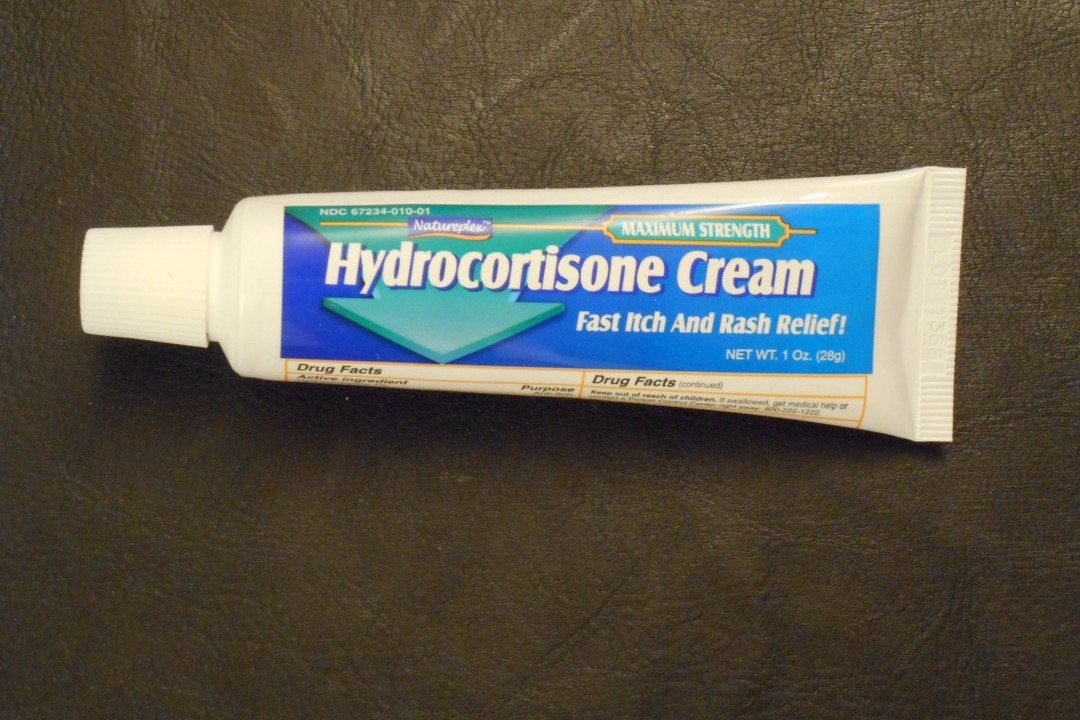
Pruritus — the medical term for itch — affects an estimated 22% of the general population at any given time, making it one of the most common reasons patients visit a dermatologist and one of the most frequent self-treated symptoms at the pharmacy counter. The underlying causes span an enormous range: eczema and atopic dermatitis affect over 31 million Americans, contact dermatitis from poison ivy alone sends 50 million people searching for relief each spring, insect bites peak during summer months, and chronic dry-skin pruritus becomes increasingly prevalent with age. Despite this prevalence, the OTC anti-itch aisle is one of the most confusing in the pharmacy — hydrocortisone, pramoxine, diphenhydramine, and colloidal oatmeal all claim to relieve itch, but they work through fundamentally different pharmacological mechanisms and are appropriate for different conditions.
At BestRatedDocs.com, our reviews are informed by Dr. David Taylor’s clinical experience evaluating dermatological pharmacology and patient outcomes. In 2026, we reviewed the best OTC anti-itch creams available on Amazon, covering corticosteroids, local anesthetics, topical antihistamines, and skin protectants. Our goal is to match you with the right active ingredient for your specific itch cause — because applying the wrong class of anti-itch product is not just ineffective, it can actively worsen certain conditions. If you’re managing related symptoms, our best allergy medicine guide covers systemic antihistamines that address itch from the inside, and our best first aid kits guide includes essential topical treatments for insect bites and minor skin irritations.
After evaluating eight products across four drug classes and analyzing the clinical evidence behind each active ingredient, here are our top anti-itch cream picks for 2026. The summary table below highlights the key differentiators at a glance.
| Product | Price | Buy |
|---|---|---|
| Cortizone-10 Maximum Strength Intensive Healing CreamBest Overall | $8.97 | View on Amazon |
| Amazon Basic Care Hydrocortisone Cream 1%Budget Pick | $4.17 | View on Amazon |
| CeraVe Moisturizing Cream for Itch Relief (Pramoxine)Premium Pick | $23.97 | View on Amazon |
| CeraVe 1% Hydrocortisone Anti-Itch CreamRunner-Up | $9.79 | View on Amazon |
| Benadryl Extra Strength Anti-Itch GelRunner-Up | $6.48 | View on Amazon |
| Sarna Sensitive Anti-Itch LotionRunner-Up | $14.96 | View on Amazon |
| Gold Bond Medicated Eczema Relief Cream | $9.91 | View on Amazon |
| Eucerin Eczema Relief Body Cream | $14.97 | View on Amazon |
How We Selected These Anti-Itch Creams
Our selection criteria prioritized pharmacological diversity and clinical relevance. Rather than reviewing eight hydrocortisone creams with minor formulation differences, we included products from all four major OTC anti-itch drug classes — corticosteroids (hydrocortisone), local anesthetics (pramoxine), topical antihistamines (diphenhydramine), and skin protectants (colloidal oatmeal) — to ensure that readers with different itch causes find an appropriate product. We required a minimum of 1,500 verified Amazon reviews for newer products and evaluated each product’s vehicle formulation, moisturizing properties, and suitability for different body areas. We specifically assessed duration-of-use safety because chronic itch sufferers — the population most in need of guidance — face the greatest risk from prolonged inappropriate use of topical corticosteroids.
1. Cortizone-10 Maximum Strength Intensive Healing Cream — Best Overall
If there is a single product that belongs in every medicine cabinet for acute itch emergencies, it is a maximum-strength hydrocortisone cream. Hydrocortisone 1% — the highest concentration available without a prescription — works by suppressing the inflammatory cascade at the cellular level: it inhibits phospholipase A2, reducing prostaglandin and leukotriene synthesis, decreases capillary permeability to limit edema and redness, and suppresses the release of pro-inflammatory cytokines that amplify the itch-scratch cycle. The result is rapid, measurable reduction in the inflammation that drives most acute itch conditions — eczema flares, contact dermatitis from poison ivy or nickel, insect bite reactions, and minor allergic skin rashes.
Cortizone-10 Intensive Healing distinguishes itself from basic hydrocortisone tubes through its moisturizing vehicle. The formulation includes seven moisturizers and vitamins designed to repair the stratum corneum barrier that inflammatory conditions damage. This is clinically meaningful because barrier disruption is both a consequence and a perpetuator of the itch-scratch cycle — damaged skin loses transepidermal water, becomes drier, itches more, gets scratched more, and sustains further barrier damage. A hydrocortisone cream that simultaneously addresses inflammation and barrier repair breaks this cycle more effectively than a bare-minimum hydrocortisone-in-petrolatum formulation.
The 4.8-star average across more than 8,200 verified reviews makes Cortizone-10 one of the highest-rated OTC dermatological products on Amazon. Users consistently report rapid onset of relief — typically within 15-30 minutes of application — for eczema flares, mosquito and ant bites, poison ivy rashes, and contact dermatitis from household chemicals. The critical caveat, which applies to all hydrocortisone products regardless of brand: continuous use should not exceed 7 days without physician supervision. Topical corticosteroids — even at OTC 1% potency — can cause skin atrophy, telangiectasia, and perioral dermatitis with overuse, particularly on thin-skinned areas like the face, eyelids, groin, and axillae.

Cortizone-10 Maximum Strength Intensive Healing Cream
by Cortizone-10
The dermatologist-recommended standard for acute itch relief — maximum-strength hydrocortisone with a moisturizing repair complex in a clean-absorbing cream.
Pros
- Maximum OTC hydrocortisone concentration (1%) combined with seven moisturizers and vitamins — the only anti-itch cream that actively repairs the skin barrier while suppressing the inflammatory itch cascade
- 4.8-star average across more than 8,200 verified reviews confirms batch-to-batch consistency for eczema flares, contact dermatitis, insect bites, and poison ivy/oak/sumac reactions
- Cream vehicle absorbs cleanly without greasy residue, making it practical for daytime application on exposed skin areas including hands, arms, and neck
- FSA/HSA eligible and widely stocked — the most recognized OTC hydrocortisone brand in the US, recommended by dermatologists as a first-line topical for mild-to-moderate pruritus
Cons
- Hydrocortisone should not be used continuously for more than 7 days without physician supervision — prolonged topical corticosteroid use risks skin thinning, striae, and hypothalamic-pituitary-adrenal axis suppression
- Not appropriate for fungal infections (athlete's foot, jock itch, ringworm) — hydrocortisone suppresses the immune response and can worsen fungal colonization
2. Amazon Basic Care Hydrocortisone Cream 1% — Budget Pick
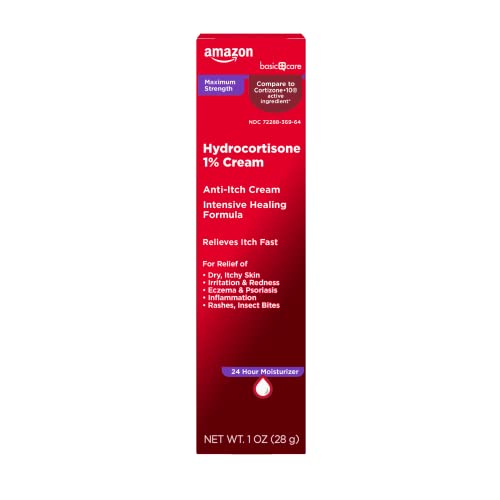
The core pharmacological insight that applies to anti-itch creams is identical to the one we emphasized in our best allergy medicine guide: the active ingredient is what matters, and the FDA OTC monograph system ensures that generic hydrocortisone 1% is chemically and therapeutically identical to brand-name products. Amazon Basic Care hydrocortisone contains the same concentration of the same molecule, manufactured under the same regulatory framework. The clinical effect is indistinguishable from Cortizone-10 at roughly half the price — the difference is entirely in the vehicle (moisturizing ingredients surrounding the active drug) and the packaging.
With more than 18,200 verified reviews, this is the most-reviewed hydrocortisone cream on Amazon — a volume of real-world data that provides strong confidence in product consistency. The 1 oz tube format is specifically practical for portability: it fits easily in a first aid kit, travel bag, or desk drawer. For families building a comprehensive first aid kit — see our best first aid kits guide — a tube of hydrocortisone cream is a standard inclusion alongside antibiotic ointment, adhesive bandages, and analgesics.
The trade-off for the lower price is a simpler vehicle formulation. Amazon Basic Care uses a standard petrolatum-based cream base without the advanced ceramide or vitamin complexes found in Cortizone-10 Intensive Healing or CeraVe Hydrocortisone. For acute, localized itch — a single mosquito bite, a small patch of contact dermatitis, a minor allergic skin reaction — this difference is clinically irrelevant. For chronic eczema management where barrier repair is a treatment goal alongside itch control, the more sophisticated formulations justify their premium.
Amazon Basic Care Hydrocortisone Cream 1%
by Amazon Basic Care
The smartest budget buy in anti-itch treatment — pharmacologically identical to brand-name hydrocortisone at a fraction of the price with Amazon's largest verified review base.
Pros
- Same hydrocortisone 1% active ingredient as Cortizone-10 at roughly half the price — FDA OTC monograph ensures identical anti-inflammatory and anti-pruritic pharmacology
- Over 18,200 verified Amazon reviews with a 4.6-star average — the highest review volume of any hydrocortisone cream on the platform, confirming reliable real-world performance
- Compact 1 oz tube is ideal for travel, first aid kits, and purse or glove compartment storage where bulk tubes are impractical
- FSA/HSA eligible under the CARES Act, bringing the effective out-of-pocket cost below generic store brands at most brick-and-mortar pharmacies
Cons
- 1 oz tube is small for users managing widespread eczema or large-area contact dermatitis — a single tube may last only 1-2 weeks of regular application
- Basic petrolatum-based vehicle lacks the advanced moisturizing complex found in Cortizone-10 Intensive Healing or CeraVe formulations
- No recognizable brand packaging, which may concern users accustomed to established dermatology brands despite identical active pharmacology
3. CeraVe Moisturizing Cream for Itch Relief (Pramoxine) — Upgrade Pick
Pramoxine hydrochloride represents an entirely different pharmacological approach to itch than hydrocortisone, and understanding the distinction is essential for choosing the right product. While hydrocortisone suppresses inflammation — appropriate for inflammatory itch conditions — pramoxine is a local anesthetic that works by blocking sodium ion channels in peripheral sensory nerve fibers. By preventing nerve impulse transmission from the itch receptors in the skin to the central nervous system, pramoxine essentially numbs the itch signal at its source. This mechanism is effective regardless of the itch cause — inflammatory, neuropathic, or irritant — making pramoxine a more broadly applicable anti-pruritic than hydrocortisone.
The critical clinical advantage of pramoxine is the absence of duration-of-use restrictions. Unlike hydrocortisone, which carries real risks with prolonged use, pramoxine does not cause skin thinning, does not suppress local immunity, and does not produce tachyphylaxis (diminishing effectiveness with repeated use). For the millions of patients managing chronic itch conditions — atopic dermatitis between flares, senile pruritus in elderly skin, chronic dry-skin itch, or pruritus associated with systemic conditions like kidney disease — pramoxine provides a treatment that can be used daily for months or years without the adverse effects that limit corticosteroid use.
CeraVe’s specific formulation elevates this pramoxine product above competitors through its MVE (MultiVesicular Emulsion) technology, which encapsulates ceramides in a time-release delivery system that maintains skin barrier repair throughout the day. The 16 oz pump bottle is the most practical format for full-body application — chronic itch patients applying cream to their arms, legs, and torso daily will find that 1 oz tubes are consumed within days. At roughly one-and-a-half dollars per ounce, the CeraVe 16 oz format is actually the most economical per-ounce option for long-term anti-itch maintenance despite its higher shelf price. For patients also managing chronic pain alongside itch, our best lidocaine patches guide covers a related local anesthetic approach for musculoskeletal conditions.

CeraVe Moisturizing Cream for Itch Relief (Pramoxine)
by CeraVe
The upgrade pick for chronic itch sufferers — steroid-free pramoxine in CeraVe's ceramide-rich formula provides unlimited-duration itch relief with barrier repair.
Pros
- Pramoxine HCl 1% provides itch relief through local anesthetic nerve-blocking rather than corticosteroid immunosuppression — safe for long-term daily use without skin thinning risk
- CeraVe's proprietary MVE (MultiVesicular Emulsion) technology releases ceramides gradually over 24 hours, restoring the skin barrier that chronic itch conditions compromise
- 16 oz pump bottle provides 4-8 months of daily full-body application — the most economical per-ounce option for widespread chronic pruritus management
- Developed with dermatologists and accepted by the National Eczema Association — the gold standard moisturizer-therapeutic combination for atopic dermatitis maintenance
Cons
- Pramoxine provides slower onset than hydrocortisone for acute inflammatory itch — takes 3-5 minutes for the local anesthetic effect versus near-immediate anti-inflammatory relief
- Higher upfront cost than hydrocortisone tubes, though the per-ounce economics and unlimited duration of use make it more cost-effective for chronic conditions
4. CeraVe 1% Hydrocortisone Anti-Itch Cream — Runner-Up
CeraVe Hydrocortisone occupies a specific and valuable niche: it is the only anti-itch cream that combines maximum-strength OTC corticosteroid with a dermatologist-developed ceramide barrier-repair system. The three essential ceramides in human skin — ceramides 1, 3, and 6-II — constitute approximately 50% of the intercellular lipid matrix in the stratum corneum, and their depletion is a hallmark of atopic dermatitis and contact dermatitis. By incorporating all three ceramides alongside hydrocortisone 1%, CeraVe addresses both the symptom (itch) and a key pathological mechanism (barrier dysfunction) simultaneously.
The MVE technology in this formulation is not marketing fluff — it is a patented delivery system that has been validated in peer-reviewed dermatology literature. The multivesicular emulsion structure releases ceramides and hyaluronic acid gradually over several hours, maintaining moisturization between applications rather than delivering a bolus of moisturizing ingredients that evaporates within 30 minutes. For eczema patients who experience their worst itch at night due to transepidermal water loss accelerating during sleep, this sustained-release mechanism provides measurable benefit during the hours when itch is most disruptive to sleep quality.
The practical limitation is the 1 oz tube size. CeraVe positions this product for targeted application on acute flare areas rather than full-body use — the hydrocortisone content makes full-body application inadvisable anyway. The smart clinical approach is to use CeraVe Hydrocortisone on active eczema patches for up to 7 days, then transition to the CeraVe Pramoxine cream (product #3 in this guide) for maintenance on those same areas once the acute flare resolves. This “step-down” strategy mirrors what dermatologists prescribe with prescription-strength topical steroids.

CeraVe 1% Hydrocortisone Anti-Itch Cream
by CeraVe
The best hydrocortisone cream for eczema-prone skin — CeraVe's ceramide-enriched formula treats the itch and repairs the barrier simultaneously.
Pros
- Combines maximum OTC hydrocortisone (1%) with CeraVe's ceramide complex — the only product that pairs acute corticosteroid itch relief with clinical-grade barrier restoration
- MVE technology delivers ceramides 1, 3, and 6-II gradually, rebuilding the intercellular lipid matrix that eczema and dermatitis deplete
- 4.6-star average across more than 12,700 verified reviews — strong real-world evidence for eczema flare management, bug bites, and allergic contact dermatitis
- Non-comedogenic and fragrance-free formulation suitable for sensitive facial skin where many hydrocortisone creams cause irritation or breakouts
Cons
- 1 oz tube size limits utility for full-body application — chronic eczema patients covering large surface areas will exhaust the tube within days
- Same 7-day continuous use limitation as all hydrocortisone products — not a maintenance therapy for chronic pruritus despite the ceramide barrier-repair benefits
5. Benadryl Extra Strength Anti-Itch Gel — Runner-Up
Topical diphenhydramine operates through a third distinct mechanism: direct H1 histamine receptor blockade at the skin surface. When mast cells in the dermis degranulate — triggered by insect venom, plant urushiol (poison ivy), or allergic contact — they release histamine, which binds to H1 receptors on sensory nerve endings and blood vessels, producing itch, redness, and localized swelling. Topical diphenhydramine competes with histamine for these receptors, blocking the itch signal specifically at the site of application. This makes it pharmacologically ideal for histamine-mediated itch: insect bites, urticaria (hives), and acute allergic contact reactions.
The gel vehicle provides an immediate cooling sensation that delivers perceptible relief before the pharmacological antihistamine effect engages — typically within 2-5 minutes. This dual-action onset (physical cooling plus chemical histamine blockade) explains why Benadryl gel has accumulated over 43,400 verified Amazon reviews, making it the single most-reviewed anti-itch product on the platform. For households with children who play outdoors and encounter mosquitoes, ants, bees, and poison ivy regularly, a bottle of Benadryl gel is a practical staple alongside the muscle rubs and bandages in the family medicine cabinet.
Two important caveats warrant emphasis. First, topical diphenhydramine can paradoxically cause allergic contact dermatitis through contact sensitization — a well-documented phenomenon in dermatology literature. Patients who notice their itch worsening with repeated Benadryl gel use should discontinue immediately and consider that the product itself has become the allergen. Second, topical diphenhydramine should never be combined with oral diphenhydramine (Benadryl tablets or liquid) because additive systemic absorption can produce excessive sedation, dry mouth, and urinary retention. If you are already taking oral Benadryl for allergy symptoms, use hydrocortisone or pramoxine topically instead.

Benadryl Extra Strength Anti-Itch Gel
by Benadryl
The go-to topical antihistamine for insect bites and hives — Benadryl's cooling gel formula delivers targeted histamine blockade with Amazon's largest anti-itch review base.
Pros
- Diphenhydramine HCl 2% topical gel provides direct H1 receptor blockade at the itch site — a different mechanism than hydrocortisone, making it effective for histamine-mediated itch from insect bites, hives, and allergic reactions
- Over 43,400 verified Amazon reviews — by far the largest review base of any anti-itch product on the platform — with consistent 4.6-star performance across years of availability
- Clear gel vehicle provides immediate cooling sensation on application, offering psychological and physical itch relief before the pharmacological antihistamine effect engages
- 3.5 fl oz bottle provides substantial supply for a topical; well-suited for households with active outdoor lifestyles encountering frequent insect bites and plant exposures
Cons
- Topical diphenhydramine can cause contact sensitization (allergic contact dermatitis) with repeated use — paradoxically worsening itch in sensitized individuals
- Should not be used concurrently with oral diphenhydramine (Benadryl tablets) due to additive systemic absorption risk, particularly in children and over large body surface areas
- Not effective for non-histaminergic itch causes such as dry skin, neuropathic itch, or eczema — mechanism is specific to histamine-mediated pruritus
6. Sarna Sensitive Anti-Itch Lotion — Runner-Up
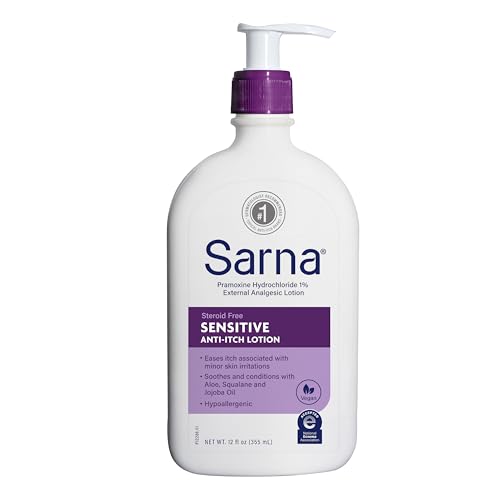
Sarna occupies a clinical niche that no other product in this guide precisely fills: a pramoxine-based anti-itch product in a lightweight lotion vehicle specifically formulated for hypersensitive skin. While CeraVe Pramoxine (product #3) provides superior moisturization through its ceramide complex, Sarna’s stripped-down formulation — fragrance-free, dye-free, paraben-free — minimizes the risk of irritant contact dermatitis in patients whose skin reacts to preservatives, fragrances, or emulsifiers that more complex formulations contain. For patients with sensitive skin who have tried multiple anti-itch creams only to find that the vehicle ingredients trigger additional irritation, Sarna’s minimalist approach is often the solution.
The 12 oz bottle format is sized for full-body application, which is critical for the chronic pruritus conditions where Sarna is most commonly recommended by dermatologists. Systemic itch associated with chronic kidney disease (uremic pruritus), liver disease (cholestatic pruritus), and age-related dry skin (senile pruritus or xerotic eczema) affects large body surface areas and requires treatment that can be applied head-to-toe without risk of systemic adverse effects. Pramoxine’s safety profile makes Sarna appropriate for this use case in ways that hydrocortisone and topical diphenhydramine cannot match.
The lotion vehicle is a deliberate formulation choice, not a compromise. Lotions spread more efficiently than creams over large surface areas, require less product per application for full-body coverage, and absorb quickly without the occlusive residue that some patients find uncomfortable — particularly in warm climates or under clothing. The trade-off is less intense moisturization per application compared to cream vehicles, which means Sarna is best suited for patients whose primary need is itch relief rather than barrier repair. Patients with significant xerosis (dry skin) alongside itch may benefit from layering Sarna over a separate ceramide moisturizer.
Sarna Sensitive Anti-Itch Lotion
by Sarna
The dermatologist's choice for sensitive and chronic itch — steroid-free pramoxine in a gentle lotion format safe for unlimited daily use on large areas.
Pros
- Pramoxine HCl 1% in a lightweight lotion vehicle — steroid-free and safe for long-term daily use on large body surface areas without the thinning risk of hydrocortisone
- 12 oz bottle is sized for full-body application in chronic pruritus conditions including uremia, cholestasis, and senile pruritus where large-area coverage is essential
- Fragrance-free, dye-free, and paraben-free formulation specifically designed for the hypersensitive skin populations most vulnerable to irritant-triggered itch cycles
- Over 7,500 verified reviews with dermatologist recommendations for conditions where corticosteroids are inappropriate or where itch persists beyond the 7-day hydrocortisone window
Cons
- Lotion vehicle is thinner than cream formulations — less occlusive, which means reduced moisturizing benefit for severely dry or cracked skin compared to CeraVe or Eucerin
- Pramoxine's local anesthetic effect lasts 2-4 hours per application, requiring more frequent reapplication than hydrocortisone for sustained relief throughout the day
7. Gold Bond Medicated Eczema Relief Cream
Colloidal oatmeal is the gentlest active ingredient in this guide, and its mechanism of action is fundamentally different from the three drug classes reviewed above. Rather than blocking inflammation (hydrocortisone), numbing nerves (pramoxine), or blocking histamine receptors (diphenhydramine), colloidal oatmeal works through avenanthramides — bioactive polyphenolic compounds naturally present in oat kernels — that inhibit NF-kB signaling, a master regulator of the inflammatory gene expression cascade. This is a mild but genuine anti-inflammatory effect, distinct from and gentler than corticosteroid-mediated immunosuppression. The FDA classifies colloidal oatmeal as a skin protectant rather than an anti-inflammatory drug, reflecting its safety profile rather than its lack of activity.
Gold Bond Medicated Eczema Relief pairs colloidal oatmeal 2% with a moisturizing complex that includes ceramides, aloe, and vitamin E — a formulation designed for daily eczema maintenance rather than acute flare rescue. With nearly 15,000 verified reviews and a 4.7-star average, the real-world evidence consistently shows that daily Gold Bond application reduces the frequency and severity of eczema flares over time. This is the product’s role in a comprehensive itch management strategy: not the first thing you reach for when a flare erupts (that is hydrocortisone), but the daily maintenance treatment that prevents flares from recurring as frequently.
The caution on Gold Bond specifically involves the aloe vera and vitamin E in its formulation. Both are well-documented contact allergens — not commonly, but at a clinically meaningful rate of approximately 1-3% among eczema patients. A patient who applies Gold Bond and experiences worsening itch may be reacting to these vehicle ingredients rather than to the colloidal oatmeal itself. Patch testing on a small area for 48 hours before committing to full-body application is a reasonable precaution, particularly for patients with a history of contact allergies.

Gold Bond Medicated Eczema Relief Cream
by Gold Bond
The best steroid-free daily maintenance cream for eczema — colloidal oatmeal's anti-inflammatory properties keep itch at bay without duration limits or thinning risk.
Pros
- Colloidal oatmeal 2% is an FDA-recognized skin protectant that calms itch through avenanthramide-mediated inhibition of NF-kB inflammatory signaling — a completely different mechanism than steroids or antihistamines
- Safe for daily long-term use with no duration restrictions — the only active ingredient class in this guide with zero risk of skin thinning, tachyphylaxis, or contact sensitization
- 8 oz tube provides generous supply for daily full-body moisturizing application in eczema maintenance, making it the most practical steroid-free option for widespread dry-skin pruritus
- 4.7-star average across nearly 15,000 verified reviews with strong repeat-purchase signals from chronic eczema patients who use it as a daily maintenance moisturizer
Cons
- Weaker acute itch suppression than hydrocortisone or pramoxine — colloidal oatmeal is best suited as a maintenance and prevention strategy rather than acute flare rescue
- Thicker cream texture may feel heavy under clothing in warm weather; some users report pilling when applied under makeup or sunscreen layers
- Contains aloe vera and vitamin E, which are contact allergens for a small but meaningful percentage of eczema patients — patch test before widespread application
8. Eucerin Eczema Relief Body Cream
Eucerin Eczema Relief represents the convergence of two evidence-based approaches: colloidal oatmeal’s avenanthramide-mediated anti-inflammatory activity and a ceramide-enriched moisturizing system that addresses the barrier dysfunction underlying atopic dermatitis. The product holds a National Eczema Association Seal of Acceptance — a distinction awarded only to products that meet rigorous criteria for ingredient safety, demonstrated efficacy, and minimal irritancy potential. With over 17,500 verified Amazon reviews, Eucerin has the largest review base of any eczema-specific moisturizer on the platform, reflecting broad adoption across dermatological patient populations including pediatric use.
The ceramide component of Eucerin’s formulation deserves specific attention. Atopic dermatitis is fundamentally a disease of impaired skin barrier function — patients with eczema have reduced ceramide content in their stratum corneum, increased transepidermal water loss, and heightened susceptibility to irritants and allergens that penetrate the compromised barrier. Replenishing ceramides through topical application has been validated in multiple dermatology studies as an effective strategy for reducing flare frequency and improving skin hydration metrics. Eucerin’s combination of ceramide replenishment with colloidal oatmeal’s anti-pruritic activity makes it one of the most physiologically rational eczema maintenance formulations available without a prescription.
The fragrance-free, dye-free, steroid-free formulation is safe for all ages including infants — a critical consideration because eczema prevalence peaks in early childhood, affecting up to 20% of children under age 5. For parents managing infantile eczema, Eucerin is among the safest and most evidence-supported daily moisturizers available. The 8 oz tube provides a practical supply for localized application but depletes quickly with full-body use in moderate-to-severe pediatric eczema — families should expect to maintain multiple tubes. For comprehensive skin and health management, pairing eczema maintenance with proper hydration tracking and the allergy management strategies in our best eye drops for dry eyes guide can address the broader symptom spectrum that atopic patients often face.

Eucerin Eczema Relief Body Cream
by Eucerin
The National Eczema Association-accepted daily moisturizer — Eucerin's ceramide-oatmeal formula is the top-reviewed eczema cream on Amazon for whole-family use.
Pros
- Colloidal oatmeal skin protectant combined with Eucerin's ceramide-enriched formula — addresses both the itch symptom and the underlying barrier dysfunction that drives eczema flare cycles
- Accepted by the National Eczema Association with a Seal of Acceptance — one of only a handful of OTC products meeting their rigorous ingredient and irritancy standards
- 4.7-star average across more than 17,500 verified reviews — the highest review count of any eczema-specific moisturizer on Amazon, with strong pediatric use signals
- Fragrance-free, dye-free, and steroid-free formulation safe for infants, children, and adults with no duration-of-use restrictions
Cons
- Does not contain an active anti-itch drug at prescription-equivalent potency — functions primarily as a therapeutic moisturizer with mild anti-pruritic benefit rather than acute itch rescue
- 8 oz tube depletes quickly with full-body daily application in moderate-to-severe eczema — families with multiple affected members should expect to purchase frequently
A Critical Warning About Fungal Infections
Before addressing the buyer’s guide, one essential safety point that many competing anti-itch guides fail to mention: never apply hydrocortisone to a fungal infection. Athlete’s foot (tinea pedis), jock itch (tinea cruris), and ringworm (tinea corporis) all cause intense itch — and the instinct to reach for an anti-itch cream is understandable. But hydrocortisone suppresses the local immune response that is actively fighting the fungal colonization. Applying hydrocortisone to a fungal infection reduces the redness and itch temporarily (making it appear to “work”), while allowing the fungus to proliferate unchecked beneath the suppressed immune response. The result is typically a dramatic worsening — tinea incognito — where the infection spreads to a much larger area before the patient realizes the anti-itch cream was masking the problem.
The distinguishing features of fungal infection versus inflammatory itch are: a well-defined, expanding border (especially a ring-shaped pattern); scaling or flaking at the border; location in warm, moist areas (feet, groin, skin folds); and failure to respond to hydrocortisone within 3-5 days. If you suspect a fungal cause, use an OTC antifungal cream containing clotrimazole, miconazole, or terbinafine instead of any product in this guide. You can safely use pramoxine or colloidal oatmeal alongside an antifungal for itch relief, but hydrocortisone should be avoided until the fungal infection has been treated and confirmed resolved.
How to Choose the Best Anti-Itch Cream
The buyer’s guide factors below provide the detailed framework for making your selection. The single most actionable decision tree is this: identify your itch cause and expected treatment duration first.
- Acute inflammatory itch (eczema flare, contact dermatitis, insect bites) lasting less than 7 days: Hydrocortisone 1% — Cortizone-10 for the best formulation, Amazon Basic Care for the best value.
- Histamine-mediated itch (insect bites, hives, acute allergic reactions): Benadryl Extra Strength Gel for targeted topical antihistamine blockade, or hydrocortisone for broader anti-inflammatory coverage.
- Chronic itch requiring daily treatment beyond 7 days: Pramoxine-based products (CeraVe Itch Relief or Sarna) — steroid-free with no duration restrictions.
- Eczema maintenance and flare prevention: Colloidal oatmeal (Gold Bond or Eucerin) as daily moisturizer, with hydrocortisone reserved for acute flares.
- Sensitive skin that reacts to product ingredients: Sarna Sensitive (minimal formulation) or Eucerin (NEA-accepted).
Buyer's Guide
Selecting the right anti-itch cream requires matching the active ingredient mechanism to your specific itch cause, duration of treatment needed, and skin sensitivity — using the wrong class for your condition can delay recovery or worsen the problem.
Active Ingredient Type
The four main OTC anti-itch drug classes work through distinct mechanisms. Hydrocortisone (1% OTC maximum) is a corticosteroid that suppresses the inflammatory cascade — most effective for eczema flares, contact dermatitis, and allergic skin reactions. Pramoxine is a local anesthetic that blocks itch nerve signal transmission — effective for localized itch of any cause without anti-inflammatory effects. Diphenhydramine is a topical antihistamine that blocks H1 receptors at the skin surface — best for histamine-mediated itch from insect bites and urticaria. Colloidal oatmeal is a skin protectant that calms itch through avenanthramide-mediated anti-inflammatory activity — gentlest option for sensitive skin and daily maintenance. Matching the mechanism to your itch cause is the most important selection criterion.
Steroid vs. Steroid-Free
This is the most consequential binary decision in anti-itch treatment. Hydrocortisone delivers the strongest acute itch relief but is limited to 7 days of continuous use and carries risks of skin thinning, striae, and rebound flares with overuse. Steroid-free options — pramoxine, colloidal oatmeal, and diphenhydramine — have no duration restrictions and no skin-thinning risk, making them appropriate for chronic conditions requiring weeks or months of daily application. A practical strategy used by dermatologists: use hydrocortisone for acute flare rescue (5-7 days), then transition to a steroid-free maintenance product like CeraVe Pramoxine or Gold Bond Colloidal Oatmeal for ongoing management.
Condition Match
Different itch conditions respond best to different active ingredients. Eczema and atopic dermatitis respond to hydrocortisone acutely and colloidal oatmeal for maintenance. Insect bites and hives — driven by histamine release — respond best to topical diphenhydramine or hydrocortisone. Contact dermatitis from poison ivy, oak, or sumac responds to hydrocortisone for the inflammatory component. Dry-skin pruritus (xerotic eczema) responds best to ceramide-rich moisturizers with pramoxine or colloidal oatmeal. Critically, fungal infections (athlete's foot, jock itch, ringworm) should never be treated with hydrocortisone — the corticosteroid suppresses local immunity and can dramatically worsen fungal colonization, converting a mild infection into a widespread one.
Form Factor
Anti-itch products come in creams, gels, lotions, and ointments — each with practical trade-offs. Creams (Cortizone-10, CeraVe) absorb cleanly and work well under clothing or on exposed skin during the day. Gels (Benadryl) provide a cooling sensation and dry quickly, making them ideal for hairy areas and acute insect bite relief. Lotions (Sarna) are the lightest vehicle, covering large body areas efficiently but providing less occlusive moisturization. Ointments (not reviewed here but pharmacologically relevant) are the most occlusive and deliver the highest drug penetration — preferred by dermatologists for stubborn, localized eczema patches but cosmetically unacceptable for daytime use on visible skin.
Duration of Use
How long you need to treat determines which products are appropriate. For acute itch lasting 1-7 days (insect bites, mild contact dermatitis, short eczema flares), hydrocortisone 1% provides the fastest and most effective relief within its safe-use window. For itch lasting 1-4 weeks (healing poison ivy, resolving allergic reactions), pramoxine-based products are appropriate because they carry no duration restrictions. For chronic itch requiring months of daily management (atopic dermatitis maintenance, chronic dry-skin pruritus, senile pruritus), colloidal oatmeal and ceramide-based moisturizers are the safest long-term strategy. Using hydrocortisone beyond its 7-day window without physician supervision is the most common OTC anti-itch mistake.
Age and Sensitivity
Age restrictions and skin sensitivity vary meaningfully across anti-itch products. Hydrocortisone 1% is approved for children 2 years and older but should be used with extra caution in children because their higher body-surface-area-to-weight ratio increases systemic absorption. Colloidal oatmeal products (Gold Bond, Eucerin) are safe for all ages including infants and are the preferred first-line option for pediatric eczema maintenance. Pramoxine products are generally safe for children but lack the extensive pediatric safety data of colloidal oatmeal. Topical diphenhydramine (Benadryl gel) should be used cautiously in children under 6 and never over large body surface areas due to systemic absorption risk. For any child under 2 with persistent itch, consult a pediatrician before initiating any topical treatment.
When to See a Doctor
OTC anti-itch creams are appropriate for mild-to-moderate pruritus with an identifiable cause — eczema flares, insect bites, contact dermatitis, and dry-skin itch. However, persistent or severe itch warrants medical evaluation for several reasons. Chronic generalized pruritus without a visible rash (pruritus sine materia) can be the presenting symptom of systemic conditions including iron deficiency anemia, thyroid disease, chronic kidney disease, liver disease, and — rarely but importantly — hematological malignancies such as Hodgkin lymphoma and polycythemia vera. Itch that is progressive, unexplained, associated with weight loss or night sweats, or unresponsive to two weeks of appropriate OTC treatment should prompt a physician visit with basic bloodwork including CBC, comprehensive metabolic panel, and thyroid function studies.
Additionally, any itchy rash showing signs of secondary bacterial infection — increasing warmth, purulent drainage, expanding redness, red streaking toward lymph nodes, or fever — requires medical evaluation and likely oral antibiotic therapy rather than continued OTC treatment. Children under 2 years with persistent itch should be evaluated by a pediatrician before initiating any topical treatment. And patients currently managing chronic conditions with complex medication regimens should verify potential topical-systemic interactions with their physician or pharmacist — particularly those taking systemic immunosuppressants where additional topical immunosuppression from hydrocortisone may be inadvisable.
Frequently Asked Questions
Is hydrocortisone cream safe for daily use?
Can I use anti-itch cream on my face?
What's the difference between hydrocortisone and pramoxine?
Are anti-itch creams safe during pregnancy?
When should I see a doctor instead of using OTC anti-itch cream?
Related Articles
About the Reviewer

Dr. David Taylor, MD, PhD
Drexel University College of Medicine (MD), Indiana University School of Medicine (PhD)
Dr. David Taylor is a licensed physician and medical researcher who founded BestRatedDocs in 2016. With an MD from Drexel University and a PhD from Indiana University School of Medicine, he combines clinical expertise with a passion for health technology to provide evidence-based product recommendations. Dr. Taylor specializes in health informatics and regularly evaluates medical devices, diagnostic equipment, and therapeutic products to help healthcare professionals and patients make informed decisions.