7 Best Otoscopes of 2026
Dr. David Taylor reviews the best otoscopes for doctors, nurses, and at-home use. Compare top-rated otoscopes by light source, magnification, and clinical capability.
Updated
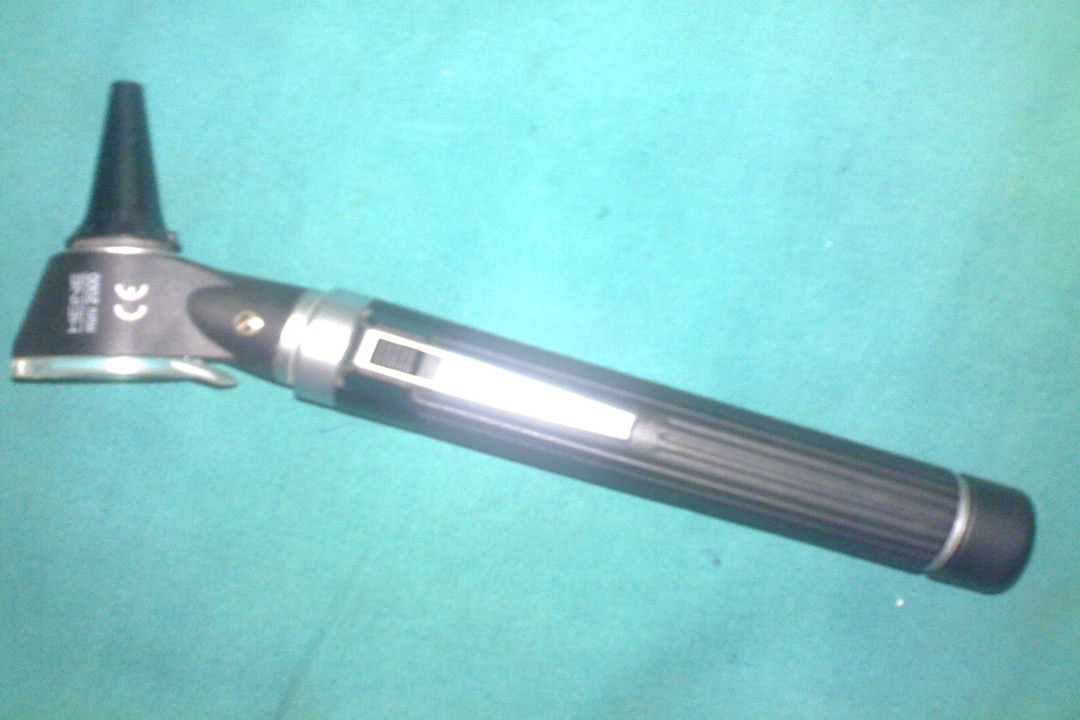
Otoscopes occupy a unique position in medical diagnostics: they are simultaneously essential clinical instruments that physicians use dozens of times per day and increasingly popular home health tools that parents reach for when a child wakes up crying with ear pain at 2 AM. In 2026, the otoscope market spans traditional optical instruments from century-old clinical brands like Welch Allyn and Heine, budget-friendly home instruments with thousands of Amazon ratings, and a growing category of digital camera otoscopes with built-in screens that require no clinical training to operate.
At Best Rated Docs, our review team combines the clinical perspective of Dr. David Taylor — a practicing physician with experience evaluating diagnostic instruments across primary care and emergency settings — with systematic analysis of verified Amazon reviews, manufacturer specifications, and real-world user feedback. For this guide, we evaluated seven otoscopes covering the full spectrum of use cases: professional pocket instruments, clinical student sets, consumer home instruments, and digital camera devices. If you are a clinician looking for a reliable pocket scope, a medical student equipping for rotations, or a parent who wants to check for ear infections between pediatric appointments, there is a right instrument in this review for your situation. For a complete diagnostic setup, you may also want to review our best diagnostic sets guide, which covers full diagnostic sets including ophthalmoscopes.
After researching the market and analyzing thousands of verified user reviews, here are our seven top picks across every use case.
How We Chose These Otoscopes
Our selection criteria covered four dimensions: optical quality (light source accuracy, magnification, and fiber optic vs. direct illumination), clinical capability (pneumatic port availability, speculum compatibility, handle system), practical portability (size, weight, battery type), and review pool credibility (number of verified ratings and review sentiment analysis). We deliberately included both professional clinical instruments and consumer-grade options because the best otoscope for a nurse practitioner in a pediatric clinic and the best otoscope for a parent monitoring a child’s recurring ear infections are genuinely different instruments. Products were selected to cover every price tier from under $30 to under $280.
1. Welch Allyn Pocket LED Fiber-Optic Otoscope — Best Overall
The Welch Allyn brand is synonymous with clinical otoscopy in the United States — their diagnostic handles and disposable specula are the de facto standard in hospital exam rooms, emergency departments, and urgent care clinics across the country. The Pocket LED Fiber-Optic Otoscope (model 22870 series) brings that institutional heritage into a pocket-format AA battery instrument designed to be carried daily in a white coat.
The fiber optic light delivery system is the key technical distinction. By routing the light through a fiber bundle rather than positioning the bulb in line with the optic, the design keeps heat away from the examination field and eliminates the central shadow that direct-illumination instruments sometimes project across the speculum. Combined with Welch Allyn’s SureColor LED technology — which balances color temperature, color rendering index, and brightness to closely approximate the natural color of tissue without the warm yellow shift of older halogen systems — this produces a view that clinical users familiar with wall-mounted Welch Allyn diagnostic sets will recognize immediately.
At 42 Amazon ratings, this instrument is conspicuously under-reviewed for its price, and that number reflects a real phenomenon: Welch Allyn sells the overwhelming majority of its clinical instruments through medical supply distributors, hospital GPOs, and institutional procurement channels rather than Amazon. The actual installed base of Welch Allyn pocket instruments in clinical practice is enormous — the Amazon review count simply does not reflect that. For a clinical buyer choosing between this instrument and a lesser-known alternative with 3,000 Amazon ratings, the Welch Allyn’s institutional track record and widely available Kleenspec specula compatibility are more meaningful signals than the Amazon review count. Pair it with a stethoscope from a leading clinical brand for a complete pocket diagnostic setup.

Welch Allyn Pocket LED Fiber-Optic Otoscope with AA Battery Handle
by Welch Allyn
The lightest Welch Allyn pocket otoscope — SureColor LED fiber optics and standard specula compatibility for daily clinical use.
Pros
- SureColor LED technology delivers a calibrated white light that renders ear canal tissue in true color without the glare or yellowing common to older halogen designs
- Fiber optic light path keeps the bulb out of the optical axis — no shadow or reflections across the tympanic membrane during examination
- Rated as the lightest Welch Allyn pocket otoscope, with a slim AA-battery handle that fits comfortably in a white coat chest pocket
- Accepts standard Welch Allyn disposable specula (Kleenspec compatible) available in virtually every hospital and clinic supply room in the US
Cons
- Only 42 Amazon ratings at time of review — most Welch Allyn sales go through medical supply distributors, so Amazon reviews underrepresent real-world clinical use
- No pneumatic port on this pocket model — cannot perform tympanic membrane mobility testing without upgrading to a full-size diagnostic head
2. Doctor Mom 4th Generation LED Pocket Pro Otoscope — Budget Pick
The Doctor Mom 4th Generation is the #1 Best Seller in the Otoscopes category on Amazon, with over 11,800 verified ratings and a 4.7-star average — the most socially validated home otoscope at any price. The brand was founded by an experienced emergency physician who designed the instrument to give non-clinical users the same basic capability that she found essential in clinical practice: bright, accurate illumination and enough magnification to actually see the tympanic membrane clearly.
The 4x magnification is higher than the 3x standard found on most professional instruments. For home users, this is a genuine advantage — the ear canal and tympanic membrane appear larger and easier to inspect, particularly in younger children where the anatomy is small and the viewing angle can be challenging. The trade-off is a slightly narrower field of view compared to 3x instruments, which takes a brief adjustment period for users switching from clinical equipment. In practice, most parents find the 4x view more informative once they learn what to look for.
The full-spectrum bright white LED with DC-DC boost converter is a meaningful technical specification at this price. Budget consumer otoscopes often use simple LED modules that produce inconsistent brightness as the battery drains. The boost converter in the Doctor Mom 4th Gen actively regulates LED drive current, maintaining consistent brightness through the battery discharge cycle — a design feature more commonly seen in clinical instruments than in $37 consumer products. For parents who want a clinically informed instrument for family monitoring without the clinical price tag, nothing in this review matches the combination of review volume, design pedigree, and value that the Doctor Mom 4th Gen delivers.

4th Generation Doctor Mom LED Pocket Pro Otoscope
by Doctor Mom
Amazon's best-selling otoscope — designed by an ER physician, 4x magnification, and a lifetime guarantee at a remarkable price.
Pros
- Amazon's #1 Best Seller in Otoscopes with over 11,800 verified ratings — the most socially validated home otoscope available at any price
- Full-spectrum bright white LED module with DC-DC boost converter produces a bright, steady beam that outperforms many cheaper LED pocket scopes
- 4x magnification — higher than the standard 3x found on most clinical instruments — gives parents and home users a more detailed view of the ear canal
- Insufflation outlet included, allowing pneumatic technique with an optional bulb for users trained in tympanic membrane mobility assessment
Cons
- Anodized aluminum body is well-built but the included hard plastic case feels less durable than a cloth or padded case at this price point
- 4x magnification narrows the field of view slightly compared to 3x instruments — takes brief adjustment for users accustomed to clinical otoscopes
3. Heine Mini 3000 Pocket Otoscope — Upgrade Pick
Heine Optotechnik is a German manufacturer with over 75 years of optical instrument heritage, and the Mini 3000 is their entry-level pocket otoscope — though “entry-level” for Heine means something very different from budget-category alternatives. The XHL (eXtra High Light) Xenon Halogen technology produces a concentrated, extremely bright beam that renders tissue in the warm, familiar color balance that clinicians trained on halogen instruments recognize as “correct.” The 100% more light output claim versus standard halogen reflects genuine XHL engineering, not marketing language.
The swiveling viewing window built into the instrument body deserves particular attention from clinicians. On standard otoscopes, the removable lens is a separate component that can be mislaid during examination or dropped. The Heine Mini 3000 integrates the lens into a swivel mechanism — to access the ear canal for instrumentation (cerumen removal, foreign body extraction), the window swings aside and locks. This eliminates a common workflow interruption in clinical practice without requiring the clinician to remove and set aside a separate lens piece. The auto-off pocket clip is equally practical: when the instrument is returned to the breast pocket, the clip engages and cuts the circuit, preventing dead batteries from accidental activation between exams.
The primary limitation to acknowledge honestly is the XHL halogen light source. Unlike LED instruments rated at 20,000+ hours of lamp life, halogen bulbs require periodic replacement — a maintenance step that LED alternatives have eliminated. For clinicians who prefer the halogen color rendering and are comfortable with a maintenance routine, this is a minor inconvenience. For those who want maintenance-free illumination, the Welch Allyn SureColor LED or the Doctor Mom full-spectrum LED are the better choice. Heine also sells an updated LED version of the Mini 3000, though it is typically more expensive and harder to source on Amazon.

Heine Mini 3000 Pocket Otoscope with Direct Illumination and Reusable Tips
by Heine
German-engineered Heine precision — XHL halogen illumination, auto-off pocket clip, and a swiveling instrumentation lens for specialist use.
Pros
- Enhanced XHL Xenon Halogen Technology produces an extremely bright, concentrated white beam — 100% more light output than standard halogen instruments at similar wattage
- Swiveling viewing window is built directly into the instrument body — the lens cannot be mislaid and swings aside for instrumentation without removing the head
- Unique clip switch automatically turns the instrument off when it is returned to a breast pocket, eliminating dead batteries from accidental activation
- Compact modern design with a refined non-slip handle reduces hand fatigue during extended clinic sessions and fits easily into any coat pocket
Cons
- XHL halogen technology requires periodic bulb replacement, unlike LED instruments that offer 20,000+ hour rated lamp life
- Amazon ratings pool is small — Heine instruments are predominantly purchased through medical supply distributors rather than direct-to-consumer channels
4. ADC Diagnostix 5110N Pocket Otoscope/Ophthalmoscope Set — Runner-Up
The ADC Diagnostix 5110N is the instrument set that generations of American medical and PA students have used to complete their physical diagnosis requirements without spending $500 on a Welch Allyn full diagnostic set. It includes two instruments on interchangeable AA battery handles: a 2.5V pocket otoscope and a 2.5V pocket ophthalmoscope, in a hard protective case with extra specula and replacement bulbs. For first- and second-year students who need both instruments for OSCE practice and clinical rotations but will spend the majority of their careers using wall-mounted institutional equipment, the 5110N represents the correct cost-benefit calculus.
The otoscope head is the stronger performer in this set. Its 2.5x wide-angle swivel lens provides adequate visualization of the tympanic membrane, and critically, it includes an insufflator port for pneumatic otoscopy — a clinical capability that costs considerably more in Welch Allyn alternatives. The Kleenspec-compatible specula are an important practical advantage: students doing hospital rotations can typically find replacement disposable specula in any clinic supply room without ordering ahead. The ophthalmoscope head receives more mixed feedback from experienced clinicians who compare it against 3.5V rechargeable Welch Allyn systems; the dimmer 2.5V lamp makes fundoscopy more technically demanding, though most students report being able to see the fundus with proper technique.
For practitioners who own this set and want to compare it with dedicated ophthalmoscope options, our guide to the best ophthalmoscopes covers clinical alternatives including Welch Allyn and Heine standalone instruments.

ADC Diagnostix 5110N Pocket Otoscope/Ophthalmoscope Diagnostic Set
by ADC
The complete student diagnostic set — both otoscope and ophthalmoscope heads with pneumatic capability in a protective hard case.
Pros
- Includes both an otoscope head and an ophthalmoscope head on interchangeable AA-battery handles — the complete 2.5V diagnostic set medical and PA students need for rotations
- Otoscope head accepts standard Welch Allyn Kleenspec disposable specula (2.75 mm and 4.25 mm) widely stocked in clinical supply rooms
- Insufflator port on the otoscope head supports pneumatic otoscopy with an optional bulb attachment — a capability absent from most consumer and pocket instruments
- Packed in a protective hard case with extra specula and replacement bulbs — ready for white coat transport with all accessories organized
Cons
- Xenon lamp (not LED) requires eventual bulb replacement; the ophthalmoscope head in particular draws down batteries more rapidly than LED-based alternatives
- 2.5V lamp output is less bright than the 3.5V rechargeable Welch Allyn systems found in clinical exam rooms — the visual difference is noticeable in direct comparison
5. Anykit Digital Otoscope with Gyroscope, 4.5 Inch Screen — Runner-Up
The Anykit digital otoscope represents the best self-contained digital ear camera in this review: 3,131 verified Amazon ratings, 4.5 stars, and the gyroscope stabilization system that sets it apart from most consumer digital otoscopes at this price. The gyroscope detects changes in probe orientation and automatically corrects the displayed image to keep it properly oriented — the practical benefit is that the view on the 4.5-inch IPS screen stays level and readable even as the examiner adjusts the probe angle in the ear canal, which reduces the disorienting image rotation that plagues many simpler digital otoscopes during pediatric exams.
The no-phone-required design is the defining feature for home users. Many digital otoscopes in this category require a paired smartphone app, which creates dependency on app version compatibility, Wi-Fi availability, and ongoing software support from the manufacturer. The Anykit includes its own screen — there is nothing to pair, no network to connect to, and no account to create. The included 32 GB microSD card records images and video at 1080p for sharing with a physician, which closes a meaningful gap between home monitoring and clinical follow-up: a parent can show the pediatrician exactly what the ear canal looked like at 7 PM before the morning appointment.
The honest limitation is the same for every digital camera otoscope at this price: the camera image is useful for visualization but does not replicate the optical resolution and contrast of a glass-lens clinical instrument. For parents checking for obvious wax buildup, monitoring tube placement, or documenting visible redness before a medical visit, the Anykit is highly effective. For clinical diagnosis requiring subtle tympanic membrane color assessment or pneumatic mobility testing, an optical instrument is the appropriate standard. Consult your physician or nurse practitioner for any diagnostic decisions.
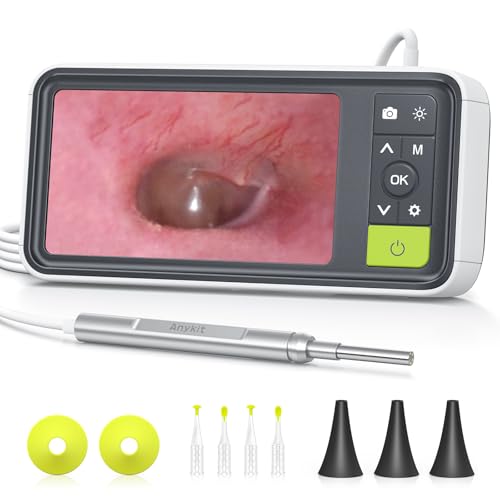
Anykit Digital Otoscope with Gyroscope, 4.5 Inches Screen
by Anykit
Best no-phone-needed digital otoscope — gyroscope stabilization, built-in 4.5" IPS screen, and 32 GB recording storage.
Pros
- Gyroscope-stabilized image keeps the view of the ear canal level and readable on the 4.5-inch IPS screen regardless of probe orientation — reduces motion blur during pediatric exams
- No app, no Wi-Fi, no phone required — the built-in screen makes this the most self-contained digital otoscope at this price point
- Includes a 32 GB microSD card that records photos and video for sharing with a physician or archiving for comparison across follow-up visits
- 3.9mm probe tip with 6 adjustable LED brightness levels fits adult and pediatric ear canals with minimal discomfort
Cons
- Digital camera resolution, while useful for monitoring at home, does not replicate the optical clarity of a clinical otoscope's glass lens and fiber optic system
- Built-in 2500 mAh battery is not field-replaceable — when it eventually degrades, the device has a finite lifespan unlike AA-battery traditional instruments
6. ScopeAround Otoscope with 4.5” IPS Screen
The ScopeAround is the principal alternative to the Anykit in the self-contained digital otoscope category. Its core specifications are nearly identical: a 4.5-inch IPS screen, 3.9mm probe, gyroscope stabilization, 6-LED adjustable illumination, and 32 GB microSD storage. Where it differentiates is the included magnetic mount stand, which is a genuinely useful accessory that the Anykit does not include. The stand holds the screen in a stable hands-free position, allowing the examiner to position the probe with both hands free — useful when examining a squirmy toddler who requires one hand for gentle restraint.
The FHD 1080p camera and built-in 2500 mAh battery are comparable to the Anykit in performance. ScopeAround has 838 verified ratings versus the Anykit’s 3,131 — both are legitimate products, but the Anykit’s larger review pool provides more longitudinal data on durability and real-world performance across different ear anatomies and user skill levels. For buyers who want the hands-free stand and are comparing these two models, both perform comparably for the home monitoring use case; the magnetic stand accessory is the marginal differentiator in ScopeAround’s favor.

ScopeAround Otoscope with 4.5" IPS Screen, 3.9mm Ear Camera with Gyroscope
by ScopeAround
Self-contained digital ear scope with built-in IPS screen, hands-free magnetic stand, and gyroscope stabilization — no phone required.
Pros
- Plug-and-play design with no app or Wi-Fi dependency — operates fully independently with its own 4.5-inch IPS screen and built-in 32 GB storage
- Gyroscope image stabilization and FHD 1080p camera deliver a stable, high-resolution view of the ear canal for confident home monitoring
- Includes a magnetic mount stand that holds the screen hands-free, freeing both hands for probe positioning and speculum insertion
- Built-in 2500 mAh rechargeable battery provides over 4 hours of continuous use and charges via USB
Cons
- Relatively smaller review pool (838 ratings) compared to leading digital competitors — less longitudinal user data on durability
- FHD resolution on the 4.5-inch screen shows adequate ear canal detail but cannot match the optical magnification of a professional glass-lens instrument
7. Doctor Mom 3rd Generation Slimline Stainless LED Pocket Otoscope
The 3rd Generation Doctor Mom is the predecessor to our budget pick and occupies a slightly different design category: slimline stainless steel construction versus the standard anodized aluminum of the 4th Gen. The stainless body is thinner, more pocket-friendly, and more durable against the kind of daily physical abuse a home instrument endures — no chrome plating to wear off, no plastic housing to crack. The soft white natural-hue LED approximates the warm color rendering of halogen instruments, which some users find more comfortable and familiar than the cooler, brighter white of the 4th Gen LED.
The honest comparison between 3rd Gen and 4th Gen: the 4th Generation is technically superior in illumination (brighter full-spectrum LED with boost converter), adds the insufflation outlet, and carries the #1 Best Seller ranking for a reason. The 3rd Gen’s advantage is the slimline stainless form factor and slightly lower price — both meaningful if the primary use case is occasional family ear checks where the pocket ergonomics and build material matter more than maximum illumination. For users who want the single best Doctor Mom instrument, the 4th Gen is the clear choice. For users who specifically want the slimline stainless body for carry comfort or prefer the softer LED color, the 3rd Gen remains a well-reviewed option.
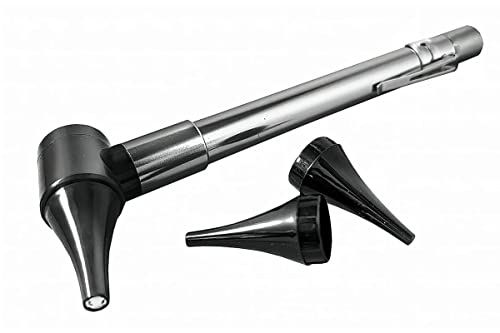
Third Generation Dr Mom Slimline Stainless LED Pocket Otoscope
by Doctor Mom
The slimline stainless alternative for home users — natural-hue LED and durable steel construction at the lowest price in this review.
Pros
- Slimline stainless steel body is more durable than plastic-bodied alternatives — withstands daily pocket carry without the chrome wear common on zinc alloy handles
- Soft white natural-hue LED spectrum approximates halogen color balance, rendering ear canal tissue in warmer, more familiar tones than cool-white LED alternatives
- Accepts three speculum sizes for both adult and pediatric exams — included in the clamshell packaging with replacement tips
- Extremely compact and pocket-friendly form factor — the narrowest traditional otoscope in this review, ideal for parents who want a clinical-feel instrument at home
Cons
- 3rd generation model has been superseded by the 4th generation Doctor Mom with a brighter, broader-spectrum LED — the newer model outperforms this one in illumination
- No insufflation port — cannot perform pneumatic otoscopy to assess tympanic membrane mobility for middle ear effusion evaluation
How to Choose the Best Otoscope
The single most important decision in otoscope selection is determining whether your primary use case is clinical professional practice or at-home consumer monitoring — because these two use cases call for fundamentally different instruments.
For clinical use, optical magnification, accurate light color rendering, and specula compatibility with your institution’s supply room are the relevant specifications. Pneumatic otoscopy capability — the ability to assess tympanic membrane mobility — matters significantly in pediatric-heavy practices, where otitis media with effusion is common and easily missed without mobility assessment. The Welch Allyn pocket LED and Heine Mini 3000 both serve the clinical professional well. Medical and PA students equipping for rotations need both an otoscope and an ophthalmoscope; the ADC 5110N provides both in a portable set at a fraction of the cost of branded alternatives.
For home use, the relevant question is whether you want a traditional optical instrument (like the Doctor Mom 4th Gen) or a digital camera instrument (Anykit or ScopeAround). Traditional optical instruments provide better image quality and more faithful color rendering, but require the user to hold the instrument to their eye and develop some basic technique. Digital camera instruments display the ear canal on a screen in real time with no technique requirement — anyone can see what the camera sees, making them more accessible for parents examining a resistant toddler.
Light source quality matters more than the LED vs. halogen distinction suggests. The key specifications are color temperature (how warm or cool the light appears, typically measured in Kelvin) and color rendering index (how accurately the light reproduces the true colors of illuminated tissue). For clinical users, confirm that the instrument’s LED provides clinically accurate color rather than simply being bright — a very blue-white LED can wash out the subtle color differences that distinguish a healthy from an inflamed tympanic membrane.
Specula supply planning is a practical detail that clinicians should confirm before purchasing. If you practice in a hospital or clinic environment where Kleenspec disposables are standard, verify that your chosen instrument accepts them. Welch Allyn instruments accept Kleenspec by default; other brands may require ordering proprietary disposables. For home users, the included specula set in any kit is typically adequate for a year or more of occasional family use.
Power system is simple in this category: AA batteries are the practical choice for most clinical and home users because the batteries are widely available everywhere, replaceable in the field without notice, and ensure the instrument is never out of service due to a depleted built-in cell. Rechargeable handle systems provide brighter, more consistent illumination but require planning — a flat rechargeable handle in a busy clinical morning is a genuine inconvenience. Digital otoscopes with built-in batteries are convenient for home use where charging is routine but are not field-replaceable.
Final Verdict
Our Best Overall pick, the Welch Allyn Pocket LED Fiber-Optic Otoscope, earns its position through institutional credibility, SureColor LED fiber optic quality, and standard specula compatibility — the specifications that matter most to clinical professionals who will use this instrument dozens of times per day. Its modest Amazon review count reflects distribution channel reality rather than product quality.
For the vast majority of home users, the Doctor Mom 4th Generation LED Pocket Pro Otoscope is the right answer. Over 11,800 verified Amazon ratings, physician-designed 4x magnification, an insufflation outlet, and a lifetime guarantee at under $40 make it the most compelling value in the entire category. Whether you are a parent managing a child’s recurring ear infections, a school nurse stocking a clinic, or a caregiver monitoring an elderly family member’s ear health, the Doctor Mom 4th Gen delivers what you need.
For digital home monitoring with no clinical technique required, the Anykit Digital Otoscope with its gyroscope-stabilized built-in screen is the strongest option — and its 3,131 verified ratings confirm real-world confidence. Pair your otoscope with a quality stethoscope and, if you need visual ear and eye diagnostic capability in one set, consider the complete diagnostic sets we review separately. As always, use these instruments as a supplement to — never a replacement for — professional medical evaluation. Consult your physician or nurse practitioner for any clinical diagnosis or treatment decisions.
Frequently Asked Questions
What is the difference between a professional otoscope and a consumer digital otoscope?
What magnification should I look for in an otoscope?
Can I diagnose an ear infection at home with an otoscope?
What is pneumatic otoscopy and which otoscopes support it?
How do I clean and maintain an otoscope between uses?
Which otoscope brands are used most commonly by physicians?
What size ear specula should I use for adults versus children?
Related Articles
About the Reviewer

Dr. David Taylor, MD, PhD
Drexel University College of Medicine (MD), Indiana University School of Medicine (PhD)
Dr. David Taylor is a licensed physician and medical researcher who founded BestRatedDocs in 2016. With an MD from Drexel University and a PhD from Indiana University School of Medicine, he combines clinical expertise with a passion for health technology to provide evidence-based product recommendations. Dr. Taylor specializes in health informatics and regularly evaluates medical devices, diagnostic equipment, and therapeutic products to help healthcare professionals and patients make informed decisions.