7 Best Lidocaine Patches of 2026
Dr. David Taylor reviews the best OTC lidocaine patches for back pain, nerve pain, and muscle aches. Compare top 4% patches by formula, size, wear time, and FSA eligibility.
Updated
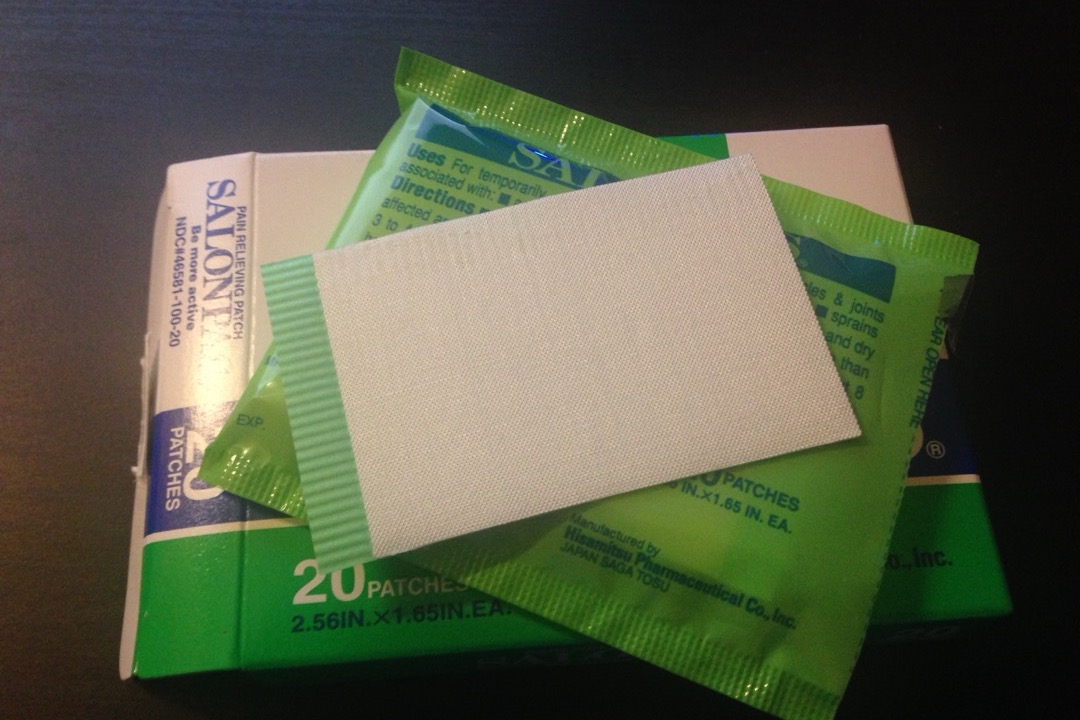
Lidocaine is a sodium channel blocker — a class of local anesthetic that has been used in clinical medicine since 1948 for everything from spinal anesthesia to cardiac arrhythmia management. Applied topically at the 4% concentration available over the counter, it works through a more targeted mechanism: blocking voltage-gated sodium channels in the peripheral nerve endings beneath the skin, interrupting pain signal transmission at its source before the signal ever reaches the spinal cord. This mechanism is fundamentally different from NSAIDs like ibuprofen (which reduce prostaglandin synthesis) and from TENS therapy (which uses electrical stimulation to modulate pain gating). Lidocaine patches do not reduce inflammation and they do not stimulate competing sensory pathways — they simply prevent the pain signal from firing at the peripheral level. That mechanistic specificity is what makes them effective for certain conditions and inappropriate for others, and understanding it is the foundation of choosing the right product for your situation.
In 2026, the OTC lidocaine patch market has matured considerably from its origins in the prescription-only Lidoderm patch, which received FDA approval for post-herpetic neuralgia in 1999. The current OTC landscape is dominated by 4% lidocaine patches across several delivery vehicle formats — hydrogel, standard fabric, and stretch fabric — each with distinct clinical applications. We reviewed seven products spanning this format spectrum, analyzing formula type, coverage geometry, wear time, adhesive performance across anatomical sites, and the increasingly relevant FSA/HSA eligibility landscape. For patients who want to understand the full drug-free pain management toolkit, our TENS unit guide covers the complementary electrical nerve stimulation approach, and our heating pads guide addresses the thermal analgesia pathway that works synergistically with topical lidocaine for many musculoskeletal conditions.
One clinical note that distinguishes lidocaine patches from almost every other topical analgesic: the drug delivery is local, not systemic. At 4% OTC concentrations applied to intact skin, systemic absorption is minimal and plasma lidocaine levels remain well below any threshold of clinical significance in healthy adults. This makes lidocaine patches one of the few analgesic modalities that can be used by patients who cannot tolerate systemic medications — those with NSAID-sensitive peptic ulcers, aspirin-exacerbated respiratory disease, or hepatic conditions that affect oral analgesic metabolism. The localized mechanism is also what makes patches appropriate for localized pain sites and less useful for diffuse or central pain syndromes.
| Product | Price | Buy |
|---|---|---|
| Salonpas Lidocaine 4% Pain Relieving Gel-PatchBest Overall | $10.34 | View on Amazon |
| Thera|Care Maximum Strength Pain Relief PatchBudget Pick | $5.09 | View on Amazon |
| Icy Hot Lidocaine Pain Relief PatchesRunner-Up | $9.58 | View on Amazon |
| Aspercreme Max Strength Lidocaine PatchRunner-Up | $9.97 | View on Amazon |
| Salonpas Lidocaine 4% Flex PatchRunner-Up | $12.98 | View on Amazon |
| Amazon Basic Care Lidocaine Patch 15-CountRunner-Up | $12.21 | View on Amazon |
| Biofreeze Ultraflex Lidocaine PatchesPremium Pick | $14.98 | View on Amazon |
How We Selected These Lidocaine Patches
Our selection criteria prioritized clinically meaningful differentiation, review validation, and format variety adequate to serve the full range of pain site anatomies and patient activity levels. Every product in this roundup contains exactly 4% lidocaine — the maximum OTC concentration permitted by FDA monograph — which means selection was driven by delivery vehicle differences, coverage geometry, wear time, and real-world performance signals from verified Amazon reviews rather than by concentration comparisons that the regulatory framework makes impossible. We required a minimum of 1,000 Amazon reviews for all products except the Biofreeze Ultraflex, which we included as the upgrade pick based on Biofreeze’s established clinical credibility and the specific format gap it fills for active patients. We excluded products with dominant complaints about adhesive failure, inconsistent drug delivery, or skin reactions disproportionate to normal topical application sites.
1. Salonpas Lidocaine 4% Pain Relieving Gel-Patch — Best Overall
The Salonpas hydrogel lidocaine patch has earned the #1 doctor and pharmacist recommended ranking among OTC pain patches through a combination of delivery vehicle quality and sustained brand investment in clinical validation. The hydrogel matrix is not simply a vehicle for carrying lidocaine to the skin surface — it is an active delivery system that maintains a moist, occlusive interface between the drug reservoir and the stratum corneum, the outermost skin layer that represents the primary barrier to transdermal absorption. Occlusion increases skin hydration at the application site, which swells the corneocyte layers and opens the intercellular lipid pathways through which lidocaine must diffuse to reach the nerve endings in the dermis below. This is the pharmacokinetic mechanism that differentiates hydrogel patches from dry fabric designs in peer-reviewed transdermal delivery research.
The practical clinical implication is relevant for the most common use cases: localized lower back pain, shoulder girdle pain, and hip or gluteal referred pain from lumbar disc pathology. These are anatomical sites with reasonable skin hydration and adequate subcutaneous tissue for topical lidocaine to reach its target nerve endings. For these applications, the Salonpas hydrogel delivers meaningful local anesthesia that users consistently describe in reviews as a distinct numbing effect — not merely a surface sensation but a reduction in the deep aching quality that characterizes musculoskeletal pain at these sites. Patients managing chronic lumbar conditions often find that pairing a lidocaine patch for localized analgesia with structural support from a well-fitted back brace addresses both the nociceptive and the postural contributors to daily pain burden.
The 8-hour wear time is the Salonpas gel-patch’s primary clinical limitation relative to 12-hour competitors. For patients who are awake for 16 hours daily, 8-hour coverage requires a mid-day patch change — an additional cost and a twice-daily skin adhesive exposure that can cause cumulative irritation in sensitive skin. For patients who want maximum daily coverage from a single application, a 12-hour fabric patch from Icy Hot, Aspercreme, or the budget Thera|Care option will better serve the protocol. The Salonpas hydrogel’s superiority in delivery mechanism makes it the best choice for applications where depth of penetration matters; the 8-hour limitation is an honest trade-off that buyers should evaluate against their daily pain management timeline.

Salonpas Lidocaine 4% Pain Relieving Gel-Patch
by Salonpas
The #1 doctor and pharmacist recommended OTC pain patch brand — Salonpas's hydrogel delivery system provides superior lidocaine penetration for localized pain relief.
Pros
- Hydrogel formula delivers lidocaine deeper into tissue than dry fabric patches — the mechanism that earns the #1 doctor and pharmacist recommendation among OTC pain patches
- Cooling sensation on application provides immediate comfort before the lidocaine fully absorbs — particularly useful for acute flare management
- Unscented formulation accommodates fragrance-sensitive patients and those managing conditions complicated by chemical sensitivities
- Flexible 3.93"x5.5" footprint conforms to curved anatomy — lower back, shoulder, and hip applications maintain contact without peeling
Cons
- Only 6 patches per box — higher per-session cost than bulk competitors for chronic daily users requiring multiple patches
- 8-hour maximum wear time falls short of the 12-hour wear time offered by competing fabric patches
2. Thera|Care Maximum Strength Pain Relief Patch — Budget Pick
The Thera|Care patch enters a market dominated by established national brands and immediately distinguishes itself on a single metric that matters decisively for chronic pain patients: cost per application. At a per-patch price that undercuts every other product in this roundup while matching the hydrogel delivery vehicle and extending wear time to 12 hours, the Thera|Care makes the economics of daily lidocaine patch use genuinely sustainable for the patient population most likely to need it. Chronic pain conditions that benefit from topical lidocaine — post-herpetic neuralgia, osteoarthritis, myofascial pain syndrome, chronic low back pain — are by definition persistent, requiring management across months and years rather than acute treatment episodes. For those patients, the per-patch cost is not a minor consideration but the primary factor determining whether topical lidocaine is affordable as part of a daily protocol.
The FSA and HSA eligibility expands the cost advantage further. Under the CARES Act of 2020, OTC lidocaine patches qualify for pre-tax reimbursement through qualifying health spending accounts, and the Thera|Care patch explicitly confirms this eligibility. A patient in the 25% federal tax bracket purchasing Thera|Care patches with HSA funds is effectively paying roughly 25% less than the sticker price — a compounding advantage on top of an already favorable per-patch price. For chronic pain patients managing their annual healthcare budget, the combination of the lowest unit cost and pre-tax purchasing eligibility makes the Thera|Care the most economically optimized option in this roundup.
The honest limitation is brand maturity. With 2,073 reviews at the time of this writing, the Thera|Care has not yet accumulated the review volume that provides statistical confidence in long-term product consistency. Salonpas at 12,799 reviews and Icy Hot at 18,994 reviews have been validated across a user population large enough to surface systematic quality control issues if they existed. Thera|Care’s thinner review base means the possibility of batch-to-batch inconsistency or supply chain variation has not been fully tested at scale. For buyers who prioritize cost above all else and are comfortable with a newer brand, the value proposition is compelling. For buyers who require the additional confidence that comes from a 10,000+ review track record, the Salonpas or Amazon Basic Care options provide that validation at a modest price premium.
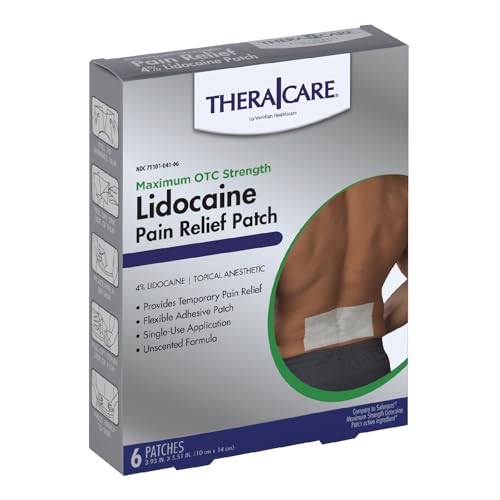
Thera|Care Maximum Strength Pain Relief Patch
by Thera|Care
Best price-per-patch at roughly $0.85 with 12-hour wear time and FSA eligibility — the economically sound choice for chronic pain patients requiring daily lidocaine patch use.
Pros
- At roughly $0.85 per patch, the lowest cost-per-application of any lidocaine patch in this roundup — a critical factor for chronic pain patients using patches daily
- 12-hour wear time matches premium competitors at a fraction of the price, eliminating the mid-day reapplication that shorter-wear options require
- FSA and HSA eligible — pre-tax purchasing further reduces the already-low effective cost for qualifying account holders
- Matching 3.93"x5.5" footprint and hydrogel formula deliver comparable coverage geometry to the Salonpas Best Overall at one-third the price
Cons
- Newer brand with only 2,073 reviews — long-term reliability data is thinner than Salonpas or Icy Hot alternatives with 10,000+ review bases
- Less widely distributed at retail pharmacy chains — primarily an online purchase, limiting access for urgent same-day needs
3. Icy Hot Lidocaine Pain Relief Patches — Runner-Up
The Icy Hot lidocaine patch is the most-reviewed product in this category on Amazon, and that review volume matters mechanistically: 18,994 reviews represent an enormous diversity of pain conditions, skin types, anatomical application sites, and daily use patterns. When a 4.4-star average is maintained across that sample, it reflects genuine real-world performance robustness rather than the self-selection effects that can elevate ratings on newer products with smaller review bases. For a buyer who wants the statistical confidence of massive user validation before committing to a lidocaine patch product, Icy Hot is the answer.
The dual-agent formula is the Icy Hot patch’s most clinically interesting feature. Menthol at 1% concentration activates TRPM8 thermoreceptors — cold-sensitive receptors in the peripheral nervous system that, when stimulated, produce afferent signals that travel through the same spinal cord gating pathways that pain signals use. The gate control theory of pain, first proposed by Melzack and Wall in 1965, holds that large-diameter non-nociceptive fiber signals can partially close the “gate” to nociceptive transmission at the dorsal horn of the spinal cord — the same mechanism that underlies TENS therapy’s analgesic effect. Menthol counterstimulation through TRPM8 activation produces a similar gating effect through a different receptor pathway. Combined with lidocaine’s direct sodium channel blockade at the peripheral nerve terminal, the Icy Hot patch delivers analgesia through two complementary mechanisms simultaneously — a pharmacologically rational combination rather than a marketing construct.
The menthol scent is the honest limitation for specific use contexts. One percent menthol produces a noticeable — not overwhelming, but distinctly present — cooling fragrance that is identifiable in professional and social environments. For patients using patches during work hours in office settings with open floor plans, healthcare environments with fragrance policies, or situations where patch use is not something they wish to announce, the Icy Hot’s menthol scent is a practical barrier. The Aspercreme fragrance-free patch and the Salonpas hydrogel are the appropriate alternatives for those contexts.
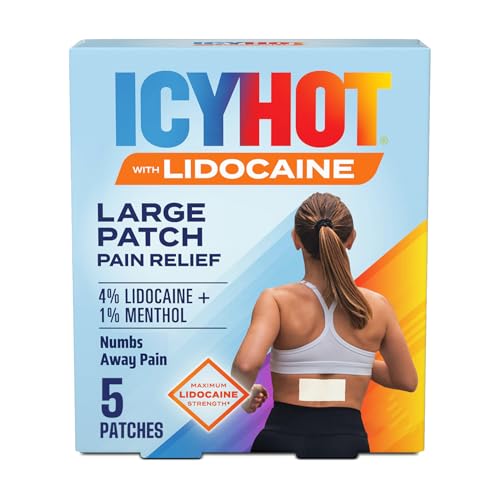
Icy Hot Lidocaine Pain Relief Patches
by Icy Hot
The most-reviewed lidocaine patch on Amazon, with dual lidocaine + menthol action that targets pain through two complementary analgesic pathways.
Pros
- 18,994 reviews make this the most-reviewed lidocaine patch on Amazon — the largest real-world performance dataset in the category by a significant margin
- Dual-action formula combines lidocaine 4% numbing with menthol 1% cooling — provides both topical analgesia and the gate-control counterstimulation that menthol activates through TRPM8 receptor pathways
- 12-hour wear time reduces reapplication frequency for full work-day and overnight coverage without interruption
- Fabric patch format is more breathable than hydrogel for users who find gel patches uncomfortable during warmer months or physical activity
Cons
- Light menthol scent is noticeable at application — not appropriate for fragrance-sensitive individuals or workplace environments with scent policies
- Menthol adds counterstimulation but does not increase lidocaine concentration — buyers seeking maximum numbing effect with no fragrance should choose a single-agent option
4. Aspercreme Max Strength Lidocaine Patch — Best Fragrance-Free
Aspercreme occupies a specific and underserved niche in the OTC lidocaine patch market: the only major national brand to explicitly commit to a fragrance-free formulation across its lidocaine patch line. This is not a minor distinction in a clinical context. Fragrance sensitivity ranges from mild preference to clinically significant contact dermatitis or airway reactivity, and the population of chronic pain patients who need topical analgesics frequently overlaps with populations who have pre-existing skin conditions, allergic disease, or chemical sensitivities. In healthcare settings — where many chronic pain patients spend significant time — fragrance-free products are often required by institutional policy. The Aspercreme patch’s explicit fragrance-free status makes it the clinically defensible default for any environment with a scent policy and for any patient with fragrance sensitivity.
The 5.13”x5.93” coverage area is the largest of any flat patch in this roundup, providing a meaningful advantage for diffuse lumbar pain that extends across multiple spinal segments or covers a wide area of the lower back. Patients with multilevel lumbar spondylosis, sacroiliac joint dysfunction that refers pain broadly across the lower back, or thoracolumbar fascia pain that spans from the mid-back to the gluteal region will find the Aspercreme’s larger footprint covers more of their pain anatomy without requiring multiple overlapping patches or patch repositioning. The 12-hour wear time compounds this advantage — wide coverage sustained for a full work day from a single morning application.
For patients who are already using supplemental pain management modalities, the Aspercreme patch integrates cleanly into multimodal protocols. The fragrance-free, fabric-format design does not interfere with heating pad application to adjacent tissue, and the localized nature of lidocaine’s mechanism makes it complementary to systemic approaches rather than redundant with them.

Aspercreme Max Strength Lidocaine Patch
by Aspercreme
The only major OTC lidocaine patch brand explicitly formulated as fragrance-free — the definitive choice for office use, sensitive individuals, and shared spaces.
Pros
- Explicitly marketed and formulated as fragrance-free — the only major national brand with a documented odor-free commitment, critical for workplace use and shared spaces
- 12-hour wear time with a larger 5.13"x5.93" footprint provides more coverage area per patch than most hydrogel competitors
- 8,805 reviews at 4.5 stars represent a large and statistically meaningful validation of consistent real-world performance
- Fabric format maintains adhesion during light activity and is generally more forgiving on skin with mild perspiration than pure hydrogel designs
Cons
- Higher per-patch cost than the budget hydrogel options when accounting for the 5-count pack size
- Fabric patches may be less effective at delivering lidocaine at equivalent depth compared to hydrogel alternatives, per dermatological research on transdermal delivery vehicles
5. Salonpas Lidocaine 4% Flex Patch — Best for Joint Pain
The design challenge that the Salonpas Flex Patch solves is one that standard flat patches fail at systematically: adhesion to curved, mobile joint surfaces during normal range of motion. The knee, elbow, shoulder, and ankle are anatomical sites that routinely flex through 90 to 150 degrees of motion during activities of daily living. Standard flat adhesive patches — whether hydrogel or fabric — have a fixed surface area that buckles and peels at the leading and trailing edges as the underlying skin stretches and compresses through flexion and extension cycles. Anyone who has tried to use a standard back pain patch on a knee during a walk has observed this failure mode directly.
The 4-way stretch fabric addresses this by allowing the patch substrate itself to deform in all planes — sagittal, coronal, axial, and diagonal — simultaneously with the skin it adheres to. Rather than fighting the skin’s deformation and failing at the edges, the stretch fabric follows the contour change, maintaining uniform adhesive contact across the entire patch surface throughout the motion cycle. The clinical result is continuous drug delivery to the target joint throughout activity rather than intermittent delivery as the patch partially detaches and reattaches with each movement cycle. For a runner using the patch for lateral knee pain from iliotibial band syndrome, or a tennis player using it for lateral epicondylalgia, or a patient with glenohumeral osteoarthritis using it during a physical therapy session, that adhesion consistency is the difference between effective drug delivery and a patch that has migrated to an irrelevant anatomical position by the end of a session.
The smaller 3.94”x2.75” footprint is a deliberate engineering choice for joint applications, not a cost reduction. A larger patch on a joint creates additional peeling surface area and more material to manage during flexion. The targeted size covers the primary pain zone at most joint sites precisely — lateral knee, olecranon, acromion, and lateral ankle are all approximately within the 3.94”x2.75” coverage area. For diffuse back pain requiring the full coverage geometry of the standard gel-patch, the Flex Patch is not the appropriate choice; it is specifically optimized for the joint application use case where its stretch format is indispensable.

Salonpas Lidocaine 4% Flex Patch
by Salonpas
The best lidocaine patch for joint pain — 4-way stretch fabric moves with knees, elbows, and shoulders without peeling, where flat patches consistently fail.
Pros
- 4-way stretch fabric maintains adhesion through full range of motion at joints — the defining advantage over rigid hydrogel patches that peel at flexion creases
- 7 patches per box improves per-patch economics while maintaining Salonpas's trusted brand quality and hydrogel-hybrid construction
- Smaller 3.94"x2.75" footprint is intentionally designed for targeted joint application — fits knee, elbow, shoulder, and ankle precisely without extending onto unaffected tissue
- Unscented formulation preserves the fragrance-free advantage of the original Salonpas gel-patch in a flexible joint-specific format
Cons
- Smaller patch size is a limitation for diffuse back pain requiring wide coverage — not appropriate as a substitute for the full-size gel-patch on lumbar applications
- 8-hour wear time is shorter than fabric-patch competitors that reach 12 hours
6. Amazon Basic Care Lidocaine Patch 15-Count — Best Bulk Value
The Amazon Basic Care lidocaine patch represents a mature category entry from Amazon’s house brand program — not a first-generation generic but a product with 8,403 reviews at a sustained 4.3-star average that validates real-world performance at meaningful scale. The hydrogel formula matches the delivery vehicle of the Salonpas Best Overall, the 3.9”x5.5” footprint is equivalent to the standard large hydrogel format, and the 12-hour wear time matches the longest-wearing options in this roundup. The differentiation is almost entirely in the package: 15 patches per box.
For a chronic pain patient using one patch daily, 15 patches represents a two-week supply from a single purchase. The operational advantage is not trivial for patients managing multiple medications, supplements, and medical supplies — reducing the frequency of reorder decisions and minimizing the risk of running out during a pain flare when reorder lead time is inconvenient. The per-patch economics of the 15-count format are favorable compared to the standard 5- or 6-count boxes of branded competitors, though the Thera|Care budget pick maintains a lower absolute per-patch price.
The Amazon house brand limitation is worth stating plainly: the Basic Care label carries no independent clinical reputation, no pharmacist recommendation data, and no brand equity built through clinical research investment. For a patient whose physician has specifically recommended Salonpas or Aspercreme by brand name, or who draws confidence from a brand with documented clinical relationships, the Amazon Basic Care is not the appropriate choice despite the favorable economics. For patients who are comfortable evaluating the product on its review data and formulation specifications alone — which is a reasonable approach for an OTC topical analgesic at 4% lidocaine — the 15-count bulk pack is the most economically efficient option for daily use.

Amazon Basic Care Lidocaine Patch 15-Count
by Amazon Basic Care
Best bulk value for chronic pain patients — 15 hydrogel patches with 12-hour wear time at the lowest per-patch cost of any multi-pack option in this roundup.
Pros
- 15-patch count is the largest single-box quantity in this roundup — optimal for chronic pain patients who use patches daily and want to minimize reorder frequency
- Hydrogel formula matches the delivery vehicle of the Salonpas Best Overall at a fraction of the cost when purchased in bulk
- 12-hour wear time with an unscented formulation delivers full-day coverage without fragrance or mid-session replacement
- 8,403 reviews at 4.3 stars demonstrate sustained real-world performance at scale — not a newly launched Amazon house brand with thin validation
Cons
- Amazon house brand lacks the independent clinical reputation and pharmacist recommendation backing of Salonpas or Aspercreme
- Availability depends on Amazon stock — chronic pain patients requiring consistent daily access should maintain a backup brand for supply disruptions
7. Biofreeze Ultraflex Lidocaine Patches — Upgrade Pick
Biofreeze has a clinical distribution profile that distinguishes it from every other brand in this roundup: its topical analgesic line is distributed through and recommended by physical therapists, chiropractors, and athletic trainers at a scale that no other consumer pain relief brand matches in the rehabilitation setting. That clinical channel presence reflects investment in health professional education and product validation in active patient populations — a different market development strategy than consumer advertising, and one that carries specific credibility for patients whose pain management occurs in the context of active rehabilitation.
The Biofreeze Ultraflex patch applies that clinical-channel credibility to the lidocaine patch format, pairing it with a patented 4-way stretch fabric construction that targets the same joint-adhesion problem that the Salonpas Flex Patch addresses. At a larger 5.5”x3.9” coverage area, the Biofreeze Ultraflex combines the adhesion compliance of stretch fabric with a coverage geometry closer to a standard large patch — addressing applications where both size and flexibility matter, such as the full posterior knee, the deltoid region, or the sacroiliac joint area where diffuse joint pain overlaps with surrounding musculature. The combination of large coverage area and 4-way stretch is not replicated by any other product in this roundup.
The honest limitation is cost per patch. The 4-patch count and premium price produce the highest per-application cost in this roundup. For a sedentary patient managing lower back pain while at a desk, the Biofreeze Ultraflex’s superior adhesion during activity offers no practical advantage over a less expensive standard patch — the activity-specific engineering is paying for a capability that sedentary use never demands. The upgrade designation is appropriate: the Biofreeze Ultraflex is the best choice for active patients, rehabilitation participants, and athletes who need large-area coverage with activity-proof adhesion. For everyone else, the cost premium is not justified by the use case.

Biofreeze Ultraflex Lidocaine Patches
by Biofreeze
Clinician-recommended Biofreeze brand in patch form — the upgrade pick for active patients and rehabilitation users who need maximum adhesion through movement.
Pros
- Patented 4-way stretch fabric from a clinician-recommended brand — designed for active patients and used in physical therapy and chiropractic settings nationally
- Superior adhesion during activity compared to standard flat patches — validated by physical therapy users who apply patches before exercise and rehabilitation protocols
- Large 5.5"x3.9" coverage area in a flexible format addresses the gap between rigid large patches and flexible small patches
- Biofreeze's established clinical credibility provides confidence for patients whose healthcare providers are already familiar with the brand's topical analgesic product line
Cons
- At 4 patches per box, the highest per-patch cost in this roundup — the clinical-grade adhesion and brand premium are meaningful for active users but not justified for sedentary applications
- With only 1,282 reviews, this is the newest and least-validated product in the roundup — monitoring long-term adhesive performance data is warranted
How to Choose the Best Lidocaine Patch
OTC lidocaine patches are indicated for localized, well-defined pain sites — conditions where the pain generator is accessible to a topical drug applied to the overlying skin. The appropriate clinical applications include: post-herpetic neuralgia (PHN) affecting the trunk or extremities; osteoarthritic joint pain at the knee, shoulder, or hip; localized myofascial trigger point pain; musculoligamentous low back pain; and minor muscle strains in the subacute phase (after the first 48-72 hours when ice is preferred). Lidocaine patches are not appropriate for diffuse pain, central sensitization syndromes, or visceral pain — the drug’s local mechanism cannot reach targets that are not accessible through the overlying skin surface.
Before placing any lidocaine patch, inspect the application site for skin integrity. The product labeling for all OTC lidocaine patches requires application to intact, non-broken skin — this is not a precautionary boilerplate but a pharmacokinetic necessity. Broken, abraded, or inflamed skin dramatically increases the absorption rate of topically applied lidocaine, potentially driving plasma concentrations into ranges that produce systemic effects including cardiac conduction changes and central nervous system symptoms. For patients with eczema, psoriasis, or any inflammatory skin condition at the intended application site, physician consultation before use is appropriate.
Buyer's Guide
Choosing the right OTC lidocaine patch means matching the formula type, patch size, and wear time to your specific pain condition, activity level, and daily routine — the best patch for overnight back pain is not the same as the best patch for a runner's knee.
Lidocaine Concentration
All OTC lidocaine patches are FDA-limited to 4% concentration — so concentration is not a differentiating factor among the products reviewed here. What matters is delivery vehicle: hydrogel patches deliver lidocaine through a water-based gel medium that maintains skin contact and facilitates transdermal absorption, while fabric patches use adhesive-embedded drug matrices. Clinical dermatology literature generally supports hydrogel as a superior transdermal delivery vehicle at equivalent concentrations. If your pain requires greater than 4% lidocaine, only a prescription from your physician will access that level — OTC options are uniformly capped.
Patch Size and Coverage Area
Patch size determines how much surface area receives topical analgesia and whether the patch can cover your entire pain site without repositioning. Standard large patches at approximately 3.93"x5.5" work well for localized back, shoulder, and hip pain. Aspercreme's 5.13"x5.93" is the largest flat patch in this roundup and best for diffuse lumbar coverage. The Salonpas Flex Patch at 3.94"x2.75" is intentionally smaller for joint applications where a larger patch would extend onto unaffected tissue. Match size to your pain anatomy rather than defaulting to the largest available.
Formula Type
Hydrogel patches (Salonpas, Thera|Care, Amazon Basic Care) provide a moist adhesive medium that maintains consistent skin contact and generally delivers lidocaine more effectively per unit concentration. They can feel cool and soothing at application but may be less comfortable in warm weather or during activity. Fabric patches (Icy Hot, Aspercreme, Biofreeze Ultraflex) are more breathable and better tolerated during physical activity, but the adhesive matrix may deliver lidocaine less efficiently. The Salonpas Flex and Biofreeze Ultraflex use stretch fabric specifically engineered for joint applications where rigidity causes detachment at flexion points.
Wear Time
Wear time ranges from 8 to 12 hours across the products in this roundup. Twelve-hour patches (Icy Hot, Aspercreme, Amazon Basic Care, Thera|Care) provide full work-day or overnight coverage from a single application. Eight-hour patches (Salonpas hydrogel, Salonpas Flex, Biofreeze) require a second daily application for continuous coverage across a waking day. For patients using patches as part of a chronic pain management protocol requiring consistent coverage, 12-hour wear time reduces the number of daily applications and associated skin irritation from frequent patch removal and reapplication.
Adhesive Quality
Adhesive performance determines whether the patch remains in contact with the target tissue throughout the wear period — a prerequisite for effective drug delivery. Flat patches on relatively static anatomical sites (lower back at rest, shoulder during sedentary work) adhere reliably across brands. The challenge arises at joints: standard flat patches peel at the elbow, knee, and ankle during routine flexion. The Salonpas Flex Patch and Biofreeze Ultraflex use 4-way stretch fabric specifically to maintain adhesion through joint range of motion. For sedentary applications, any well-reviewed patch will adhere adequately; for active use or joint applications, flex-format patches are clinically necessary.
HSA/FSA Eligibility
Since the CARES Act of 2020, most OTC topical analgesics including lidocaine patches qualify for Flexible Spending Account and Health Savings Account reimbursement without a prescription. This makes FSA/HSA eligibility relevant to purchasing decisions because pre-tax funds reduce the effective cost by 20 to 37% depending on your marginal tax bracket. For a chronic pain patient using a box of patches every two weeks, this tax advantage can represent meaningful annual savings. Verify your specific plan's OTC eligibility list before purchasing, and retain receipts for reimbursement documentation.
Final Verdict
After evaluating seven OTC lidocaine patches across three distinct delivery vehicle formats, the Salonpas Lidocaine 4% Pain Relieving Gel-Patch remains the best overall choice for most buyers in 2026. The hydrogel delivery system’s pharmacokinetic superiority for transdermal lidocaine delivery, combined with Salonpas’s #1 doctor and pharmacist recommendation status and a strong 12,799-review validation base, makes it the most defensible clinical recommendation across the widest range of pain sites and patient profiles. The 8-hour wear time is a genuine limitation for patients requiring full-day coverage, and those patients should consider the Icy Hot or Aspercreme 12-hour fabric options as primary alternatives.
For cost-conscious buyers — particularly those managing chronic pain conditions requiring daily patch use — the Thera|Care Maximum Strength Pain Relief Patch offers the most favorable economics in the category, with 12-hour wear time and FSA/HSA eligibility amplifying the value further. Active patients with joint pain should look specifically at the Salonpas Flex Patch or the Biofreeze Ultraflex for their stretch-fabric adhesion that flat patches cannot replicate during movement. And for anyone using lidocaine patches as part of a multimodal pain management approach — combining topical analgesia with TENS therapy for electrical neuromodulation or heating pads for thermal vasodilation at adjacent tissue — the mechanistic complementarity of these approaches provides additive benefit that no single modality achieves alone. As always, consult your physician or pharmacist before beginning any new pain management regimen, particularly if you are taking other medications, have cardiac disease, or are managing a neuropathic condition that may warrant prescription-strength options.
Frequently Asked Questions
What is the strongest OTC lidocaine patch available?
How long does an OTC lidocaine patch last?
Are lidocaine patches FSA or HSA eligible?
Can you sleep with a lidocaine patch on?
What is the difference between OTC and prescription lidocaine patches?
Related Articles
About the Reviewer

Dr. David Taylor, MD, PhD
Drexel University College of Medicine (MD), Indiana University School of Medicine (PhD)
Dr. David Taylor is a licensed physician and medical researcher who founded BestRatedDocs in 2016. With an MD from Drexel University and a PhD from Indiana University School of Medicine, he combines clinical expertise with a passion for health technology to provide evidence-based product recommendations. Dr. Taylor specializes in health informatics and regularly evaluates medical devices, diagnostic equipment, and therapeutic products to help healthcare professionals and patients make informed decisions.