7 Best Laxatives of 2026
Dr. David Taylor reviews the best OTC laxatives by mechanism, onset, and safety. Compare osmotic, stimulant, fiber, and stool softener options for reliable constipation relief.
Updated
Constipation is not a minor inconvenience — it is a clinical condition affecting approximately 16% of the US adult population, rising to 33% in adults over 60. Americans spend more than $725 million annually on OTC laxatives, making this one of the largest categories in self-care pharmacy. Yet despite their ubiquity on pharmacy shelves, laxatives are among the most misused OTC products: the wrong class for the clinical situation, incorrect dosing timing, and chronic reliance on stimulant agents when gentler options would serve better. Choosing the right laxative is not complicated once you understand the four primary mechanisms of action — but making that choice without clinical context leads to a frustrating experience for a large fraction of buyers.
On this site, founded by Dr. David Taylor (MD, Drexel; PhD, Indiana University), we approach OTC health products with the same rigor we apply to prescription medical devices: mechanism first, evidence second, product third. The OTC laxative category has a well-developed clinical evidence base — including the American Gastroenterological Association’s 2020 guidelines authored by Bharucha and Lacy, Ramkumar and Rao’s 2005 meta-analysis confirming PEG superiority, and Müller-Lissner’s 2005 review revising the stimulant laxative dependency concern — and our recommendations reflect that literature rather than marketing claims. For straightforward guidance on related digestive care products, our stool softeners guide covers that narrower category in depth.
For this roundup, we evaluated seven products across the four primary laxative classes — osmotic, stimulant, bulk-forming, and stool softener — analyzing mechanism of action, onset time, safety profile for both short- and long-term use, verified Amazon user review data, and clinical suitability for the specific patient populations most likely to be searching for OTC constipation relief in 2026. That last consideration includes a population that no competing affiliate site has addressed: the approximately 9 million Americans now using GLP-1 medications like Ozempic and Wegovy, for whom drug-induced constipation is a common and underserved problem.
Understanding the Four Laxative Classes
Before reviewing individual products, it is worth establishing the framework that determines which class is appropriate for a given clinical situation. These four mechanisms are genuinely different — not interchangeable — and selecting the right one is the most important decision in this product category.
Osmotic laxatives (PEG 3350, lactulose) work by drawing water into the colon through osmotic pressure, softening and expanding stool without triggering muscular contractions. The result is predictable and gentle — no cramping, no urgency — but the onset of 1–3 days makes this class unsuitable for acute relief. Ramkumar and Rao’s 2005 meta-analysis found PEG-based osmotic laxatives superior to lactulose in both efficacy and tolerability, which is why MiraLAX became the gastroenterology community’s first-line recommendation.
Stimulant laxatives (bisacodyl, sennosides) activate the myenteric nerve plexus in the colon wall, triggering peristaltic contractions that accelerate intestinal transit. Onset is 6–12 hours, making overnight use the standard protocol. Cramping is a real and common side effect — because the mechanism involves nerve-driven muscle contractions that can be intense. Maximum OTC use is 7 days without medical supervision.
Bulk-forming laxatives (psyllium husk, methylcellulose) absorb water and form a gel-like mass in the colon that increases stool volume and stimulates natural peristalsis. These are dietary supplement-level interventions — they work best as part of daily fiber intake management rather than as rescue agents. Psyllium (Metamucil) has the additional benefit of significantly reducing LDL cholesterol through bile acid binding, giving Metamucil a therapeutic scope well beyond simple constipation management.
Stool softeners (docusate sodium) are emollient agents that allow water and fat to penetrate the stool mass, making it softer and easier to pass without stimulating motility. Critically, the clinical evidence for docusate in treating established constipation is weak — the Tarumi 2011 RCT found no benefit over placebo for chronic constipation — making this class most appropriate for prevention rather than treatment, particularly in post-surgical patients on opioids.
How We Selected These Laxatives
Our selection process prioritized products with clear mechanism differentiation, verified Amazon review counts above 5,000, and meaningful representation across all four laxative classes. We excluded niche delivery formats (suppositories, enemas — covered separately in our enema kits guide) and focused on the oral formulations that represent the bulk of the OTC market. Each product was evaluated against these criteria: active ingredient and dose accuracy, onset profile match to clinical use cases, safety data for long-term and at-risk populations (elderly, post-surgical, GLP-1 users), dosage form suitability, and price-per-dose efficiency.
1. MiraLAX Laxative Powder — Best Overall
MiraLAX’s dominance of the OTC laxative market is not driven by marketing alone — it reflects a genuine clinical consensus. Gastroenterologists and pharmacists recommend PEG 3350 as the first-line OTC laxative for chronic constipation because its mechanism of action — passive water retention in the colon — produces reliable results without the side effect profile of stimulant agents. No cramping. No urgency. No electrolyte disturbance at standard doses. The AGA’s 2020 clinical guidelines explicitly recommend PEG-based osmotic therapy as first-line treatment for chronic constipation, citing superior efficacy and tolerability versus lactulose, stimulant laxatives, and fiber supplementation in meta-analysis data.
The 17-gram dose per serving is the standard clinical dose confirmed in the pivotal PEG 3350 efficacy trials, and MiraLAX’s powder dissolves completely — and invisibly — in any hot or cold beverage. The practical implication is that the product can be added to morning coffee, juice, or water without altering taste, texture, or appearance, which meaningfully improves adherence for people who need to take it daily. At 41,000+ Amazon reviews with a 4.8-star average, this is one of the most reviewed and highest-rated OTC health products in any category on the platform.
The primary limitation is onset time. MiraLAX is not appropriate for acute constipation requiring same-day relief — for that clinical scenario, Dulcolax or Senokot-S are the correct choices. And while MiraLAX’s brand equity is well-earned, the identical 17g PEG 3350 formula is available at a significantly lower price in Amazon Basic Care ClearLax — a consideration for buyers on a budget.

MiraLAX Laxative Powder, Gentle Constipation Relief, 45 Dose
by MiraLAX
The undisputed #1 laxative — MiraLAX's osmotic mechanism delivers reliable, cramp-free relief that has made it the most physician-recommended OTC laxative for over a decade.
Pros
- No cramping, bloating, or sudden urgency — zero harsh side effects in the osmotic mechanism
- Completely tasteless and dissolves invisibly in any hot or cold beverage
- #1 doctor-recommended OTC laxative by gastroenterologists and pharmacists
- Gentle, predictable results within 1–3 days for ongoing constipation management
Cons
- Takes 1–3 days to work — not appropriate for acute same-day relief
- Premium price versus generic PEG 3350 alternatives with identical formulas
2. Amazon Basic Care ClearLax — Budget Pick
The case for ClearLax over MiraLAX is simple pharmacology: the active ingredient is chemically identical. Both products contain 17 grams of polyethylene glycol 3350 per dose — the same FDA-approved molecule, at the same dose, in the same unflavored powder form. The difference is brand recognition and price. Amazon Basic Care’s ClearLax passes the bioequivalence standard by definition — generic pharmaceutical products in the US are required by FDA to demonstrate equivalent pharmacokinetics to the brand-name formulation. This is not speculation; it is regulatory fact.
With nearly 40,000 verified Amazon reviews and a 4.7-star average, ClearLax has the user-experience data to support the claim that buyers experience the same clinical results as MiraLAX. The most commonly cited user complaint — gritty texture if not fully dissolved — is easily addressed by stirring thoroughly and allowing 30 seconds before drinking. This is not a formulation defect; it is a common property of PEG 3350 powder that applies to MiraLAX and all generic equivalents equally.
For buyers managing chronic constipation with daily or near-daily laxative use, the cost differential between brand-name MiraLAX and ClearLax represents meaningful savings over a year. If a physician has already recommended MiraLAX or PEG 3350, switching to ClearLax uses the exact same clinical prescription at a lower out-of-pocket cost. The only scenario where we would recommend MiraLAX over ClearLax is when the branded product is on sale below ClearLax’s price — an occasional occurrence on Amazon.
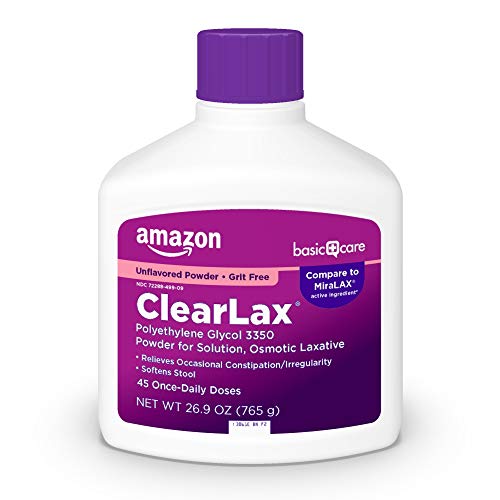
Amazon Basic Care ClearLax Polyethylene Glycol 3350 Powder, Osmotic Laxative, 1.68 lb
by Amazon Basic Care
Chemically identical to MiraLAX with the same 17g PEG 3350 dose, ClearLax delivers the same osmotic results at a meaningfully lower price.
Pros
- Identical active ingredient and dosage as MiraLAX at roughly $9 less per bottle
- Completely flavorless — mixes invisibly into coffee, juice, or any beverage
- No cramping, no diarrhea — the same gentle osmotic experience as the name brand
- Amazon's Choice with nearly 40,000 verified reviews confirming consistent effectiveness
Cons
- Can be gritty if not fully dissolved — stir well and allow 30 seconds before drinking
- Generic branding may feel less reassuring despite identical pharmaceutical formulation
3. Dulcolax Stimulant Laxative Tablets — Upgrade Pick
Dulcolax occupies a different clinical role than MiraLAX — it is not a “better” laxative, it is a different tool for a different problem. When the clinical need is acute constipation requiring next-morning relief, bisacodyl’s stimulant mechanism is the appropriate choice: take at bedtime, expect results in 6–12 hours. The 5mg bisacodyl tablet activates contact receptors in the colon’s myenteric nerve plexus, triggering peristaltic contractions that accelerate transit through the lower GI tract. It is the most reliable same-night-to-next-morning laxative mechanism available OTC.
The 100-count bottle positions Dulcolax as a cost-effective option for occasional use — travel constipation, post-diet disruption, pre-colonoscopy prep (when directed by a physician), and the kind of acute relief that osmotic agents cannot provide on their timeline. The comfort-coated tablet is easy to swallow and produces no taste or odor, making it practical for use even when the user is already experiencing GI discomfort. Dulcolax is the physician-recommended brand among OTC bisacodyl products, and the data supporting its safety and efficacy at standard doses is well-established.
The honest caveat is cramping. Bisacodyl works by driving muscular contractions — and those contractions can be intense in users who are sensitive to stimulant laxatives. Roughly one-third of Dulcolax users report mild to moderate abdominal cramping. For users who have experienced significant cramping with stimulant laxatives in the past, Senokot-S (which combines a lower-intensity senna stimulant with a stool softener) is a gentler stimulant alternative. And the 7-day OTC maximum is a real clinical limit — Dulcolax is for acute situations, not chronic management, where MiraLAX or Metamucil are the appropriate choices.

Dulcolax Stimulant Laxative Tablets, Bisacodyl 5 mg, 100 Count
by Dulcolax
When you need relief by morning, Dulcolax's bisacodyl formula delivers predictable overnight results — the market-leading stimulant laxative trusted by physicians for acute constipation.
Pros
- Reliably delivers results in 6–12 hours — ideal for overnight constipation relief
- Doctor-recommended brand among OTC stimulant laxatives
- Comfort-coated tablets are easy to swallow with no taste
- Reactivates natural bowel rhythm — effective for travel and post-diet constipation
Cons
- Cramping is a real risk — roughly one-third of users report mild to moderate abdominal cramping
- Not appropriate for long-term use — 7-day OTC maximum applies
4. Metamucil 4-in-1 Psyllium Husk — Runner-Up (Best Fiber-Based)
Metamucil is the only product in this guide that functions simultaneously as a laxative, a cholesterol-lowering agent, and a blood sugar management supplement. That is not marketing language — it reflects the mechanism of psyllium husk. The soluble fiber in psyllium forms a viscous gel in the GI tract that slows glucose absorption (directly supporting blood sugar management), binds bile acids (the mechanism behind its LDL cholesterol-lowering effect, confirmed in multiple clinical trials), and adds stool volume that stimulates natural peristalsis. The FDA permits a health claim on psyllium packaging for cardiovascular risk reduction — a regulatory bar that requires substantial clinical evidence.
The GLP-1 Friendly designation on current Metamucil packaging is clinically meaningful, not a gimmick. GLP-1 receptor agonists like semaglutide (Ozempic, Wegovy) slow gastric emptying as part of their weight-management mechanism, which causes constipation in approximately 24% of users. That constipation is driven by slowed transit, not by hard or dry stool — which is why bulk-forming agents like Metamucil, which work with transit timing, are more appropriate than stool softeners, which address stool consistency. Metamucil’s combination of fiber supplementation and blood sugar support is also directly aligned with the metabolic profile of GLP-1 medication users, who are typically managing type 2 diabetes or obesity-related insulin resistance alongside their constipation.
The orange flavor is pleasant and consistently well-reviewed — more so than any competing powder laxative. The sugar-free formula uses aspartame, which is a real concern for buyers who avoid artificial sweeteners; plain psyllium alternatives like Kirkland Psyllium Fiber or Konsyl Daily Psyllium offer the identical fiber type without aspartame at a lower price per dose. But Metamucil’s formulation, taste, and brand recognition make it the easiest daily fiber supplement to actually take consistently — and adherence is the determining factor in fiber therapy outcomes.
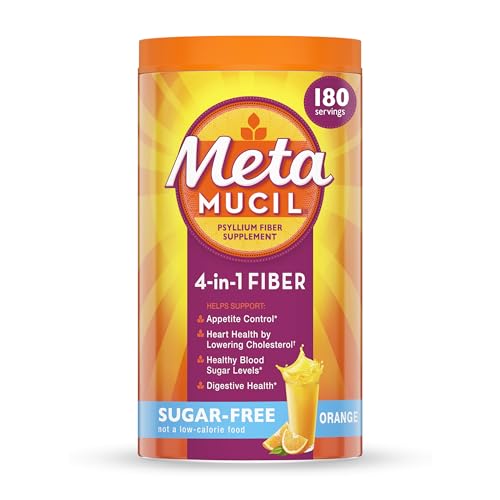
Metamucil 4-in-1 Psyllium Husk Fiber Supplement, Sugar-Free Orange, 180 Teaspoons
by Metamucil
Metamucil goes beyond simple laxative use — its psyllium husk fiber promotes regularity while simultaneously lowering cholesterol and supporting blood sugar.
Pros
- Four-in-one benefits: promotes regularity, lowers cholesterol, supports blood sugar, and aids appetite control
- Pleasant orange flavor consistently praised as easy to drink — highest taste satisfaction of any powder option
- #1 doctor-recommended fiber brand with 90+ years of clinical use
- Explicitly marketed as GLP-1 Friendly — directly addresses constipation from Ozempic and Wegovy
Cons
- Contains aspartame in the sugar-free formula — a concern for some health-conscious buyers
- More expensive than plain psyllium alternatives (Kirkland, Konsyl) with the same fiber
5. Senokot-S Dual Action — Best for Post-Surgical Recovery
Senokot-S is the standard-of-care OTC recommendation for post-surgical constipation, and its dual-action formula explains why. Opioid analgesics — the most commonly prescribed pain management agents after orthopedic, colorectal, and general surgery — cause constipation through two distinct mechanisms: they reduce intestinal smooth muscle contractions (opioid-induced constipation), and they increase colonic water absorption (producing drier, harder stools). A product that addresses only one of these mechanisms delivers incomplete relief. Senokot-S addresses both: the 8.2mg sennoside stimulant reactivates peristaltic motility, while the 50mg docusate softener improves stool consistency. That combination in a single tablet is what makes Senokot-S specifically appropriate for opioid-induced constipation rather than generic constipation management.
The senna in Senokot-S is derived from Cassia senna, a plant-based source that produces a somewhat gentler stimulant profile compared to bisacodyl (Dulcolax). Users managing post-surgical pain who are also managing opioid side effects tend to tolerate sennosides better than bisacodyl — the cramping risk is lower, and the urgency is more predictable. The 6–12 hour onset aligns with overnight use, which is the most practical protocol for post-surgical patients who need reliable morning results without disrupting sleep.
The clinical context for Senokot-S extends beyond surgery. Opioid-based pain management for chronic pain conditions — including cancer pain, chronic back pain, and post-injury pain management — carries the same constipation mechanism as post-surgical opioid use, making Senokot-S the appropriate choice for any patient managing constipation as an opioid side effect. For patients in those situations, this product is worth discussing with their prescribing physician as part of a bowel management protocol. Pair with a quality probiotic supplement to help restore the gut microbiome disrupted by surgical antibiotics and extended opioid use.

Senokot-S Dual Action 60 Tablets, Natural Vegetable Laxative Plus Stool Softener
by Senokot
The go-to post-surgical laxative — its combination of natural senna stimulant and docusate softener addresses both the motility and stool-consistency challenges common after anesthesia and opioid pain management.
Pros
- Dual-action formula combines a senna stimulant with a docusate stool softener in a single tablet
- Hospital-standard post-surgical regimen — frequently recommended after orthopedic and colorectal surgery
- Gentler than bisacodyl-based stimulants — senna's natural vegetable origin means less harsh cramping
- Works overnight predictably without the explosive urgency of stronger stimulants
Cons
- More expensive than generic Senna-S alternatives that use the same active ingredients
- Docusate dose (50mg) is lower than in standalone stool softener products (100mg)
6. Senokot Laxative Gummies — Best for Pill-Averse Users
Dysphagia — difficulty swallowing — affects an estimated 15–22% of the US adult population, with prevalence rising sharply in adults over 65. For this population, the default assumption that “take two tablets at bedtime” is a straightforward instruction does not hold. Senokot Gummies address this barrier directly: the same senna leaf extract that provides the therapeutic effect in Senokot tablets is delivered in a chewable gummy format that requires no swallowing. The clinical outcome — 6–12 hour onset stimulant laxative action — is identical.
Beyond older adults with dysphagia, Senokot Gummies have found a significant user base among GLP-1 medication users and the general adult population who prefer not to take tablets. The 8,730 Amazon reviews and 4.5-star average reflect real-world effectiveness confirmation across a diverse user population. The bedtime protocol — standard for stimulant laxatives — translates directly to the gummy format, and users consistently report that it delivers reliable next-morning results on the expected timeline.
The honest critique is cost and taste. The adult dose is 4 gummies per serving, which makes the per-dose economics significantly worse than equivalent stimulant laxative tablets. And the taste is genuinely divisive — approximately 40% of reviewers describe it as gritty, artificially sweet, or prune-flavored in a way they find unpleasant. Buyers who are sensitive to artificial flavors or who find gummy supplements unappealing may find the tablet alternatives (Senokot or Dulcolax) more palatable despite their pill-swallowing requirement. But for the right buyer — pill-averse, elderly, or simply preferring a chewable format — Senokot Gummies are the only mainstream brand-name stimulant laxative available in this dosage form.

Senokot Dietary Supplement Laxative Gummies, Mixed Berry, 60 Count
by Senokot
For the one in five Americans who struggle to swallow tablets, Senokot Gummies offer the same trusted senna formula in a chewable mixed-berry format.
Pros
- Tablet-free option for pill-averse adults, children 6+, and elderly patients with swallowing difficulty
- Effective overnight when taken at bedtime — works within the same 6–12 hour window as tablets
- Popular among GLP-1 medication users managing drug-induced constipation
- Amazon's Choice with 8,700+ verified reviews confirming real-world effectiveness
Cons
- Taste is highly divisive — roughly 40% of reviewers describe it as gritty, prune-like, or unpleasant
- Adult dose requires 4 gummies per serving, making per-dose cost significantly higher than tablets
7. Amazon Basic Care Docusate Sodium 100mg — Best Ultra-Budget / Preventive
Docusate sodium is the most widely prescribed preventive laxative in US hospitals and long-term care facilities. It is the product that physicians add to opioid prescriptions as a matter of routine — not as a treatment for established constipation, but as a prophylactic agent to prevent hard stool formation in patients whose mobility, hydration, and dietary fiber intake are compromised. Amazon Basic Care’s version delivers the standard clinical dose (100mg per softgel) at the lowest per-dose cost of any product in this guide.
The important clinical caveat — which belongs in a physician-founded review site even when it is commercially inconvenient — is that the evidence for docusate in treating established chronic constipation is poor. The Tarumi 2011 randomized controlled trial found docusate no more effective than placebo for chronic constipation management, and the AGA’s current guidelines explicitly recommend against docusate monotherapy for chronic constipation. What docusate does do well is prevent stool from becoming hard and dry in patients who are at risk — post-surgical patients, bedbound elderly patients, and people beginning opioid therapy. It is a prevention tool, not a treatment.
At the ultra-low price point of Amazon Basic Care’s formulation, docusate makes economic and clinical sense as a daily supplement for anyone in a preventive-use scenario. It is gentle to a degree that no other laxative class matches — there are no contractions, no urgency, no cramping, and no risk of the electrolyte disturbances associated with overuse of osmotic agents. Softgels are easy to swallow even for older adults managing multiple daily medications. For the buyer managing a documented prevention scenario — opioid therapy, post-surgical recovery, immobility — this is the appropriate first-line agent, and at this price, cost is not a barrier to consistent daily use.
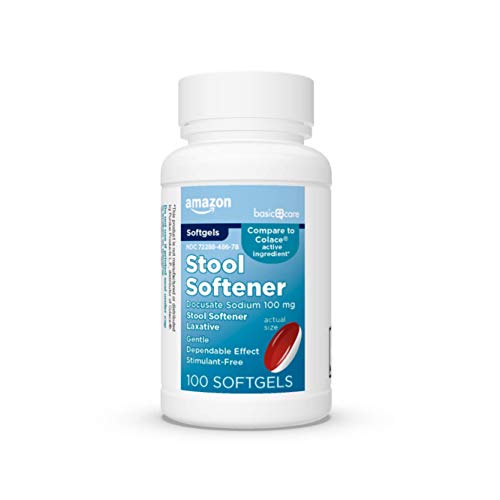
Amazon Basic Care Stool Softener Laxative, Docusate Sodium 100 mg, 100 Count
by Amazon Basic Care
At a fraction of the brand-name Colace price, Amazon Basic Care Docusate delivers the same stool-softening action — the safest, most affordable option for preventive use.
Pros
- Remarkably affordable at $0.04 per dose — identical to Colace at a fraction of the brand-name price
- Completely gentle — works by drawing water into the stool with no muscular stimulation, no cramping
- Easy to swallow softgels with no taste, no aftertaste
- Hospital-used: physicians report prescribing docusate routinely for post-surgical and high-risk patients
Cons
- Slow onset (12–72 hours) — not appropriate for acute constipation needing immediate relief
- Functions as a preventive softener — won't resolve severe or impacted constipation alone
GLP-1 Medications and Constipation: What to Use
Semaglutide (Ozempic, Wegovy) and tirzepatide (Mounjaro, Zepbound) have become among the most prescribed medications in the US, with an estimated 9 million Americans now taking these drugs. Constipation is the most commonly reported GI side effect — occurring in approximately 24% of users — but it is underserved in the OTC laxative market. None of the major competitors in this affiliate category address GLP-1-specific constipation with any clinical depth.
The mechanism matters for product selection. GLP-1 receptor agonists slow gastric emptying as part of their therapeutic effect, which reduces the natural peristaltic signals that drive bowel movements. This is different from the hard, dry stool of dehydration-related constipation — transit is simply slower because the drug is doing its job. Stool softeners alone are ineffective for this situation because softening stool does not address the transit problem. The appropriate first-line intervention is a bulk-forming agent like Metamucil, which adds stool volume and provides the physical mass needed to trigger peristalsis even at slower transit rates. If Metamucil alone is insufficient, adding MiraLAX provides osmotic water retention support without the cramping risk of stimulant agents.
Stimulant laxatives (Dulcolax, Senokot) are not the ideal first choice for GLP-1-induced constipation because they add artificial muscular stimulation on top of an already pharmacologically altered motility system — the urgency and cramping risk is higher in this context than in typical acute constipation. Discuss your laxative strategy with the physician prescribing your GLP-1 medication, as they can recommend the most appropriate bowel management protocol for your specific dose and GI profile.
How to Choose the Best Laxative
The six buyer’s guide factors in the section below cover the core decision framework. One additional clinical distinction worth addressing separately is the difference between acute and chronic constipation — a categorization that should drive product selection before any other consideration.
Acute constipation — less than one week — is typically situational (travel, dietary change, new medication, acute illness) and generally resolves with a single course of the appropriate laxative class. A stimulant laxative taken at bedtime for 1–2 nights, followed by a return to normal diet and activity, is usually sufficient. Using MiraLAX for acute constipation is ineffective simply because its 1–3 day onset means it typically does not resolve the acute episode faster than the underlying situation would naturally improve.
Chronic constipation — defined by the Rome IV criteria as fewer than three bowel movements per week for three or more months, or persistent straining and hard stool — requires a different approach. MiraLAX or Metamucil as a daily maintenance agent, with dietary fiber optimization and adequate hydration, is the evidence-based starting point. Chronic reliance on stimulant laxatives is not the appropriate long-term strategy, and daily stimulant laxative use beyond 7 days warrants a conversation with a physician to identify the underlying cause. Conditions including hypothyroidism, irritable bowel syndrome with constipation (IBS-C), Parkinson’s disease, and medication side effects (antidepressants, calcium channel blockers, antacids containing aluminum) commonly present with chronic constipation and require condition-specific management rather than OTC laxative reliance.
Buyer's Guide
Choosing the right laxative requires matching the mechanism of action to your clinical situation — the best laxative for chronic management is not the best for acute relief, and the best option for post-surgical recovery is not the best for the GLP-1 medication user.
Mechanism of Action
The four OTC laxative classes work through fundamentally different biological pathways — and choosing the wrong class for your situation can mean either ineffective relief or unnecessary side effects. Osmotic agents (PEG 3350) pull water into the colon passively and are appropriate for regular chronic constipation management. Stimulant laxatives trigger nerve-mediated peristaltic contractions and are the right choice for acute relief when 6–12 hour onset is acceptable. Bulk-forming agents add stool volume through fiber expansion and work best as a long-term dietary supplement rather than an acute remedy. Stool softeners prevent hard, dry stools through emollient action without stimulating motility — appropriate for prevention but inadequate for treatment. Understanding the mechanism lets you select the product most likely to address your specific presentation.
Onset of Action
Onset time is the most practically important specification for most buyers. If you need relief today or tonight, osmotic laxatives will not work — their 1–3 day onset is too slow for acute situations. Stimulant laxatives (6–12 hours) are the appropriate choice for next-morning relief, and taking them at bedtime is the standard protocol. Bulk-forming agents and stool softeners require 12–72 hours and are not acute-relief options. For travelers, people preparing for a medical procedure, or anyone experiencing acute discomfort, onset time should drive product selection over all other factors. For people managing chronic constipation, the slower but gentler osmotic class is the clinically preferred starting point.
Long-Term Safety
Safety profiles differ significantly across laxative classes. PEG 3350 (MiraLAX, ClearLax) has the strongest evidence base for long-term use — multiple clinical trials confirm no electrolyte disturbance, dependence, or nerve damage with extended use. Psyllium fiber (Metamucil) is similarly safe for indefinite daily use and adds cardiovascular benefits through cholesterol lowering. Stimulant laxatives carry the clearest safety limits: the OTC label specifies a 7-day maximum without medical supervision, and while the cathartic colon concern has been partially revised, habituation to stimulant signaling is a real clinical consideration. Docusate sodium's long-term safety is adequate, but its efficacy for chronic constipation is genuinely contested — the 2011 Tarumi RCT found no benefit over placebo for chronic constipation management.
Condition-Specific Fit
The right laxative depends heavily on why you are constipated. Post-surgical constipation caused by opioid pain management requires a dual-action product combining a stimulant and stool softener (like Senokot-S), because opioids simultaneously reduce motility and dry out stool. GLP-1 medication users (Ozempic, Wegovy) benefit most from bulk-forming psyllium because the underlying mechanism is slowed gastric transit rather than hard stool. Elderly patients who are at risk for drug interactions, frailty, and electrolyte imbalance are safest with PEG-based osmotic agents. Travelers experiencing short-term constipation from diet disruption respond well to a single-dose stimulant laxative. Identifying the underlying cause before selecting a product is the clinically sound approach.
Dosage Form
Laxatives are available in powders, tablets, softgels, and gummies — and the right form depends substantially on the user. Powders (MiraLAX, ClearLax, Metamucil) mix into beverages and are well-suited to people who have difficulty swallowing tablets or prefer to add a supplement to their morning drink routine. Tablets (Dulcolax, Senokot-S) are compact, portable, and accurate in dosing — the most convenient form for travel and occasional use. Softgels (docusate) are easy to swallow and essentially tasteless — the preferred form for daily preventive use in elderly patients. Gummies (Senokot) eliminate the pill-swallowing barrier entirely and are the most appropriate form for pill-averse adults, children 6 and older, and patients with dysphagia.
FSA/HSA Eligibility
Since the CARES Act of 2020, all OTC laxatives are FSA and HSA eligible without a prescription — a benefit that is widely unknown among consumers. For the roughly 70 million Americans with FSA or HSA accounts, this means a year's supply of any product in this guide can be purchased with pre-tax health dollars. Depending on your marginal tax rate, this represents a 22–37% effective discount on OTC laxative spending. If you use laxatives regularly for a chronic condition, buying through Amazon's FSA Store with your benefits card maximizes that discount automatically.
Final Verdict
After analyzing seven products across all four laxative classes, MiraLAX is the best overall OTC laxative for most buyers in 2026. Its osmotic mechanism produces reliable, cramp-free results without the side effect profile of stimulant agents, and the clinical evidence supporting PEG 3350 as first-line therapy for chronic constipation is the strongest in the category. The fact that it is the #1 physician-recommended OTC laxative by gastroenterologists is not incidental — it reflects the same evidence review that informs our recommendation here.
For budget-conscious buyers, Amazon Basic Care ClearLax is the straightforward choice: identical active ingredient, identical dose, identical mechanism, meaningfully lower price. There is no clinical trade-off. For buyers who need acute overnight relief rather than chronic management, Dulcolax is the appropriate pick — its 6–12 hour stimulant onset is the right tool when waiting three days is not an option. And for GLP-1 medication users managing drug-induced constipation, Metamucil is the most clinically appropriate choice, with its psyllium fiber addressing the slow-transit mechanism while adding the cholesterol and blood sugar benefits that align with the metabolic context of GLP-1 therapy. As always, consult your physician or gastroenterologist before beginning regular laxative use, particularly if you are managing a chronic condition, taking other medications, or have not identified the underlying cause of your constipation.
Frequently Asked Questions
What is the difference between osmotic, stimulant, bulk-forming, and stool softener laxatives?
Is MiraLAX safe for daily long-term use?
Can laxatives cause dependency or stop working over time?
Which laxative is best for constipation caused by Ozempic, Wegovy, or GLP-1 medications?
Are OTC laxatives FSA and HSA eligible?
Related Articles
About the Reviewer

Dr. David Taylor, MD, PhD
Drexel University College of Medicine (MD), Indiana University School of Medicine (PhD)
Dr. David Taylor is a licensed physician and medical researcher who founded BestRatedDocs in 2016. With an MD from Drexel University and a PhD from Indiana University School of Medicine, he combines clinical expertise with a passion for health technology to provide evidence-based product recommendations. Dr. Taylor specializes in health informatics and regularly evaluates medical devices, diagnostic equipment, and therapeutic products to help healthcare professionals and patients make informed decisions.