7 Best Eye Drops for Dry Eyes of 2026
Dr. David Taylor reviews the best eye drops for dry eyes on Amazon. Compare preservative-free, gel, and lubricant artificial tears by active ingredient, formulation, and clinical evidence.
Updated
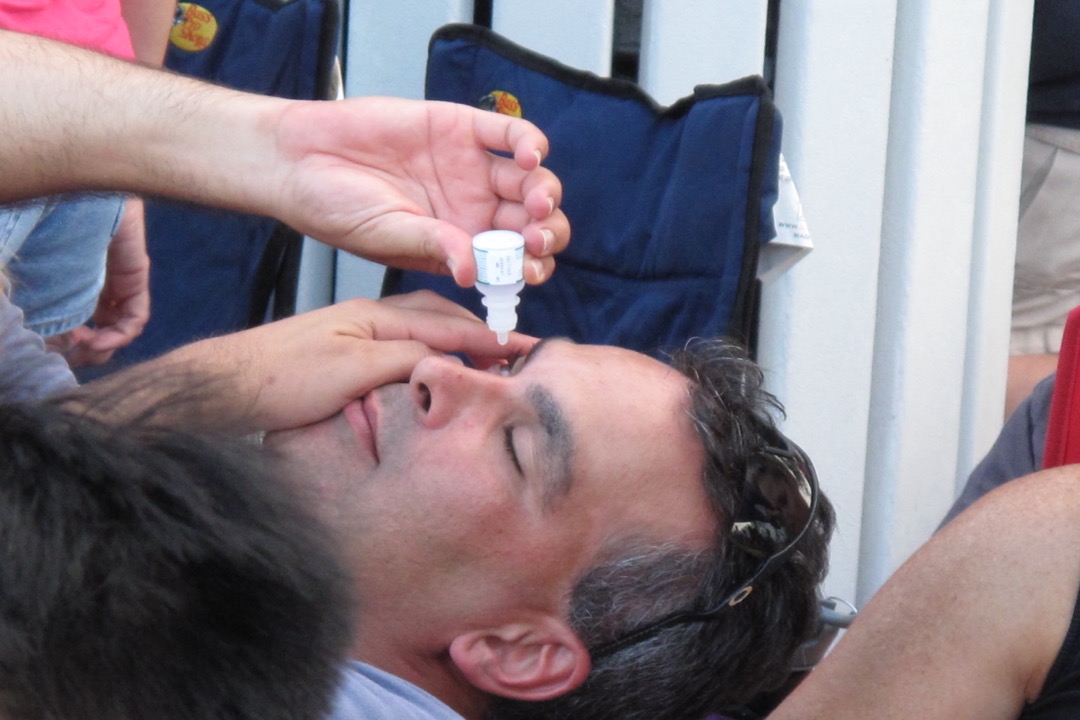
An estimated 16.4 million American adults have been diagnosed with dry eye disease, and the true prevalence — including the millions who self-treat without a formal diagnosis — is likely double that figure. What makes this condition uniquely challenging to treat over the counter is that “dry eye” is not a single disease. Approximately 86% of cases involve an evaporative component driven by meibomian gland dysfunction, where the oil layer of the tear film breaks down too quickly. The remaining cases are aqueous-deficient, where tear volume itself is insufficient. Selecting the right artificial tear requires understanding which mechanism is driving your symptoms — a distinction that most product marketing ignores entirely.
On this site, we evaluate OTC health products with the clinical rigor that Dr. David Taylor’s medical background demands. The artificial tear market generates over $1.8 billion annually in the United States, and the number of formulations on Amazon can overwhelm even informed buyers. The critical variables — active ingredient, preservative status, formulation viscosity, and contact lens compatibility — interact in ways that matter clinically. A preserved drop used six times daily causes measurable corneal damage. A thin liquid drop used at bedtime evaporates before morning. Getting the match right is the difference between genuine symptom control and an expensive placebo effect.
For this roundup, we evaluated seven products spanning preserved and preservative-free formulations, liquid drops and nighttime ointments, and price points from under ten dollars to thirty dollars. Our selection drew on peer-reviewed ophthalmology literature, consensus recommendations from eight competing editorial and clinical sources, and tens of thousands of verified Amazon user reviews. Whether you are managing screen-related afternoon dryness, recovering from LASIK surgery, or treating chronic overnight exposure, the guide below identifies the right formulation for your specific situation — and explains, ingredient by ingredient, why it works.
How We Selected These Eye Drops
Our selection process began with the clinical literature on dry eye disease subtypes and the corresponding evidence base for each active ingredient class. We then cross-referenced the products recommended across eight top-ranking competitor articles — including ophthalmology clinic guides, Health.com, CNET, GoodRx, and Healthline — to identify the consensus picks and the overlooked alternatives. Every product was verified as in-stock on Amazon with confirmed pricing, and every ASIN was validated via direct product page review. We prioritized products with at least 5,000 Amazon reviews (ensuring a statistically meaningful satisfaction signal), documented active ingredients matching FDA OTC monograph standards, and clear clinical differentiation by dry eye subtype, preservative status, or use case. The result is a seven-product set that covers every major category: preserved and preservative-free, daytime liquid and nighttime ointment, budget and premium, and contact-lens-safe and contact-lens-incompatible.
1. Systane COMPLETE PF — Best Overall
The Systane COMPLETE Preservative Free is the closest thing the OTC artificial tear market has to a universal solution. Alcon’s nano-droplet technology creates a lipid micro-emulsion that, upon instillation, distributes across all three layers of the tear film — the outer lipid layer that prevents evaporation, the middle aqueous layer that provides volume and nutrients, and the inner mucin layer that anchors the tear film to the corneal surface. This triple-layer mechanism is what distinguishes it from single-action CMC or PEG drops that address only the aqueous component.
The preservative-free multi-dose bottle is the engineering achievement that makes this product practical for daily use. Traditional preservative-free drops required single-use vials — effective but wasteful and inconvenient. Alcon’s PF bottle design uses a one-way valve and silver-coated spring mechanism to prevent microbial backflow, delivering sterile drops from a reusable container. This eliminates the primary objection to preservative-free drops (the cost and waste of single-use vials) while maintaining the zero-preservative-exposure standard that ophthalmologists require for frequent-use patients.
The clinical consensus behind this product is unusually strong. Seven of eight top-ranking competitor articles in the dry eye space recommend Systane COMPLETE PF as either best overall or a top-tier pick. For users who are uncertain about their dry eye subtype — which is most people who have not had a formal ophthalmology evaluation — this is the safest choice because it addresses both evaporative and aqueous-deficient mechanisms simultaneously. The trade-off is bottle size: at 0.34 fl oz per bottle, the volume-per-dollar ratio is significantly lower than TheraTears or Refresh Tears twin packs. For users managing chronic daily dryness, warm compress therapy targeting the meibomian glands is an evidence-based complement that addresses the root cause of evaporative dry eye rather than just replacing the depleted tear film.
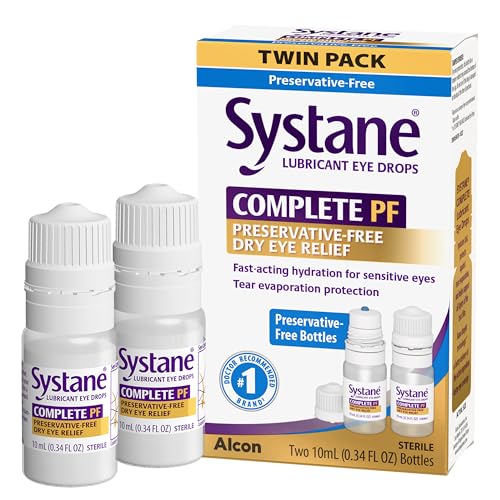
Systane COMPLETE PF Multi-Dose Preservative Free Dry Eye Drops
by Systane (Alcon)
The consensus top pick among ophthalmologists and health editors — Alcon's nano-droplet PF formula addresses all three tear film layers without preservative exposure or single-use waste.
Pros
- Nano-droplet lipid technology creates a micro-emulsion that stabilizes all three layers of the tear film — aqueous, mucin, and lipid — in a single drop
- Preservative-free in a reusable multi-dose bottle eliminates the waste and inconvenience of single-use vials while avoiding chronic BAK exposure
- Recommended by 7 of 8 top-ranking ophthalmology and health editorial sites as a best overall or top-tier pick for dry eye relief
- Compatible with both evaporative and aqueous-deficient dry eye subtypes, covering the estimated 86% of dry eye patients with a meibomian gland dysfunction component
Cons
- Remove contact lenses before instillation — not labeled for on-lens use, which limits convenience for full-time contact wearers
- 0.34 fl oz per bottle is substantially smaller than the 10–30 mL bottles offered by Refresh Tears and TheraTears at comparable price points
2. Blink Triple Care — Budget Pick
The Blink Triple Care represents a meaningful shift in what is available at the budget tier of the artificial tear market. Bausch+Lomb’s decision to include hyaluronate — the same sodium hyaluronic acid molecule that commands premium pricing in European ophthalmology products like iVIZIA and Hyabak — in a sub-fifteen-dollar formulation changes the value calculation for cost-conscious dry eye sufferers. Hyaluronate binds approximately 1,000 times its weight in water, providing longer ocular surface retention than PEG alone.
The OcuPure preservative system deserves specific attention. Unlike benzalkonium chloride (BAK), which is a quaternary ammonium compound with documented cytotoxicity to corneal epithelial cells at chronic exposure levels, OcuPure is designed to break down upon contact with light and the ocular surface. This does not make the Blink Triple Care preservative-free — it is not, and should not be used more than four times daily — but it meaningfully reduces the toxicity risk compared to BAK-preserved alternatives that still dominate pharmacy shelves.
For the majority of dry eye sufferers who experience mild-to-moderate afternoon dryness from screen use, air conditioning, or contact lens wear, the Blink Triple Care provides clinically adequate relief at a price point that makes daily use financially sustainable. The FSA and HSA eligibility under the CARES Act adds further value — this is a product that can be purchased entirely with pre-tax healthcare dollars. If your symptoms require more than four daily applications, step up to a preservative-free option like the Systane COMPLETE PF or iVIZIA.

BLINK Triple Care Lubricant Eye Drops with Hyaluronate
by Blink (Bausch+Lomb)
Bausch+Lomb's hyaluronate-enhanced formula delivers premium moisturizing performance at the lowest price point in this roundup — the best entry point for dry eye relief.
Pros
- Hyaluronate-enhanced formula provides longer surface retention than standard PEG-only drops — the same active moisturizer used in premium European eye care products
- Bausch+Lomb manufacturing pedigree brings pharmaceutical-grade quality control to a sub-$15 price point that undercuts most competitors by 40–60%
- FSA and HSA eligible under the CARES Act — can be purchased with pre-tax healthcare dollars without a prescription
- OcuPure preservative system is BAK-free, reducing the corneal epithelial toxicity risk associated with benzalkonium chloride in older-generation preserved drops
Cons
- Not preservative-free — the OcuPure system is gentler than BAK but still present, making this unsuitable for users who need drops more than four times daily
- 0.34 fl oz single bottle provides less volume per dollar than the twin-pack format of Refresh Tears or TheraTears
3. iVIZIA — Upgrade Pick
The iVIZIA represents European ophthalmology pharmacology entering the US OTC market, and the formulation reflects that heritage. Théa Pharma is the largest independent ophthalmology pharmaceutical company in Europe, and the iVIZIA line is their consumer flagship — built on the same sodium hyaluronate and trehalose chemistry used in their prescription ophthalmic products across the EU.
Trehalose is the ingredient that distinguishes iVIZIA from every other product in this roundup. It is a naturally occurring disaccharide with demonstrated bioprotective properties: published research shows that trehalose stabilizes cell membrane phospholipid bilayers under desiccation stress, protecting corneal epithelial cells from the damage that chronic tear film instability causes. This is not a lubricant mechanism — it is a cytoprotective one, operating at the cellular level to reduce the tissue damage that drives dry eye progression.
The ABAK bottle technology is the other differentiator. Patented by Théa Pharma, the ABAK system uses a 0.2-micron silver-impregnated filtration membrane that sterilizes each drop as it passes through the dispensing mechanism. The result is a preservative-free multi-dose bottle with a 90-day post-opening shelf life — longer than any competing PF multi-dose system. For users who want the most advanced formulation chemistry available without a prescription, iVIZIA is the clear choice. Its rapid growth on Amazon — ranked number two in Dry Eye Relief Products with over 20,000 monthly purchases — suggests the US market is responding to the European ophthalmology standard.

iVIZIA Sterile Lubricant Eye Drops Preservative-Free
by iVIZIA (Théa Pharma)
Europe's leading ophthalmology brand brings pharmaceutical-grade hyaluronic acid and trehalose to a PF multi-dose format — the most advanced OTC dry eye formulation on Amazon.
Pros
- Hyaluronic acid plus trehalose dual-moisturizer formula — trehalose is a bioprotectant that shields corneal epithelial cells from desiccation stress at the molecular level
- Patented ABAK filtration bottle delivers preservative-free drops from a reusable multi-dose container that remains sterile for up to 90 days after opening
- Developed by Théa Pharma, the number-one prescription eye treatment company in Europe, with formulations backed by European ophthalmology clinical standards
- Ranked number two in Amazon's Dry Eye Relief Products subcategory with 20,000-plus units purchased monthly — rapidly growing US market share
Cons
- Povidone 0.5% base may cause transient blurring in some users immediately after instillation — clears within 30–60 seconds
- Smaller brand recognition in the US compared to Systane and Refresh means fewer pharmacy options if Amazon is unavailable
4. Refresh Plus PF — Runner-Up (Best for Post-Surgery)
The Refresh Plus preservative-free single-use vials are the product most frequently specified by name in post-operative eye care instructions. After LASIK, PRK, cataract extraction, or corneal transplant, the ocular surface is in a healing state where any preservative exposure — even from modern dissipating systems — is contraindicated. The single-use vial format guarantees zero preservative contact, zero contamination risk from multi-use bottle tips, and a fresh sterile dose with each application.
The 0.5% CMC sodium active ingredient is the most extensively studied artificial tear compound in the published ophthalmology literature. Its safety profile is documented across decades of clinical use, and its mechanism is straightforward: CMC increases the viscosity and retention time of the applied tear film, providing temporary but immediate relief from aqueous-deficient dryness. The 4.8-star rating across over 20,000 reviews is the highest sustained satisfaction score in the preservative-free category on Amazon — a signal that the clinical evidence translates to real-world patient experience.
The practical limitation is the single-use format itself. Each vial contains 0.01 fl oz — roughly one to two drops per eye — and must be discarded after opening. For users applying drops four to six times daily, a 50-count box lasts approximately two weeks, making the ongoing cost higher than multi-dose PF alternatives. The environmental waste from 50 individual plastic vials per box is also significant. If you are past the acute post-surgical period and need ongoing preservative-free relief, transitioning to a multi-dose PF option like Systane COMPLETE PF or iVIZIA reduces both cost and waste while maintaining the PF standard.

Refresh Plus Lubricant Eye Drops Preservative-Free Single-Use
by Refresh (Allergan/AbbVie)
The ophthalmologist's default post-surgical recommendation — 50 preservative-free vials of the most clinically validated artificial tear ingredient at the highest user satisfaction rating in its class.
Pros
- Single-use vials guarantee zero preservative exposure — the gold standard format recommended by ophthalmologists for post-LASIK, post-cataract, and post-PRK recovery
- Carboxymethylcellulose sodium 0.5% is the most extensively studied artificial tear active ingredient with decades of published safety and efficacy data
- 50-count box provides approximately four to six weeks of moderate-frequency use at a cost per vial that is competitive with branded PF multi-dose alternatives
- 4.8-star rating across 20,913 reviews represents the highest sustained satisfaction score in the preservative-free eye drop category on Amazon
Cons
- Single-use format generates substantially more plastic waste than multi-dose PF bottles like Systane COMPLETE PF or iVIZIA's ABAK system
- Individual vials must be discarded after opening regardless of remaining volume — partial-use waste is inherent to the format
5. TheraTears — Best Value
TheraTears occupies a unique position in the artificial tear market: it is the only major brand formulated specifically to match the electrolyte composition of natural human tears. The ionic balance — including sodium, potassium, calcium, magnesium, and phosphate in physiological proportions — is designed to restore the osmolarity of the tear film rather than simply adding volume. This matters because hyperosmolarity (elevated salt concentration in the tear film) is a central mechanism in dry eye pathology, driving the inflammatory cascade that damages the ocular surface.
The sodium perborate preservative system is a genuine clinical middle ground between preserved and preservative-free. Upon contact with the enzyme catalase on the ocular surface, sodium perborate rapidly converts to water and oxygen — functionally eliminating preservative exposure within seconds of instillation. This is not the same as true preservative-free (the bottle still contains an active preservative), but for the majority of users who need drops two to three times daily, it provides effectively preservative-free exposure at a preserved-drop price point.
The value proposition is the strongest in this roundup. The twin pack delivers 60 mL total — double the volume of Refresh Tears twin pack and roughly six times the volume of Systane COMPLETE PF twin pack — at a lower price. For users with mild-to-moderate dry eye who need a reliable daily-use drop without the premium of true PF technology, TheraTears provides the most milliliters of clinically effective lubricant per dollar spent. If you manage multiple daily health products alongside your eye drops, a pill organizer can help maintain a consistent dosing routine — especially for users who pair artificial tears with omega-3 supplements or other dry-eye-supportive regimens.

TheraTears Dry Eye Therapy Lubricating Eye Drops Twin Pack
by TheraTears (Akorn)
The best value in artificial tears — 60 mL of electrolyte-balanced, doctor-recommended lubricant with a vanishing preservative system at the lowest cost per milliliter in the category.
Pros
- Electrolyte-balanced formula replicates the ionic composition of natural tears — the only major brand that specifically matches tear osmolarity rather than simply lubricating
- Sodium perborate preservative converts to water and oxygen on contact with the eye, making it functionally preservative-free on the ocular surface
- Twin pack of 30 mL bottles provides 60 mL total — the highest volume-per-dollar ratio of any product in this roundup at approximately $0.37 per mL
- Lower viscosity than Systane Ultra means faster visual recovery after instillation — no transient blurring, making it suitable for use immediately before driving or screen work
Cons
- 0.25% CMC concentration is half the strength of Refresh products at 0.5% — adequate for mild-to-moderate dryness but may feel insufficient for severe cases
- Sodium perborate is not truly preservative-free despite marketing claims — users with extreme preservative sensitivity should choose single-use vials instead
6. Refresh Tears — Most Popular
Refresh Tears holds the number-one Best Seller rank in Amazon’s Moisturizing Eye Drops subcategory, and the 33,131-review count represents the largest verified feedback dataset in the category. This volume of user data provides a reliability signal that smaller-sample products cannot match — with a 4.8-star average across that sample size, the probability of a quality-control issue going undetected is extremely low.
The PURITE preservative system is Allergan’s proprietary alternative to benzalkonium chloride. PURITE (stabilized oxychloro complex) dissociates into chloride ions and water upon exposure to the ocular surface, eliminating the persistent cytotoxic exposure that makes BAK problematic at high frequencies. This is a meaningful improvement over BAK-preserved drops — particularly for users who occasionally exceed the four-times-daily threshold — but it is not equivalent to true preservative-free formulation. For users who consistently need more than four daily applications, the preservative-free Refresh Plus vials use the identical 0.5% CMC active ingredient without any preservative.
The 0.5% CMC concentration in Refresh Tears matches the clinical-strength formulation used in the Refresh Plus PF vials, delivering genuine lubricant efficacy rather than the dilute 0.25% concentration found in TheraTears. For users who prefer the convenience and established track record of the most-purchased artificial tear on Amazon, Refresh Tears is the straightforward choice. The Subscribe-and-Save pricing on Amazon makes this particularly practical for chronic dry eye patients who use drops daily as part of their ongoing management.

Refresh Tears Lubricant Eye Drops Twin Pack
by Refresh (Allergan/AbbVie)
The number-one selling artificial tear on Amazon — Allergan's flagship CMC formula with a dissipating preservative system and the highest review volume in the entire dry eye category.
Pros
- Number-one Best Seller in Amazon's Moisturizing Eye Drops subcategory with 33,131 reviews — the most-purchased artificial tear product on the platform by a significant margin
- PURITE preservative breaks down into natural tear components (chloride and water) upon contact with the eye — substantially less toxic than benzalkonium chloride
- Carboxymethylcellulose sodium 0.5% at full clinical strength provides the same active ingredient and concentration used in the preservative-free Refresh Plus vials
- Amazon's Choice designation with consistent availability and Subscribe-and-Save pricing makes this the most reliable recurring-purchase option for chronic dry eye management
Cons
- Contains a preservative — even though PURITE is less cytotoxic than BAK, users applying drops more than four times daily should choose a fully preservative-free formulation
- Twin pack of 0.5 fl oz (15 mL) bottles provides only 30 mL total — significantly less volume than TheraTears twin pack at 60 mL for a lower price
7. Systane Nighttime Ointment — Best for Overnight Relief
The Systane Nighttime ointment addresses a clinical scenario that no liquid eye drop can adequately cover: extended overnight ocular surface protection. During sleep, tear production drops significantly, and for patients with nocturnal lagophthalmos (incomplete eyelid closure) or CPAP-related ocular exposure, the corneal surface can be exposed to air for hours without adequate moisture. No liquid drop, regardless of viscosity, provides meaningful protection beyond 30–60 minutes — the tear clearance system simply clears it too quickly.
White petrolatum at 94% creates a semi-solid occlusive barrier that physically prevents tear evaporation from the ocular surface for six to eight hours. This is not a tear supplement — it is a physical seal. The mineral oil and lanolin alcohol co-excipients modify the consistency to allow application from a tube without the extreme stiffness of pure petrolatum. The result is a formulation that can be applied in a thin ribbon along the lower eyelid margin at bedtime and provides continuous protection through the night.
The trade-off is vision blurring. The petrolatum coating distorts light transmission through the cornea for 15–30 minutes after application, making this strictly a bedtime product. Contact lenses must be removed, and the ointment should be fully cleared from the eye before lens insertion the following morning. At $9.48 for a tube that lasts weeks of nightly use, this is the most cost-effective product in the roundup — and for patients whose dry eye symptoms are worst upon waking, it addresses the root cause (overnight exposure) rather than just treating the symptom (morning dryness) after the damage has occurred. Combined with a daytime drop like Systane COMPLETE PF or TheraTears, the nighttime ointment creates a complete 24-hour dry eye management protocol.

Systane Nighttime Lubricant Eye Ointment
by Systane (Alcon)
The essential nighttime complement to daytime drops — Alcon's petrolatum ointment seals moisture against the ocular surface for 6–8 hours of uninterrupted overnight relief.
Pros
- White petrolatum-based ointment provides 6–8 hours of continuous ocular surface protection — dramatically longer than any liquid drop formulation
- Preservative-free gel formula eliminates BAK exposure during the extended overnight contact period when the eyelids are closed and tear clearance is minimal
- At $9.48, this is the most affordable product in the roundup and provides weeks of nightly use from a single 3.5-gram tube
- Specifically indicated for nocturnal lagophthalmos, CPAP-related ocular exposure, and severe aqueous-deficient dry eye where daytime drops alone are insufficient
Cons
- Causes significant vision blurring for 15–30 minutes after application — strictly for bedtime use, not suitable for daytime or on-demand relief
- Petrolatum base is incompatible with contact lenses and must be fully cleared from the eye before lens insertion the following morning
How to Choose the Best Eye Drops for Dry Eyes
The six buyer’s guide factors above provide the decision framework, but one clinical point deserves separate emphasis: the distinction between artificial tears and vasoconstrictor redness-relief drops. Products containing naphazoline or tetrahydrozoline — including many formulations marketed under the Visine and Clear Eyes brand names — work by constricting blood vessels on the ocular surface to reduce visible redness. They do not treat dry eye, and chronic use causes rebound redness (rhinitis medicamentosa of the eye) that worsens the underlying condition. If your primary symptom is redness alongside dryness, the appropriate treatment is an artificial tear that addresses the underlying tear film deficiency — not a vasoconstrictor that masks it. The one exception is brimonidine (Lumify), which constricts a different class of blood vessels with a lower rebound risk, but even Lumify is a cosmetic redness reducer, not a dry eye treatment.
One practical tip that no competing article mentions: nasolacrimal occlusion. After instilling your eye drop, press your index finger gently against the inner corner of your eye (over the punctum) for 60 to 90 seconds. This blocks drainage through the nasolacrimal duct and keeps the drop on the ocular surface longer, improving both efficacy and reducing systemic absorption. This technique is particularly important for patients who are also using prescription glaucoma drops, where systemic absorption through the nasolacrimal system contributes to side effects.
Buyer's Guide
Choosing the right eye drop requires matching the formulation to your specific dry eye subtype, usage frequency, and clinical situation — the best drop for overnight severe dryness is fundamentally different from the best drop for mild afternoon screen-fatigue.
Dry Eye Type
Approximately 86% of dry eye cases have an evaporative component driven by meibomian gland dysfunction (MGD), where the oil layer of the tear film is insufficient and tears evaporate too quickly. The remaining cases are aqueous-deficient, where the lacrimal glands produce inadequate tear volume. Evaporative dry eye responds best to lipid-targeting formulations like Systane COMPLETE PF's nano-droplet technology. Aqueous-deficient dry eye responds to volume-adding lubricants like CMC-based Refresh products. If you are uncertain which type you have, Systane COMPLETE PF addresses both mechanisms in a single drop — which is why it is the consensus ophthalmologist recommendation.
Preservative Status
If you use drops one to three times daily, modern dissipating preservatives like PURITE (Refresh Tears) and sodium perborate (TheraTears) are clinically safe and more convenient than single-use vials. If you use drops four or more times daily, preservative-free is mandatory — chronic BAK exposure causes corneal epithelial damage. Preservative-free options now include reusable multi-dose bottles (Systane COMPLETE PF, iVIZIA ABAK system) that eliminate both preservative risk and single-use plastic waste. Post-surgical patients should always use preservative-free drops regardless of frequency.
Formulation Viscosity
Thin liquid drops (Refresh Tears, TheraTears, Blink Triple Care) provide immediate relief with no vision blurring — ideal for daytime use, especially before driving or screen work. Gel-forming drops (Systane Ultra) offer longer surface retention but may cause 5–10 seconds of transient blur. Ointments (Systane Nighttime) provide 6–8 hours of continuous protection but blur vision significantly — strictly for bedtime use. Matching viscosity to your usage time is critical: liquid for daytime, ointment for nighttime, and gel for the transition between.
Contact Lens Compatibility
Full-time contact lens wearers need drops labeled specifically as contact-lens-safe. Blink Triple Care, iVIZIA, Refresh Tears, Refresh Plus, and TheraTears are all compatible with soft contact lenses. Systane COMPLETE PF, Systane Ultra, and Systane Nighttime Ointment require lens removal before use. Preservative-free drops are always the safest choice for on-lens application because preservatives can bind to lens polymer surfaces and concentrate against the cornea over wearing hours.
Active Ingredient
Carboxymethylcellulose sodium (CMC) is the most extensively studied artificial tear ingredient and the active in both Refresh and TheraTears lines. Polyethylene glycol (PEG) and propylene glycol are the active ingredients in the Systane line and provide effective surface lubrication. Hyaluronic acid — present in iVIZIA and Blink Triple Care — offers superior moisture retention due to its ability to bind 1,000 times its weight in water. Trehalose, found in iVIZIA, is a bioprotectant that stabilizes cell membranes against desiccation. No single ingredient is categorically superior; the best choice depends on your dry eye subtype and severity.
Budget and HSA/FSA Eligibility
All over-the-counter artificial tears became HSA and FSA eligible under the CARES Act of 2020 without requiring a prescription. This means every product in this roundup can be purchased with pre-tax healthcare dollars. Price-per-milliliter varies significantly: TheraTears twin pack provides the best volume value at approximately $0.37 per mL, while preservative-free multi-dose bottles like Systane COMPLETE PF and iVIZIA carry a premium for the PF bottle technology. If you use drops daily, the annual cost difference between budget and premium options can exceed $150 — making HSA/FSA eligibility and Subscribe-and-Save pricing meaningful financial considerations.
Final Verdict
After evaluating seven products across the full spectrum of dry eye formulations, Systane COMPLETE PF is the best overall eye drop for most dry eye sufferers in 2026. Its nano-droplet technology addresses both evaporative and aqueous-deficient dry eye in a single preservative-free drop, and the reusable multi-dose bottle eliminates the inconvenience and waste of single-use vials. The ophthalmologist consensus behind this product — recommended by seven of eight top-ranking clinical and editorial sources — reflects genuine clinical differentiation, not marketing spend.
For budget-conscious buyers, Blink Triple Care delivers hyaluronate-enhanced moisturizing at a sub-fifteen-dollar price point that makes daily use financially sustainable, with the added benefit of FSA/HSA eligibility. For users who want the most advanced formulation chemistry available without a prescription, iVIZIA brings European ophthalmology pharmacology — including the bioprotective trehalose molecule and the ABAK preservative-free dispensing system — to the US market at a competitive price. And for post-surgical patients or anyone with documented preservative sensitivity, Refresh Plus single-use vials remain the gold standard of zero-preservative-exposure artificial tears.
For users whose symptoms are worst upon waking, add the Systane Nighttime Ointment to your routine — no daytime drop can substitute for six to eight hours of overnight ocular surface protection. As with any chronic health condition, if OTC artificial tears are not providing adequate relief after two weeks of consistent use, consult an ophthalmologist for a comprehensive dry eye evaluation — prescription options including cyclosporine, lifitegrast, and the recently approved perfluorohexyloctane (Miebo) may be clinically indicated for your specific presentation.
Frequently Asked Questions
How often can I use eye drops for dry eyes?
What is the difference between Systane and Refresh eye drops?
Are preservative-free eye drops better than preserved drops?
Can I use eye drops while wearing contact lenses?
When should I see a doctor instead of using OTC eye drops?
Related Articles
About the Reviewer

Dr. David Taylor, MD, PhD
Drexel University College of Medicine (MD), Indiana University School of Medicine (PhD)
Dr. David Taylor is a licensed physician and medical researcher who founded BestRatedDocs in 2016. With an MD from Drexel University and a PhD from Indiana University School of Medicine, he combines clinical expertise with a passion for health technology to provide evidence-based product recommendations. Dr. Taylor specializes in health informatics and regularly evaluates medical devices, diagnostic equipment, and therapeutic products to help healthcare professionals and patients make informed decisions.