7 Best Calcium Supplements of 2026
Dr. David Taylor reviews the best calcium supplements of 2026. Compare calcium carbonate vs citrate, tablet vs gummy vs liquid, and USP vs non-certified options for bone health.
Updated

Calcium is the most abundant mineral in the human body — approximately 99% of it resides in bone and teeth, where it provides the structural rigidity that prevents fractures under mechanical load. Yet despite its ubiquity, calcium deficiency is remarkably common. National Health and Nutrition Examination Survey data consistently show that over 40% of American adults do not meet the recommended daily intake from diet alone, with the gap widest among postmenopausal women, vegans, and adults with lactose intolerance who avoid dairy. As a physician, I encounter the downstream consequences of chronic calcium insufficiency regularly: low bone mineral density on DEXA scans, stress fractures in otherwise healthy patients, and osteoporosis diagnoses that could have been mitigated with earlier intervention.
Choosing the right calcium supplement is not as simple as grabbing a bottle off the shelf. The form of calcium determines when and how you can take it. The co-nutrients — particularly vitamin D3 and K2 — determine how efficiently your body actually deposits that calcium into bone rather than soft tissue. Drug interactions with common medications like thyroid hormones, antibiotics, and proton pump inhibitors can render a calcium supplement ineffective or create clinical problems if timing is not managed. This guide evaluates seven calcium supplements across the full spectrum of forms, delivery methods, and price points. Whether you are supplementing preventively, managing diagnosed osteopenia, or simply closing the dietary gap that most Americans have, the products below represent the most clinically sound options available in 2026. If you are also working on broader nutritional coverage, our multivitamins for women guide addresses the full-spectrum approach, and our collagen supplements review covers another key structural protein for joint and bone health.
After evaluating over 30 calcium supplement formulations against clinical absorption data, third-party certification status, consumer reviews, and cost efficiency, here are our top seven picks. The comparison table below highlights the spec dimensions that matter most for your selection.
How We Chose These Calcium Supplements
Our evaluation process prioritized three clinical dimensions above all else: bioavailability of the calcium form, presence and adequacy of co-nutrients for absorption, and independent quality verification. We cross-referenced peer-reviewed absorption studies on calcium carbonate versus citrate versus phosphate forms, matched each product’s vitamin D3 content against current Endocrine Society guidelines, and verified third-party certification claims directly through the USP Verified Products database. Consumer data from Amazon — including review volume, rating distributions, and the specific content of negative reviews regarding GI tolerability and tablet size — provided real-world signal on daily usability. We deliberately included five distinct delivery formats to accommodate the full range of patient needs, from standard tablets through liquid formulations for patients who cannot swallow pills.
Nature Made Calcium 600 mg with Vitamin D3, 220 Tablets
Nature Made is the only supplement brand that consistently appears on pharmacist recommendation lists year after year — and the reason is the USP Verified mark that appears on every bottle. USP verification is not a self-reported claim. It requires an independent laboratory to physically test the finished product for identity, potency, purity (including heavy metals and microbial contaminants), and dissolution. Many supplement brands fail these tests when independently evaluated; Nature Made passes them routinely. For a mineral supplement that patients will take daily for years to decades, this level of quality assurance is the baseline that should be expected.
The 600 mg calcium carbonate dose with 400 IU vitamin D3 is a clinically sound maintenance combination. Carbonate delivers the highest concentration of elemental calcium per gram of any supplemental form, and the inclusion of D3 — while modest at 400 IU — ensures that the active calcium transport pathway in the duodenum is at least partially supported. At 220 tablets per bottle and a per-tablet cost of approximately eight cents, this product stretches over seven months of daily use, making it the most cost-effective USP-verified calcium available.
The primary limitation is the carbonate form itself. Patients with reduced gastric acid — whether from age-related atrophic gastritis, chronic PPI use, or post-bariatric anatomy — will absorb calcium carbonate less efficiently. These patients should consider the Citracal Maximum Plus (our upgrade pick) instead. For everyone else taking their calcium with a meal as directed, this is the straightforward recommendation.

Nature Made Calcium 600 mg with Vitamin D3, 220 Tablets
by Nature Made
The gold-standard calcium supplement backed by USP verification and pharmacist trust — reliable bone support at an unbeatable per-serving cost.
Pros
- USP Verified — independent laboratory confirmation of purity, potency, and dissolution for every batch
- Exceptional value at approximately eight cents per tablet across a 220-count supply lasting over seven months
- Clean formula with no artificial flavors, colors, or preservatives and verified gluten-free status
- Includes 400 IU vitamin D3 per tablet to support intestinal calcium absorption
Cons
- Calcium carbonate requires co-ingestion with food for adequate gastric acid-dependent dissolution and absorption
- Large tablet size presents swallowing difficulty for some patients, particularly the elderly
- Only 400 IU D3 per tablet — patients with documented vitamin D deficiency may need supplemental D3
21st Century Calcium 600 mg Supplement, 400 Tablets
At 400 tablets for under twelve dollars, the 21st Century Calcium delivers a full thirteen months of daily supplementation at approximately three cents per serving. For patients on fixed incomes — a demographic that overlaps significantly with those most in need of calcium supplementation — this cost structure removes financial barriers entirely. The formulation is deliberately minimalist: calcium carbonate at 600 mg with no added vitamins, no fillers beyond basic binders, and certifications covering non-GMO, gluten-free, and vegan status.
The absence of vitamin D3 is both a limitation and a feature, depending on your situation. If your physician has prescribed a specific D3 dose — 2,000 or 5,000 IU daily is increasingly common for patients with documented deficiency — then a calcium-only supplement avoids the stacking problem where multiple products each contribute small, uncontrolled amounts of D3. You maintain precise control over your D3 intake while getting calcium from the most affordable source available.
The trade-offs are real: no third-party certification beyond the manufacturer’s internal quality controls, and tablets that are as large and difficult to swallow as any carbonate product on the market. For healthy adults with normal digestion who are already managing their D3 supplementation independently and who can tolerate large tablets, this is the most rational budget choice. Pair it with proper timing — always with food, separated by at least two hours from iron supplements or thyroid medication — and it will deliver equivalent calcium to products costing five times as much.
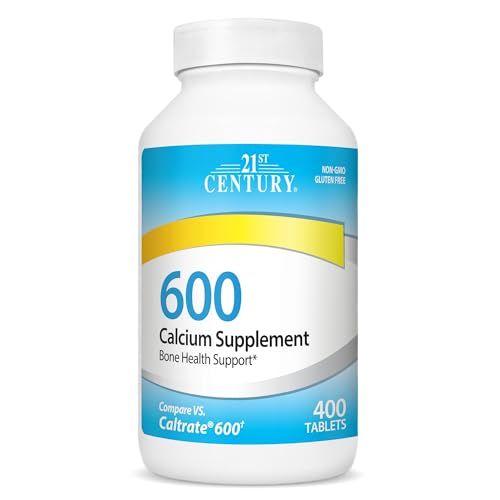
21st Century Calcium 600 mg Supplement, 400 Tablets
by 21st Century
A full year of calcium supplementation for under twelve dollars — the most economical option for patients who already supplement vitamin D3 separately.
Pros
- Lowest cost per serving of any calcium supplement in our lineup at approximately three cents per tablet
- 400-tablet bottle provides over a full year of daily supplementation in a single purchase
- Vegan-friendly, non-GMO, and gluten-free — suitable for patients with multiple dietary restrictions
- No vitamin D3 included, which is advantageous for patients who supplement D3 separately at higher doses
Cons
- Very large tablets may be difficult to swallow for elderly patients or those with dysphagia
- No vitamin D3 included — patients must ensure adequate D3 from another source for proper calcium absorption
- No USP or NSF third-party certification — quality assurance relies on internal manufacturing controls only
Citracal Maximum Plus Calcium Citrate with Vitamin D3, Zinc, and Minerals, 180 Caplets
Citracal Maximum Plus exists to solve a specific clinical problem: reliable calcium absorption in patients whose gastric physiology does not support carbonate dissolution. Calcium citrate does not require stomach acid to dissolve — it is already in a soluble salt form that is absorbed effectively on an empty stomach, with food, or in any gastric acid environment. This makes it the definitive choice for patients over 50 with declining acid production, long-term PPI users (omeprazole, pantoprazole, esomeprazole), H2 blocker users, and post-bariatric surgery patients whose altered anatomy reduces gastric acid exposure.
Beyond the citrate advantage, the mineral formula here is genuinely comprehensive. Zinc supports osteoblast activity and immune function. Copper and manganese are cofactors for enzymes involved in collagen cross-linking within the bone matrix. Boron, while less studied, has consistent observational associations with improved bone mineral density. Vitamin D3 completes the absorption picture. No other product in our lineup delivers this breadth of bone-support co-nutrients in a single serving.
The caplet size and two-per-serving requirement are the practical barriers. Each serving requires swallowing two large coated caplets, which some patients find difficult. The solution is to split the dose: one caplet in the morning and one in the evening, which actually improves total calcium absorption by avoiding the 500 mg saturation threshold for active duodenal transport. If you are also supplementing B12 or electrolytes, the split-dose approach integrates well into a twice-daily supplement routine.

Citracal Maximum Plus Calcium Citrate with Vitamin D3, Zinc, and Minerals, 180 Caplets
by Citracal
The physician-preferred calcium citrate with a comprehensive bone-support mineral complex — ideal for patients on acid reducers or those who need empty-stomach dosing flexibility.
Pros
- Calcium citrate absorbs effectively on an empty stomach — does not require food or gastric acid for dissolution
- Comprehensive mineral formula includes zinc, copper, manganese, and boron alongside calcium and D3
- Number one doctor and pharmacist recommended calcium citrate brand in the United States
- Flexible dosing with individually dosed caplets allows patients to split intake across meals
Cons
- Large caplets with a two-per-serving requirement may challenge patients with pill-swallowing difficulties
- Contains polyethylene glycol as an inactive ingredient, which some patients prefer to avoid
- Higher cost per serving compared to basic calcium carbonate options
Caltrate 600 Plus D3 Calcium and Vitamin D Supplement Tablets, 200 Count
Caltrate has been the number one doctor-recommended calcium brand for over two decades, and the 600 Plus D3 formulation represents their core product. The distinguishing feature is the 800 IU vitamin D3 per tablet — double the amount in the Nature Made Best Overall pick and the highest D3 content of any single-serving calcium product in our list. For patients over 50, whose vitamin D requirements increase and whose skin synthesis of vitamin D from sunlight decreases, this higher D3 dose is clinically meaningful.
The 800 IU figure matters because the Endocrine Society’s 2024 guidelines suggest that many adults — particularly those over 50, those with limited sun exposure, and those with darker skin pigmentation — need 1,000 to 2,000 IU of D3 daily to maintain serum 25-hydroxyvitamin D above 30 ng/mL. A single Caltrate tablet provides 800 IU, which either meets or substantially contributes toward that target depending on the patient’s other dietary sources.
The calcium carbonate base carries the same gastric acid dependency as the Nature Made and 21st Century products. Patients on chronic acid suppression therapy should still prefer calcium citrate. For the large population of adults over 50 with intact gastric function who want a single daily tablet addressing both calcium and vitamin D in clinically relevant amounts, Caltrate is the most efficient option.

Caltrate 600 Plus D3 Calcium and Vitamin D Supplement Tablets, 200 Count
by Caltrate
The strongest D3-per-tablet combination in our lineup from the most doctor-recommended calcium brand — particularly well-suited for seniors who need both calcium and robust vitamin D support.
Pros
- Highest vitamin D3 content per tablet in our lineup at 800 IU — critical for patients over 50 and those with documented D deficiency
- 200-count bottle provides strong long-term value for daily supplementation
- Number one doctor recommended calcium brand with decades of clinical use history
- Well-suited for thyroid patients who need calcium supplementation timed separately from levothyroxine
Cons
- Calcium carbonate may cause gastrointestinal discomfort including bloating and constipation in sensitive patients
- Large tablets present swallowing challenges similar to other 600 mg carbonate formulations
- No additional bone-support minerals such as zinc, magnesium, or boron included in the formula
Nature Made Calcium Gummies 500 mg Per Serving with Vitamin D3, 80 Gummies
Pill burden is a genuine clinical barrier to supplement compliance. Research on medication adherence consistently shows that difficulty swallowing is among the top reasons patients stop taking prescribed supplements entirely — and calcium tablets are among the largest pills in a typical supplement regimen. Nature Made’s calcium gummies solve this problem completely. Two fruit-flavored gummies per serving deliver 500 mg of calcium as tricalcium phosphate alongside vitamin D3, with the same USP Verified certification that distinguishes Nature Made’s tablet products.
The USP verification on a gummy product is particularly important because gummy supplements have historically been the format most likely to fail independent potency testing. Multiple consumer lab analyses have found gummy vitamins with less active ingredient than labeled, degraded potency from heat exposure, and inconsistent dosing between gummies in the same bottle. Nature Made’s USP certification provides independent assurance that these specific gummies deliver what the label claims.
The trade-offs are the lower calcium dose (500 mg versus 600 mg in tablets), added sugars inherent to the gummy format, and only 40 servings per bottle. For patients whose only alternative is not taking calcium at all because they cannot swallow tablets, these limitations are acceptable. For patients who can tolerate tablets, the tablet options provide more calcium at a lower per-serving cost.
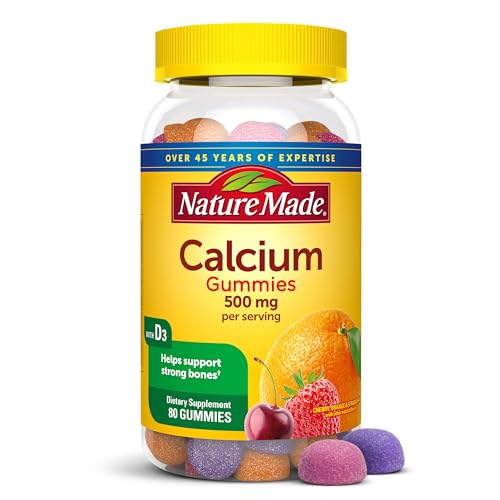
Nature Made Calcium Gummies 500 mg Per Serving with Vitamin D3, 80 Gummies
by Nature Made
The only USP-verified calcium gummy on the market — the clear choice for patients who cannot or will not swallow tablets but still want independently certified quality.
Pros
- Gummy format completely eliminates pill-swallowing barriers — practical for elderly patients and those with dysphagia
- USP Verified for purity and potency — the only gummy calcium in our list with independent third-party certification
- Includes vitamin D3 to support calcium absorption in a single convenient serving
- Nature Made brand trust backed by pharmacist recommendation surveys and decades of market presence
Cons
- Lower calcium dose at 500 mg per two-gummy serving compared to 600 mg tablet alternatives
- Contains added sugars — a consideration for diabetic patients or those limiting sugar intake
- Only 40 servings per bottle — significantly shorter supply duration than tablet options
Bluebonnet Nutrition Liquid Calcium Citrate, Magnesium, Vitamin D3, 16 fl oz
Liquid calcium occupies an essential niche for patients who cannot take any solid oral supplement — post-surgical patients with esophageal restrictions, patients with advanced dysphagia, elderly individuals with severe pill aversion, and children who need calcium supplementation. The Bluebonnet liquid delivers calcium citrate (the acid-independent form), magnesium, and vitamin D3 in a mixed berry liquid that requires one tablespoon per serving. The calcium citrate base means absorption is not affected by stomach acid status, and the liquid format ensures complete dissolution before it even reaches the stomach.
The inclusion of magnesium alongside calcium is clinically thoughtful. Magnesium and calcium compete for absorption via shared intestinal transport mechanisms, but at the moderate doses in this product, the interaction is minimal and the synergistic benefits for bone metabolism outweigh any competitive absorption effect. Magnesium deficiency is itself prevalent — estimated at 50% of the US population consuming below the RDA — and contributes independently to osteoporosis risk. The allergen-free profile (kosher, non-GMO, gluten-free, soy-free, dairy-free) makes this suitable for patients with multiple food sensitivities.
The practical limitations are refrigeration requirements after opening, a shorter shelf life than dry formats, and only 32 servings per bottle. For patients managing probiotics and other liquid supplements alongside this, consolidating the refrigerated items makes the routine manageable. Cost per serving is higher than tablets, but for the patient population that needs liquid delivery, there is no tablet alternative — this is the format of necessity.

Bluebonnet Nutrition Liquid Calcium Citrate, Magnesium, Vitamin D3, 16 fl oz
by Bluebonnet Nutrition
A comprehensive liquid bone-support formula combining calcium citrate, magnesium, and D3 — the best option for patients who cannot tolerate any pill or capsule format.
Pros
- Liquid format is ideal for patients with dysphagia, post-surgical patients, or anyone unable to swallow tablets or capsules
- Calcium citrate plus magnesium plus D3 provides a comprehensive bone-support formula in a single product
- Free from all major allergens — kosher, non-GMO, gluten-free, soy-free, and dairy-free
- Pleasant mixed berry flavor with high reported palatability across consumer reviews
Cons
- Requires refrigeration after opening with a shorter shelf life than tablet or capsule alternatives
- Higher cost per serving compared to tablet-form calcium supplements
- Only 32 servings per bottle — requires more frequent repurchasing than high-count tablet options
Micro Ingredients Calcium 1,200 mg with Vitamin D3 and K2, 300 Tablets
The Micro Ingredients formula represents the most scientifically comprehensive approach to calcium supplementation in our lineup. The inclusion of vitamin K2 as MK-7 addresses what many calcium researchers consider the missing piece in standard calcium supplementation: directing where calcium goes once it is absorbed. Vitamin K2 activates osteocalcin (the protein that binds calcium into bone) and matrix Gla protein (which prevents calcium from depositing in arterial walls). This dual mechanism is why emerging research suggests that calcium supplemented with K2 may have a more favorable cardiovascular safety profile than calcium alone.
The 1,200 mg dose per two-tablet serving is designed for patients whose daily calcium target is 1,200 mg from supplements — typically postmenopausal women and adults over 70 per NIH guidelines. The addition of boron, a trace mineral with growing evidence for bone mineral density support, rounds out a formula that covers four distinct pathways in calcium metabolism: absorption (D3), bone deposition (K2), structural support (calcium), and enzymatic cofactors (boron).
The newer market presence is the primary concern — with under 700 reviews, the real-world track record is significantly thinner than Nature Made or Caltrate. The carbonate base still requires food for absorption. And for patients whose dietary calcium intake already provides 600 to 800 mg daily, the 1,200 mg supplemental dose may push total intake beyond the 2,500 mg upper limit. Calculate your total from all sources before committing to this dose. For patients specifically seeking the calcium-plus-K2 combination with clinical rationale, this is currently the strongest formulation available. Those interested in broader joint and connective tissue support may also benefit from our turmeric supplements guide for its anti-inflammatory properties.

Micro Ingredients Calcium 1,200 mg with Vitamin D3 and K2, 300 Tablets
by Micro Ingredients
The most comprehensive bone-support formula in our lineup — calcium paired with K2, D3, and boron addresses the full calcium metabolism pathway from absorption through targeted deposition.
Pros
- Four-in-one formula includes vitamin K2 as MK-7, which directs calcium toward bone matrix deposition rather than arterial walls
- 300-tablet bottle provides 150 servings — strong long-term value for a comprehensive bone formula
- Coated tablets are easier to swallow than many uncoated calcium carbonate alternatives
- Includes boron alongside D3 and K2 — a trace mineral increasingly associated with bone metabolism support
Cons
- Newer product with fewer than 700 reviews — less long-term consumer validation than established brands
- 1,200 mg per two-tablet serving may exceed needs for patients already obtaining dietary calcium
- Calcium carbonate base still requires food for optimal absorption despite the comprehensive vitamin additions
How to Choose the Best Calcium Supplement
Buyer's Guide
Selecting the right calcium supplement requires matching the calcium form, dose, and co-nutrients to your specific digestive physiology, medication profile, and dietary intake — a decision that varies considerably between a healthy 35-year-old and a 70-year-old on a proton pump inhibitor.
Calcium Form
Calcium carbonate is the most concentrated and affordable form — ideal for healthy adults with normal stomach acid who take supplements with meals. Calcium citrate is less concentrated but absorbs without food or gastric acid, making it the preferred choice for patients over 50, those on proton pump inhibitors or H2 blockers, post-bariatric surgery patients, and anyone with achlorhydria. Tricalcium phosphate (used in gummies) provides moderate absorption with a gentler GI profile. For the majority of healthy adults under 50, carbonate taken with food is clinically equivalent to citrate at a lower cost.
Vitamin D3 Content
Vitamin D3 is the rate-limiting factor in intestinal calcium absorption. Without adequate vitamin D, active calcium transport in the duodenum is impaired and only passive paracellular absorption remains — reducing total absorption by 60 to 75 percent. Products in our list range from zero D3 to 800 IU per serving. If you are already taking a standalone D3 supplement, a calcium-only product may be appropriate. If not, choose a calcium product with at least 400 IU D3, and consider the Caltrate 600 Plus at 800 IU if your physician has identified low vitamin D levels.
Additional Bone-Support Nutrients
Calcium alone is necessary but not sufficient for optimal bone health. Vitamin K2 (particularly the MK-7 form) activates osteocalcin, the protein responsible for binding calcium into bone matrix — and simultaneously activates matrix Gla protein, which inhibits arterial calcification. Magnesium supports over 300 enzymatic reactions including those in bone remodeling. Zinc, copper, manganese, and boron all play supporting roles in bone metabolism. The Citracal Maximum Plus and Micro Ingredients formulas include multiple bone-support co-nutrients, while the Nature Made and 21st Century products focus purely on calcium with or without D3.
Delivery Format
Tablets are the most cost-effective format but require adequate swallowing ability and water. Caplets are coated for easier swallowing and reduced aftertaste. Gummies eliminate pill-swallowing barriers entirely but contain added sugars and typically deliver less calcium per serving. Liquid calcium is the optimal format for patients with dysphagia, post-surgical patients, or anyone who cannot tolerate solid oral supplements. Choose format based on your physical ability to take the supplement consistently — compliance matters far more than marginal absorption differences between formats.
Drug Interactions
Calcium interacts with a significant number of common medications. It reduces absorption of levothyroxine (thyroid medication), bisphosphonates (alendronate, risedronate), tetracycline and fluoroquinolone antibiotics, and iron supplements. Separate calcium from these medications by at least two to four hours. Patients on thiazide diuretics should monitor serum calcium, as thiazides reduce renal calcium excretion and supplementation can push levels toward hypercalcemia. Proton pump inhibitors reduce calcium carbonate absorption specifically — switch to citrate if you take omeprazole, pantoprazole, or similar medications long-term.
Dose and Splitting Strategy
The body absorbs calcium most efficiently in doses of 500 to 600 mg at a time. Active transport in the duodenum saturates at approximately 500 mg, after which only passive paracellular absorption contributes — and that is far less efficient. If your daily supplement target is 1,000 to 1,200 mg, split it into two separate doses taken at different meals. This maximizes absorption and reduces GI side effects. Single-dose products delivering 1,200 mg should be taken as two tablets at separate times, not together. Calculate your actual supplementation need by subtracting estimated dietary calcium intake from your age-appropriate target.
When Not to Supplement Calcium
Not everyone should take calcium supplements, and overcorrecting carries real risks. Patients with primary hyperparathyroidism already have elevated serum calcium — supplementation can worsen hypercalcemia and accelerate kidney stone formation. Patients with a history of calcium oxalate kidney stones should discuss supplementation carefully with their urologist, as the relationship between supplemental calcium and stone risk is dose-dependent and timing-dependent (calcium taken with meals actually reduces oxalate absorption, while calcium taken between meals may increase stone risk). Patients with chronic kidney disease stage 3 or higher should have calcium supplementation managed by their nephrologist, as impaired phosphate excretion creates a complex calcium-phosphate balance that standard supplementation can destabilize.
If you have had a DEXA scan showing normal bone mineral density, your dietary calcium intake is adequate (three servings of dairy or equivalent fortified foods daily provides approximately 900 mg), and you have no risk factors for deficiency, routine calcium supplementation may not be necessary. A dietary assessment is a better starting point than automatic supplementation.
Final Verdict
For the majority of adults, Nature Made Calcium 600 mg with Vitamin D3 is the most reliable starting point: USP-verified quality, a proven calcium-plus-D3 combination, seven months of supply per bottle, and a per-serving cost that eliminates price as a barrier. It is the product I recommend most frequently to patients in my own practice for straightforward calcium maintenance.
If cost is the deciding factor, 21st Century Calcium 600 mg at three cents per serving provides clinically equivalent calcium carbonate at the lowest price available — just ensure you are managing vitamin D3 supplementation separately. For patients on proton pump inhibitors, over 50 with reduced gastric acid, or post-bariatric surgery, Citracal Maximum Plus is the non-negotiable upgrade — calcium citrate’s acid-independent absorption is not optional for these populations, it is clinically necessary.
The Micro Ingredients Calcium with D3 and K2 deserves specific attention for patients focused on the cardiovascular safety dimension of calcium supplementation. The K2 MK-7 inclusion addresses a legitimate concern in the calcium literature and represents the most forward-looking formulation approach in this category. As with any supplement regimen, discuss your specific needs with your healthcare provider — particularly if you take thyroid medication, bisphosphonates, antibiotics, or blood thinners, all of which interact with calcium in clinically significant ways.
Frequently Asked Questions
What is the difference between calcium carbonate and calcium citrate?
How much calcium should I take per day?
Can calcium supplements cause heart problems?
Should I take calcium and iron supplements at different times?
Do I need vitamin D with my calcium supplement?
Related Articles
About the Reviewer

Dr. David Taylor, MD, PhD
Drexel University College of Medicine (MD), Indiana University School of Medicine (PhD)
Dr. David Taylor is a licensed physician and medical researcher who founded BestRatedDocs in 2016. With an MD from Drexel University and a PhD from Indiana University School of Medicine, he combines clinical expertise with a passion for health technology to provide evidence-based product recommendations. Dr. Taylor specializes in health informatics and regularly evaluates medical devices, diagnostic equipment, and therapeutic products to help healthcare professionals and patients make informed decisions.