7 Best Iron Supplements of 2026
Dr. David Taylor reviews the best iron supplements of 2026. Compare ferrous sulfate vs iron bisglycinate, tablets vs liquids vs gummies, and USP vs NSF-certified options.
Updated
Iron deficiency is the most common nutritional deficiency worldwide and the leading cause of anemia in the United States, affecting an estimated 10 million Americans. As a physician who routinely orders iron panels and manages deficiency correction protocols, I can tell you that the supplement you choose matters more than most patients realize. The wrong form leads to side effects that cause people to stop taking it entirely — and untreated iron deficiency has real consequences for energy, cognitive function, immune response, and cardiovascular health. The difference between ferrous sulfate and iron bisglycinate is not marketing — it is a clinically meaningful distinction that determines whether you will actually take the supplement long enough for it to work.
The iron supplement market in 2026 offers more variety than ever: traditional ferrous sulfate tablets, chelated bisglycinate capsules, liquid formulations with herbal cofactors, and even sugar-free gummies. Each format has legitimate clinical applications for different patient profiles. We evaluated over 30 iron supplements against the criteria that matter most — iron form and bioavailability, elemental iron content per serving, third-party certification, tolerability data, and real-world consumer outcomes across thousands of verified reviews. The seven products below represent the strongest recommendations across the full spectrum of needs, from aggressive deficiency correction to gentle daily maintenance. If you are also addressing other nutritional gaps, our guides to B12 supplements and multivitamins for women cover two nutrients that frequently co-occur with iron deficiency.
After evaluating the full iron supplement landscape, here are our top picks across seven distinct use cases. The comparison table below shows how each product stacks up on the spec dimensions that matter most.
| Product | Price | Buy |
|---|---|---|
| Nature Made Iron 65 mg, 180 TabletsBest Overall | $8.44 | View on Amazon |
| Carlyle Iron Ferrous Sulfate 65 mg, 400 TabletsBudget Pick | $11.99 | View on Amazon |
| Thorne Iron Bisglycinate 25 mg, 60 CapsulesPremium Pick | $16.00 | View on Amazon |
| Solgar Gentle Iron 25 mg, 180 CapsulesRunner-Up | $14.49 | View on Amazon |
| NOW Supplements Iron 36 mg Double Strength, 90 Capsules | $9.99 | View on Amazon |
| Floradix Iron + Herbs Liquid, 8.5 fl oz | $26.39 | View on Amazon |
| MaryRuth's Iron Gummies with Vitamin C, 60 Count | $21.99 | View on Amazon |
How We Chose These Iron Supplements
Our selection process prioritized clinical relevance over marketing claims. We cross-referenced peer-reviewed absorption data for each iron form (ferrous sulfate, iron bisglycinate, ferrous gluconate, ferrous bisglycinate), third-party certification status (USP, NSF), Amazon review volume and sentiment distribution (specifically filtering for GI tolerability comments), brand reputation in the pharmacy and clinical supplement channels, and elemental iron content per serving relative to the standard therapeutic dose range. We deliberately included products across four delivery formats — tablet, capsule, liquid, and gummy — because the optimal format varies significantly by patient profile. A supplement that causes intolerable side effects is worse than no supplement at all, because it creates the illusion of treatment while the deficiency persists.
Nature Made Iron 65 mg, 180 Tablets
Nature Made consistently holds the number-one pharmacist-recommended position in US supplement surveys, and the USP Verified mark on this product is not a trivial distinction. USP verification means an independent laboratory has physically tested the finished product — not just the raw materials — to confirm that it contains exactly 65 mg of elemental iron, dissolves within the specified window for GI absorption, and is free of heavy metal contaminants above USP thresholds. For an iron supplement where dose accuracy directly affects both efficacy and safety, this verification is worth paying attention to.
The 65 mg elemental iron dose is the standard therapeutic dose recommended by the American Society of Hematology for iron deficiency correction. At this dose, patients with confirmed iron deficiency anemia can expect to see hemoglobin improvements within two to four weeks and serum ferritin normalization within three to six months. The 180-tablet count stretches over a full six months at one-per-day dosing, which conveniently aligns with the typical duration of a deficiency correction protocol.
The primary trade-off is tolerability. Ferrous sulfate is the most likely iron form to cause constipation, nausea, and epigastric discomfort — side effects that affect 20-40% of patients. If you have a history of GI sensitivity with iron, consider the Thorne or Solgar chelated options before committing to ferrous sulfate. For everyone else, this is the straightforward, evidence-based recommendation.

Nature Made Iron 65 mg, 180 Tablets
by Nature Made
The gold-standard iron supplement backed by pharmacists and independently verified by USP — 65 mg ferrous sulfate in a six-month supply at an unbeatable price.
Pros
- USP Verified for purity, potency, and label accuracy — the strongest independent quality assurance available for iron supplements
- Number one pharmacist-recommended supplement brand in the US — unmatched institutional credibility in the pharmacy channel
- 180-tablet bottle provides a full six-month supply at one tablet daily — exceptional long-term value
- 65 mg elemental iron per tablet meets the standard therapeutic dose for iron deficiency correction
Cons
- Ferrous sulfate is the most effective form but also the most likely to cause GI side effects including constipation and nausea
- Tablet format without enteric coating may cause stomach upset in sensitive individuals when taken without food
Carlyle Iron Ferrous Sulfate 65 mg, 400 Tablets
The 400-tablet count is the headline here — over 13 months of daily iron supplementation in a single bottle. For patients on long-term maintenance protocols, this eliminates the reordering friction that causes gaps in supplementation. At the current price point, the cost per tablet is under three cents, making this the most affordable iron supplement in our entire evaluation set by a significant margin.
The 4.8-star rating across 15,000 reviews is notable because iron supplements are a category where negative reviews are common due to GI side effects. Maintaining a rating that high across that volume of reviews for a ferrous sulfate product suggests that Carlyle’s formulation and tablet quality are genuinely competitive with the pharmacist-recommended brands. Multiple reviewers specifically note that this product causes fewer stomach issues than other ferrous sulfate options they have tried, though individual responses vary.
The absence of USP or NSF certification is the meaningful trade-off. Carlyle manufactures in a GMP-compliant facility, but GMP compliance is a legal baseline — it verifies that processes are followed, not that the finished product contains what the label claims. For patients who prioritize independent verification, the Nature Made USP-verified option costs slightly less per tablet but comes in a smaller count. For long-term supplementation where cost accumulation is a real concern, the Carlyle 400-count is the most practical choice.

Carlyle Iron Ferrous Sulfate 65 mg, 400 Tablets
by Carlyle
Over 13 months of iron supplementation in a single bottle — the most cost-effective ferrous sulfate option for long-term deficiency correction.
Pros
- 400-tablet bottle provides over 13 months of daily supplementation — the largest supply count in our entire lineup
- Highest-rated iron supplement in our list at 4.8 stars across 15,000 reviews — exceptional consumer satisfaction
- Cost per serving is among the lowest available — under three cents per tablet at current pricing
- Same 65 mg elemental iron dose as the USP-verified best pick at a fraction of the price
Cons
- No USP or NSF third-party certification — quality assurance relies on internal GMP compliance only
- Ferrous sulfate carries the same GI side effect profile as all non-chelated iron forms
- Tablet size may be challenging for patients who struggle with pill swallowing
Thorne Iron Bisglycinate 25 mg, 60 Capsules
Thorne is the brand you will find in integrative medicine practices, functional medicine clinics, and sports medicine offices — and their iron bisglycinate is the most frequently recommended iron supplement across competitor review sites for good reason. The iron bisglycinate chelate form bonds elemental iron to the amino acid glycine, which fundamentally changes how the mineral interacts with your GI tract. Instead of free iron ions irritating the gastric and intestinal mucosa (the mechanism behind ferrous sulfate side effects), the chelated iron is absorbed through amino acid transport pathways in the duodenum. Clinical studies consistently show 3-4x fewer GI complaints with bisglycinate compared to ferrous sulfate.
The NSF Certified for Sport designation is particularly relevant for athletes dealing with sports anemia — a condition caused by the combination of hemolysis from foot-strike impact, iron loss through sweat, and the inflammatory response to intense training that temporarily sequesters iron. These athletes need iron supplementation that is verified free of banned substances, and Thorne’s NSF certification provides that assurance.
The 25 mg dose is lower than the 65 mg standard therapeutic dose, which is both a feature and a limitation. For maintenance supplementation or mild deficiency correction, 25 mg of highly bioavailable chelated iron may be sufficient — some studies suggest that chelated iron achieves equivalent outcomes to ferrous sulfate at lower absolute doses due to superior absorption. For severe deficiency, your physician may recommend two capsules daily or may prefer a higher-dose product for faster correction.
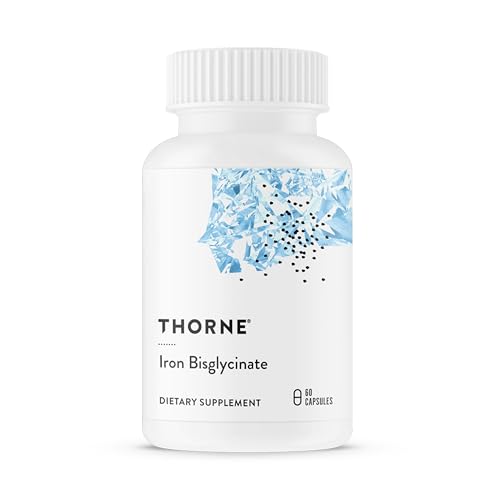
Thorne Iron Bisglycinate 25 mg, 60 Capsules
by Thorne
NSF-certified chelated iron from the most trusted clinical supplement brand — the go-to for sensitive stomachs and patients who prioritize tolerability over dose.
Pros
- Iron bisglycinate chelate is significantly less likely to cause constipation, nausea, or stomach upset compared to ferrous sulfate
- NSF Certified for Sport — independently tested for purity and absence of over 270 banned substances
- Thorne is the most trusted supplement brand among integrative and functional medicine practitioners
- Lower 25 mg dose is ideal for maintenance supplementation and patients who do not tolerate high-dose iron
Cons
- Most expensive option on a per-serving basis — approximately four times the cost of the budget pick
- 60-capsule count provides only a two-month supply at one-per-day dosing — frequent reordering required
- Lower iron content per serving may not be sufficient for severe deficiency correction without multiple daily doses
Solgar Gentle Iron 25 mg, 180 Capsules
Solgar has positioned this product explicitly around the tolerability advantage of chelated iron, and the “Gentle Iron” branding reflects genuine clinical differences. At 180 capsules per bottle, Solgar delivers the best count-to-price ratio of any chelated iron option in our lineup — six full months of daily supplementation at a price point below the Thorne 60-count bottle. For patients who know they need chelated iron for tolerability but want to avoid the premium pricing of clinical brands, this is the most rational compromise.
The vegan, kosher, and gluten-free certifications make this the most broadly accessible option for patients with dietary restrictions. The vegetable capsule shell avoids gelatin entirely, which is relevant for the same demographic — premenopausal women — who represent the largest population requiring iron supplementation. The 4.7-star rating across 18,000 reviews provides substantial real-world evidence that the tolerability claims hold up across a diverse consumer base.
The limitation is the same as the Thorne: 25 mg per serving may not be aggressive enough for severe deficiency correction, and the lack of USP or NSF certification means quality assurance relies on Solgar’s internal processes rather than independent verification. However, Solgar has been manufacturing supplements since 1947, and their track record is among the longest in the industry.

Solgar Gentle Iron 25 mg, 180 Capsules
by Solgar
The best value in gentle, chelated iron — six months of non-constipating supplementation in a vegan capsule backed by 18,000 reviews.
Pros
- Iron bisglycinate chelate form is clinically demonstrated to cause fewer GI side effects than ferrous sulfate
- 180-capsule bottle provides a full six-month supply — the best count-to-price ratio among chelated iron options
- Vegan, kosher, and gluten-free certified — suitable for patients with multiple dietary restrictions
- Over 18,000 Amazon reviews at 4.7 stars — extensive real-world validation of tolerability claims
Cons
- 25 mg elemental iron per serving may require physician-guided dose adjustment for moderate to severe deficiency
- Vegetable capsule shell is slightly larger than standard tablets, which some patients find less convenient
NOW Supplements Iron 36 mg Double Strength, 90 Capsules
NOW Foods occupies an interesting position in the iron supplement landscape by offering 36 mg of Ferrochel iron bisglycinate — a dose that sits between the gentle 25 mg chelated options and the full-strength 65 mg ferrous sulfate standard. For patients who find 25 mg insufficient for their deficiency correction timeline but cannot tolerate ferrous sulfate side effects, this mid-range chelated dose is a practical solution that the other products in our list do not directly address.
Ferrochel is a specific branded form of iron bisglycinate manufactured by Albion Minerals, and it has its own body of clinical research supporting both bioavailability and tolerability. The double-strength designation on the NOW label refers to the fact that their standard iron capsule contains 18 mg — this product doubles that to 36 mg while maintaining the chelated form factor. NOW Foods has over 50 years of supplement manufacturing history, and their internal testing protocols are among the more transparent in the industry, even without formal USP or NSF certification.
The 90-capsule count provides a three-month supply, which is reasonable but shorter than the six-month options from Nature Made and Solgar. For patients managing multiple supplements, organizing daily doses with a pill organizer helps maintain consistency across different refill schedules.

NOW Supplements Iron 36 mg Double Strength, 90 Capsules
by NOW Foods
A mid-range chelated iron option that bridges the gap between gentle 25 mg doses and full-strength ferrous sulfate — practical for moderate deficiency correction with fewer GI side effects.
Pros
- Ferrochel iron bisglycinate at 36 mg hits a mid-range dose — higher than gentle options but lower than ferrous sulfate standard dose
- Double-strength formulation reduces the need for multiple capsules per day during deficiency correction
- NOW Foods has over 50 years of supplement manufacturing history with consistent GMP compliance
- Non-constipating chelated form at a price point competitive with basic ferrous sulfate products
Cons
- No USP or NSF third-party certification — quality relies on internal GMP and self-reported testing
- 90-capsule count provides only a three-month supply — shorter than the six-month options from Nature Made and Solgar
Floradix Iron + Herbs Liquid, 8.5 fl oz
Floradix represents a fundamentally different approach to iron supplementation. The liquid format uses ferrous gluconate — a well-absorbed iron salt that is gentler than ferrous sulfate — combined with vitamin C, B vitamins (B1, B2, B6, B12), and a proprietary blend of herbal extracts including nettle, spinach, and rosemary. The vitamin C inclusion is clinically significant: ascorbic acid reduces ferric iron (Fe3+) to the more absorbable ferrous form (Fe2+), potentially improving absorption by 2-3 fold when taken together.
The liquid delivery mechanism provides the fastest absorption of any format in our list. Iron in liquid form begins absorbing in the stomach and upper duodenum almost immediately, without requiring tablet dissolution or capsule breakdown. This makes Floradix particularly practical for patients with swallowing difficulties, elderly patients managing pill burden, pregnant women experiencing nausea with tablets, and anyone who has failed multiple tablet and capsule formulations due to intolerance.
The trade-offs are meaningful. At 10 mg elemental iron per serving, Floradix delivers substantially less iron than tablet or capsule options — well below the standard therapeutic dose for deficiency correction. This means Floradix is best suited for maintenance supplementation, mild deficiency, or as a complement to dietary iron intake rather than as a primary deficiency correction tool. The per-serving cost is also the highest in our lineup, and the product requires refrigeration after opening with a four-week use-by window. For patients maintaining adequate hydration and electrolyte balance alongside iron therapy, our electrolyte powders guide covers complementary products.

Floradix Iron + Herbs Liquid, 8.5 fl oz
by Floradix
The liquid alternative for patients who cannot swallow pills — includes vitamin C and herbal cofactors for enhanced absorption, though at a lower dose and higher price point.
Pros
- Liquid format provides the fastest absorption — ideal for patients who cannot tolerate capsules or tablets
- Includes vitamin C, B vitamins, and a proprietary herbal blend that supports iron absorption and energy metabolism
- Ferrous gluconate is well-absorbed and generally better tolerated than ferrous sulfate
- Established European brand with over 70 years of manufacturing history — widely recommended by naturopathic practitioners
Cons
- Most expensive option per serving in our lineup — approximately one dollar per serving at 25 servings per bottle
- Only 10 mg elemental iron per serving — significantly lower than the 65 mg standard therapeutic dose
- Requires refrigeration after opening and must be consumed within four weeks — less convenient than shelf-stable tablets
MaryRuth’s Iron Gummies with Vitamin C, 60 Count
The gummy format addresses a compliance problem that physicians encounter regularly: patients who refuse to take iron supplements because they dislike swallowing pills. Compliance is everything in iron supplementation — a supplement that sits in the medicine cabinet because the patient finds it unpleasant is clinically worthless. MaryRuth’s iron gummies provide 18 mg of ferrous bisglycinate per two-gummy serving alongside vitamin C for enhanced absorption, in a sugar-free formulation that most patients find genuinely pleasant to take.
The 18 mg dose aligns with the RDA for premenopausal women (18 mg/day), making these gummies a reasonable daily maintenance option for the demographic most likely to need routine iron supplementation. The chelated ferrous bisglycinate form maintains the tolerability advantage of chelated iron while the gummy delivery avoids pill-related nausea entirely. The vegan certification and sugar-free formulation address two common concerns in the gummy supplement category.
The limitations are real. At 30 servings per bottle (two gummies per day), this is the smallest supply count in our lineup, and the per-serving cost is among the highest. The 4.3-star rating — the lowest in our list — reflects batch inconsistency that some reviewers report in texture and flavor. And 18 mg per serving is inadequate for moderate to severe deficiency correction. These gummies are best positioned as a maintenance supplement for patients who are already iron-replete and need to prevent recurrence, not as a primary treatment for active deficiency.

MaryRuth's Iron Gummies with Vitamin C, 60 Count
by MaryRuth Organics
The most palatable iron supplement for patients who avoid pills — sugar-free gummies with vitamin C for enhanced absorption, best suited for maintenance rather than deficiency correction.
Pros
- Gummy format is the most palatable delivery method — significantly improves compliance for patients who dislike pills
- Includes vitamin C which enhances non-heme iron absorption by reducing ferric iron to the more absorbable ferrous form
- Sugar-free formulation avoids the added sugar common in most gummy supplements
- Vegan-certified and made with ferrous bisglycinate — combining the benefits of chelated iron with an enjoyable format
Cons
- 18 mg elemental iron per serving (two gummies) is below the standard therapeutic dose for deficiency correction
- Lowest rating in our lineup at 4.3 stars — some users report inconsistent texture and taste between batches
- 60-count bottle provides only 30 servings at two gummies per day — frequent reordering required
How to Choose the Best Iron Supplement
Buyer's Guide
Selecting the right iron supplement requires matching the iron form, dose, and delivery method to your specific deficiency severity, tolerance profile, and medical context — what works for a mildly deficient premenopausal woman differs substantially from what a post-bariatric patient or an athlete with sports anemia needs.
Iron Type and Absorption
The three main supplemental iron forms differ meaningfully in absorption and tolerability. Ferrous sulfate delivers the highest elemental iron per dose (65 mg standard) and has the most clinical evidence — it is the default recommendation in most hematology guidelines. However, it is also the most likely to cause GI side effects. Iron bisglycinate (chelated iron) bonds elemental iron to the amino acid glycine, which improves tolerability dramatically — studies show 3-4x fewer GI complaints compared to ferrous sulfate. Chelated forms are absorbed via amino acid transport pathways rather than the standard DMT1 iron transporter, which means they are less affected by dietary inhibitors like phytates, tannins, and calcium. Ferrous gluconate (used in the Floradix liquid) falls between the two in terms of tolerability and is well-absorbed in liquid form.
Dosage and Your Needs
The RDA for iron varies significantly by demographic: 8 mg/day for adult men and postmenopausal women, 18 mg/day for premenopausal women, and 27 mg/day during pregnancy. Therapeutic doses for confirmed iron deficiency anemia typically range from 100-200 mg elemental iron daily, though recent evidence supports alternate-day dosing of 40-80 mg as equally effective with better absorption efficiency and fewer side effects. Your physician should determine your dose based on your serum ferritin, hemoglobin, and transferrin saturation levels. For mild deficiency or maintenance, a gentle 18-25 mg chelated supplement may be sufficient. For moderate to severe deficiency, a 65 mg ferrous sulfate tablet — potentially taken every other day — is the standard approach.
Side Effects and Tolerability
GI side effects are the primary reason patients discontinue iron supplementation — and discontinuation means the deficiency persists. Constipation, nausea, abdominal cramping, and dark stools affect 20-40% of patients on ferrous sulfate. Strategies to improve tolerability include: switching to chelated iron bisglycinate, adopting alternate-day dosing (which research shows improves fractional absorption while reducing GI exposure), taking the supplement with a small amount of food, starting at a lower dose and titrating upward over two weeks, and ensuring adequate hydration and fiber intake. If none of these strategies resolve intolerance, liquid iron (Floradix) or iron gummies (MaryRuth's) provide alternative delivery methods that some patients tolerate better.
Form Factor
Iron supplements are available as tablets, capsules, liquids, and gummies — each with distinct advantages. Tablets and capsules are the most common and typically the most cost-effective. Liquids like Floradix absorb rapidly and are ideal for patients who cannot swallow pills, though they require refrigeration and have a shorter shelf life. Gummies improve compliance through palatability but generally deliver lower doses per serving and cost more per milligram of iron. Vegetable capsules (Solgar, NOW, Thorne) are preferred by vegan patients and those avoiding gelatin. Consider your daily routine, other supplements you take, and any swallowing difficulties when choosing format.
Third-Party Testing
Iron supplements are not FDA-approved before sale — the quality of what is inside the bottle depends on manufacturer integrity and any independent testing they voluntarily pursue. USP Verified (Nature Made) means an independent laboratory has confirmed that the product contains the labeled amount of elemental iron, dissolves appropriately, and is free of harmful contaminants including heavy metals. NSF Certified for Sport (Thorne) adds verification for the absence of banned athletic substances. For a mineral supplement where dose accuracy directly affects both efficacy and safety (excess iron can cause organ damage), third-party verification provides meaningful assurance. GMP compliance alone is a legal requirement — it verifies manufacturing process, not finished product quality.
Price and Value
Iron supplementation for deficiency correction typically lasts three to six months, and maintenance may continue indefinitely for high-risk populations. At those timeframes, cost per serving matters considerably. The Carlyle 400-count ferrous sulfate bottle provides over 13 months of supplementation for under twelve dollars — the lowest cost per serving in our lineup. Nature Made USP-verified iron is similarly affordable. Chelated forms (Thorne, Solgar, NOW) cost 3-5x more per serving but may be worth the premium if ferrous sulfate intolerance would otherwise cause you to stop supplementing entirely. Liquid and gummy formats carry the highest per-serving costs. Calculate cost per serving rather than comparing bottle prices — container sizes range from 25 servings to 400.
Who Needs Iron Supplements?
Iron deficiency does not affect all populations equally. Understanding whether you are in a high-risk group helps determine not just whether to supplement, but how aggressively.
Premenopausal women. Menstrual blood loss is the single most common cause of iron deficiency in developed countries. Women with heavy menstrual bleeding (menorrhagia) are at particularly high risk — the average menstrual cycle causes a loss of 20-40 mg of iron, and heavy periods can double or triple that. The 18 mg/day RDA for premenopausal women reflects this ongoing loss, and many women in this group will benefit from a chelated iron supplement at the RDA level even without confirmed deficiency.
Pregnant women. Pregnancy increases iron requirements to 27 mg/day due to expanded blood volume, placental development, and fetal iron transfer. Iron deficiency during pregnancy is associated with preterm delivery, low birth weight, and impaired neonatal neurodevelopment. Most prenatal vitamins include iron, but the amount varies — discuss your specific needs with your OB-GYN.
Vegetarians and vegans. Non-heme iron from plant sources is absorbed at roughly 2-20% efficiency compared to 15-35% for heme iron from animal sources. Vegans need approximately 1.8x the RDA of iron to compensate for lower bioavailability. Pairing iron-rich plant foods or supplements with vitamin C significantly improves non-heme iron absorption.
Endurance athletes. Sports anemia affects distance runners, cyclists, and other endurance athletes through three mechanisms: mechanical hemolysis (red blood cell destruction from repetitive foot impact), iron loss in sweat, and exercise-induced inflammation that upregulates hepcidin, a hormone that blocks iron absorption. Athletes with unexplained fatigue or declining performance should have a full iron panel checked.
Frequent blood donors. Each whole blood donation removes approximately 200-250 mg of iron. Regular donors — particularly those donating every 56 days at the maximum frequency — can deplete iron stores within three to four donation cycles without supplementation.
Understanding Your Iron Lab Values
If your physician has ordered iron studies, here is how to interpret the key markers:
Serum ferritin is the most useful single marker of iron stores. Values below 30 ng/mL indicate depleted iron stores even if hemoglobin is still normal (this is stage 1 iron deficiency — iron depletion without anemia). Values below 12 ng/mL are diagnostic of iron deficiency. Values above 200 ng/mL in men or 150 ng/mL in women may indicate iron overload and supplementation should be avoided. Note that ferritin is also an acute-phase reactant — it rises during infection, inflammation, and malignancy, which can mask underlying iron deficiency.
Transferrin saturation (TSAT) reflects the percentage of iron-binding capacity that is currently occupied. Values below 20% suggest iron deficiency. Values above 45% suggest iron overload.
Total iron-binding capacity (TIBC) increases when iron stores are low — the body produces more transferrin to capture whatever iron is available. Elevated TIBC in combination with low ferritin confirms iron deficiency.
Hemoglobin below 12 g/dL in women or 13 g/dL in men indicates anemia, which in the context of low ferritin confirms iron deficiency anemia — the most advanced stage of depletion.
Maximizing Iron Absorption
Several evidence-based strategies improve how much iron you absorb from each dose:
Alternate-day dosing. Research from ETH Zurich published in The Lancet Haematology demonstrated that iron supplementation every other day results in 35-40% higher fractional absorption compared to daily dosing. The mechanism involves hepcidin — a liver-produced hormone that blocks intestinal iron absorption for approximately 24 hours after an iron dose. By dosing every 48 hours, hepcidin levels return to baseline, allowing the next dose to be absorbed more efficiently. This approach also reduces GI side effects substantially.
Take with vitamin C. Ascorbic acid is the single most potent enhancer of non-heme iron absorption. It works by reducing ferric iron (Fe3+) to the more soluble and absorbable ferrous form (Fe2+) and by forming a soluble iron-ascorbate complex that resists the inhibitory effects of phytates and polyphenols. Taking your iron supplement with a glass of orange juice or a 250 mg vitamin C tablet can increase absorption by 2-3 fold.
Avoid absorption inhibitors. Calcium, tannins (in tea and coffee), phytates (in whole grains and legumes), and polyphenols significantly reduce iron absorption. Separate iron supplementation from these by at least two hours. Dairy products are a particularly common source of calcium-mediated absorption inhibition.
Take on an empty stomach when tolerated. Iron absorption is highest when the supplement is taken 30-60 minutes before a meal. If GI side effects prevent empty-stomach dosing, taking iron with a small vitamin C-rich snack is an acceptable compromise.
Important Drug Interactions
Iron supplements interact with several commonly prescribed medications, and proper timing is essential:
Levothyroxine. Iron reduces levothyroxine absorption by up to 50% — separate the two by at least four hours. Given that hypothyroidism and iron deficiency frequently co-occur in women, this interaction is clinically common and frequently overlooked.
Fluoroquinolone and tetracycline antibiotics. Iron chelates these antibiotics in the GI tract, forming insoluble complexes that are not absorbed. This can reduce antibiotic efficacy to the point of treatment failure. Separate by at least two hours before or six hours after the antibiotic dose.
Proton pump inhibitors (PPIs). Omeprazole, pantoprazole, and other PPIs reduce gastric acid production, which impairs the conversion of dietary and supplemental iron from the ferric to the absorbable ferrous form. Long-term PPI users are at increased risk of iron deficiency. Chelated iron forms (bisglycinate) are less affected by gastric pH than ferrous sulfate because they use amino acid absorption pathways.
Levodopa. Iron reduces levodopa absorption — relevant for Parkinson’s disease patients. Separate by at least two hours.
Final Verdict
For most patients with confirmed iron deficiency, Nature Made Iron 65 mg is the clearest recommendation: USP-verified quality, the standard therapeutic dose, a six-month supply, and a price point that removes cost as a barrier to adherence. Ferrous sulfate remains the first-line recommendation in clinical guidelines for a reason — it works, it is well-studied, and at this price it is accessible to virtually everyone.
If ferrous sulfate causes GI side effects that threaten your compliance, Solgar Gentle Iron provides the best value in chelated iron with a six-month supply at a reasonable price. For patients who want the highest level of third-party certification and are willing to pay the premium, Thorne Iron Bisglycinate with its NSF Certified for Sport designation is the quality-first choice — particularly for athletes managing sports anemia.
Budget-conscious patients who need long-term supplementation should consider the Carlyle 400-count bottle — over 13 months of iron for under twelve dollars is hard to beat on pure value. And for patients who simply will not take pills, the Floradix liquid and MaryRuth’s gummies provide alternatives that prioritize compliance over per-serving cost. As with all mineral supplementation, consult your physician before starting iron — unlike water-soluble vitamins, excess iron accumulates in the body and can cause organ damage. A simple blood test confirms whether you actually need it. For comprehensive nutritional support alongside iron, our B12 supplements guide and multivitamins for women guide cover two commonly co-deficient nutrients.
Frequently Asked Questions
What is the best form of iron supplement to take?
How long does it take for iron supplements to work?
Can iron supplements cause constipation, and how do I prevent it?
Should I take iron supplements with food or on an empty stomach?
Can I take iron supplements with other vitamins or medications?
Related Articles
About the Reviewer

Dr. David Taylor, MD, PhD
Drexel University College of Medicine (MD), Indiana University School of Medicine (PhD)
Dr. David Taylor is a licensed physician and medical researcher who founded BestRatedDocs in 2016. With an MD from Drexel University and a PhD from Indiana University School of Medicine, he combines clinical expertise with a passion for health technology to provide evidence-based product recommendations. Dr. Taylor specializes in health informatics and regularly evaluates medical devices, diagnostic equipment, and therapeutic products to help healthcare professionals and patients make informed decisions.