7 Best Denture Adhesives of 2026: A Dentist-Reviewed Buyer's Guide
Dr. David Taylor reviews the best denture adhesives of 2026. Compare zinc-free creams, strips, pads, and thermoplastic options for all-day hold and sensitive gums.
Updated
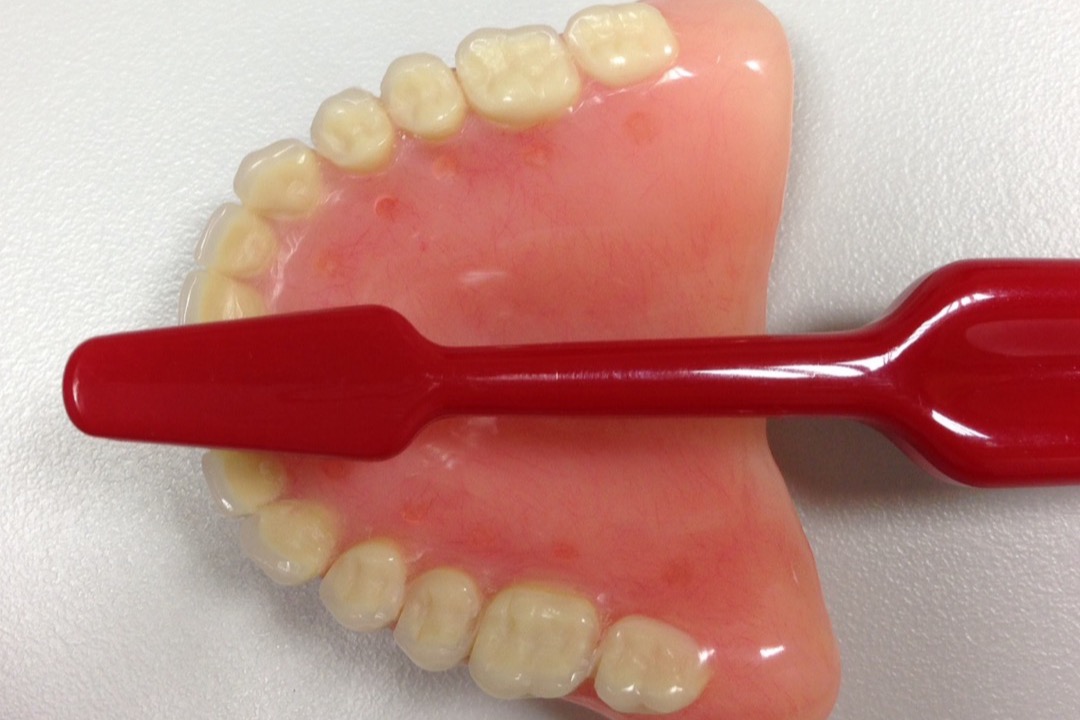
Approximately 36 million American adults wear full or partial dentures, and the population of long-term denture wearers continues to grow as the over-65 demographic expands. For most of these patients, denture adhesive is not a luxury — it is the difference between confident eating and speaking in public and constant low-grade self-monitoring for slippage. The denture adhesive aisle on Amazon includes creams, powders, strips, pads, and thermoplastic compounds across a wide range of hold strengths, flavors, and ingredient profiles. Selecting the right one is less about brand loyalty than about matching the format and hold strength to your particular denture fit, your saliva production, and your manual dexterity. We reviewed seven of the most clinically familiar zinc-free options to help you choose well.
Two clinical points belong up front. First, every product on this list is zinc-free. The history matters: pre-2010, several major cream adhesives contained zinc as an active hold-enhancing ingredient, and chronic over-application produced a small but documented number of cases of copper deficiency and peripheral neuropathy. Following the FDA’s 2010 safety communication, every mainstream US manufacturer reformulated. The zinc question is now effectively closed for the products reviewed here, but it remains relevant when evaluating off-brand or imported adhesives — always check the ingredient list. We discuss the mechanism in detail in a dedicated section below.
Second, denture adhesive is a supplement to a well-fitting denture, not a substitute for one. The single most common pattern we see in patients escalating their adhesive use is the slow drift of denture fit over years as the underlying alveolar bone resorbs. A patient who used to apply a thin smear of cream once a day finds themselves applying generous beads twice a day — and concluding that they need a stronger product. The honest answer in that situation is usually a denture reline, not more adhesive. We come back to this throughout the buyer’s guide, because it is the single most clinically important context for this category.
After reviewing all seven options, our top picks are summarized in the table below. For most denture wearers, Fixodent Complete Original is the right answer — it is the most clinically familiar zinc-free cream, delivers reliable all-day hold, and keeps the per-ounce cost low in its 3-pack configuration. Read on for detailed analysis of each product.
Find the Right Denture Adhesive for Your Need
Jump to the type that fits how you wear your dentures:
- Best zinc-free denture adhesive
- Best denture adhesive powder
- Strongest / maximum hold
- Best strips & seals
- Best waterproof denture adhesive
What Denture Adhesive Actually Does (and When You Don’t Need It)
The clinical purpose of denture adhesive is narrow and specific: it fills the micro-gaps between the denture base and the underlying soft tissue (the alveolar mucosa overlying the residual ridge), creating a tighter seal that resists the small lateral forces produced during chewing, speech, and swallowing. A well-made denture seated on healthy ridges with normal saliva production already produces meaningful suction-based retention on its own. In that ideal case, adhesive is helpful for added confidence — particularly during demanding meals or extended speaking — but it is not strictly necessary.
Several variables push patients toward heavier adhesive reliance. Resorption of the underlying alveolar bone is the most important; the mandible loses approximately 0.5 mm of vertical bone height per year on average after teeth are extracted, and after a decade the residual ridge is meaningfully different in shape from the one the original denture was molded against. Reduced saliva production from medications or aging undermines the natural suction seal. Ill-fitting partial dentures with worn clasps face similar issues. In each of these scenarios, the appropriate sequence is: try adhesive first to bridge the gap; if adhesive use escalates, see a dentist for a reline or new denture rather than buying stronger products indefinitely.
Types of Denture Adhesive: Choosing Your Format
Five formats dominate the US market. Cream is the default — flexible, well-studied, and effective across most denture types. Powder is a lower-mess alternative but depends on saliva to activate, which makes it less reliable in patients with dry mouth. Strips and pads (Sea-Bond is the dominant brand) are pre-cut, peel-and-apply formats that eliminate dosing decisions and are excellent for arthritic hands. Thermoplastic (Cushion Grip) is fundamentally different — a moldable cushion softened in hot water that creates a multi-day mechanical fit between denture and ridge. Wafers exist but are largely obsolete in the US market.
The right format depends less on hold strength than on ergonomics. Cream offers the most flexibility and the best per-ounce economics. Strips and pads are the right answer for patients with limited dexterity. Thermoplastic is the right answer for patients waiting for a dental appointment to address a poor fit, or for those who travel frequently and want fewer daily applications. We cover all five formats below across the ten products reviewed.
Best Denture Adhesives Overall
Below we review each adhesive in full — starting with our best overall pick and working through the strong-hold, zinc-free, sensitive-gum, lower-denture, thermoplastic, powder, and strip options. Use the use-case sections further down if you already know which type you need.
1. Fixodent Complete Original Denture Adhesive Cream — Best Overall
The Fixodent Complete Original 3-pack is the right starting point for the vast majority of denture wearers. It is the most widely dispensed denture adhesive in US dental practice, reformulated zinc-free since the 2010 FDA safety communication, and the 3-pack keeps the per-ounce cost among the lowest of the multipacks here. The formulation delivers reliable all-day hold rated at 12+ hours — long enough to cover a normal waking day without a midday reapplication.
What positions Fixodent Complete as the best overall pick is not any single feature. It is the combination of clinical familiarity, user-volume evidence, and value. More than 13,000 Amazon reviews represent a real-world reliability dataset that smaller-brand alternatives simply cannot match. The standard tip applicator delivers a controlled pea-sized bead with minimal practice, and the 2.4 oz tube size lasts approximately seven to eight weeks at the manufacturer-recommended three to four dabs per denture. For first-time users, this is the product that most US dentists will mention first.
The original flavor is mild but noticeable, and patients with mint sensitivity should verify tolerance before committing to a multipack. The standard tip is wider than the precision nozzles found on the Power Max and Fixodent Plus Scope formulations, which can make targeted application along a lower denture’s ridge slightly less precise — though for most users this is a non-issue.

Fixodent Complete Original Denture Adhesive Cream (3-Pack, 2.4 oz each)
by Fixodent
The most clinically familiar zinc-free denture adhesive cream — reliable all-day hold, dentist-recommended, and multipack pricing that keeps the per-ounce cost low.
Pros
- Zinc-free formulation eliminates the copper-deficiency neuropathy risk associated with pre-2010 adhesive formulations
- All-day hold rated for 12+ hours of secure denture fit between meals and conversations
- Standard tip applicator allows precise pea-sized dosing without overuse — a 2.4 oz tube applied correctly lasts 7-8 weeks
- Most clinically familiar brand among US dentists, with 13,000+ Amazon reviews providing real-world reliability data
Cons
- Original flavor is mild but noticeable — patients sensitive to mint or peppermint should verify tolerance before buying multipack quantities
- Standard tip is wider than precision-tip alternatives, which can make targeted application on lower dentures slightly less precise
- Some users report that humid climates accelerate softening of the adhesive seal compared to dry environments
2. Poligrip Power Max Ultimate All-in-1 — Best Strong Hold (Upgrade)
When maximum hold security is the priority, Poligrip Power Max Ultimate All-in-1 is the current top-tier cream in the Super Poligrip lineup. It is the zinc-free successor to the older Power Max strong-hold formula, sold as a four-pack of 2.2 oz tubes, and engineered as an all-in-one cream that combines strong all-day hold with a comfort seal and a food-seal barrier. We rank Fixodent Complete as the best overall on the strength of price-per-ounce, dentist familiarity, and review-base depth — but for patients who specifically need maximum security (lecturers, public speakers, anyone whose work depends on confident articulation), Power Max Ultimate is the right choice.
The precision nozzle applicator is meaningfully better than the standard tip for placing controlled beads along the denture ridge contour, and it dispenses the right amount without overloading — which means less mess, less waste, and a cleaner seat. The all-in-1 design is built to resist food particle infiltration during meals, which is particularly relevant for patients who report food trapping under their dentures during normal chewing. The flavor-free formulation suits patients sensitive to mint or peppermint additives.
The tradeoffs are price and the newness of the SKU. Power Max Ultimate costs more per ounce than the standard Fixodent Complete, which adds up over a year of daily use, and as a newer listing it carries a smaller review base than the long-established Poligrip lines. For maximum security users, both are reasonable concessions. For users who simply want adequate hold for normal daily activities, Fixodent Complete delivers what they need at a lower price.

Poligrip Power Max Ultimate All-in-1 Denture Adhesive Cream, Zinc Free, 2.2 oz (4 Pack)
by Super Poligrip
The current top-tier Poligrip SKU — a zinc-free, all-day strong-hold cream with a precision nozzle and four-pack value, the upgrade pick for maximum hold.
Pros
- Zinc-free formula is safe for long-term daily use with no heavy-metal exposure risk
- Precision nozzle applies the right amount without overloading — less mess and waste
- Four-pack bundle lowers the per-ounce cost versus single tubes
- All-in-1 formula combines strong hold, a comfort seal, and a food-seal barrier in one product
Cons
- Flavor-free suits sensitive users but some wearers prefer a mint taste
- Newer SKU with a smaller review base than the legacy Poligrip lines
3. Super Poligrip Zinc Free Denture Adhesive Cream — Best Zinc-Free Labeling (Runner-Up)
The standard Super Poligrip Zinc Free 4-pack is the most explicitly zinc-free product in the category — the labeling is unambiguous, the ingredient transparency is prominent, and the formulation has been the GlaxoSmithKline standard since the post-2010 reformulation. For patients already taking zinc supplements (the 80 mg/day AREDS2 regimen for macular degeneration is a common example), this is the cream we suggest first. The 12-hour hold rating covers a typical waking day, and the original flavor is mild and well-tolerated across the older patient population represented in the 17,000+ Amazon reviews.
The hold strength sits between standard Fixodent Complete and Power Max Ultimate — moderate but adequate for well-fitted dentures. Patients whose dentures have begun to fit poorly may find the Zinc Free formulation insufficient on its own and either escalate to Power Max Ultimate or, more appropriately, consult a dentist about relining. The standard tip applicator is well-suited to first-time users learning correct dosing technique.
For patients who are simultaneously managing multiple supplements as part of a broader health regimen — a common scenario in the over-65 demographic — pairing this adhesive with a structured pill management routine helps simplify daily life. We discuss strategies for medication and supplement organization in our review of the best pill organizers.

Super Poligrip Zinc Free Denture Adhesive Cream (4-Pack, 2.4 oz each)
by Super Poligrip
The clearest zinc-free labeling in the category — a sensible choice for patients combining dentures with daily zinc supplementation.
Pros
- Explicitly marketed as zinc-free, with prominent ingredient transparency on packaging — useful for patients already taking zinc supplements
- 12-hour hold rating covers a typical waking day without midday reapplication
- Original flavor is mild and well-tolerated across an older patient population per 17,000+ Amazon reviews
- Standard tip applicator is well-suited to first-time adhesive users learning correct dosing technique
Cons
- Hold strength is moderate compared to Power Max Ultimate — patients with poorly fitting dentures may need a stronger formulation
- Standard tip lacks the precision of nozzle-style applicators for lower-denture targeted application
4. Fixodent Plus Scope Flavor — Best Fresh Breath (Runner-Up)
The Fixodent Plus Scope formulation pairs the standard zinc-free Fixodent adhesive with a Scope-licensed mint flavor. This is the highest-rated denture adhesive in this guide, and it holds that rating across a deep pool of Amazon reviews, which is unusual in a category where most products sit a notch lower. The reason for the rating is straightforward: the mint flavor masks the underlying adhesive taste effectively, and many denture wearers report that it produces a lingering fresh-breath benefit through the day that they did not anticipate from a denture product.
The precision tip applicator delivers a more controlled bead than the standard Fixodent Complete tip, which is a meaningful upgrade for patients applying along the lower denture ridge. The smaller 2.0 oz tube size is the only mild drawback — the four-tube pack delivers fewer total ounces than a 4-pack of 2.4 oz tubes — but the Scope flavor and tip precision typically justify the configuration for users who specifically want fresh breath alongside hold.
The flavor strength is genuine, not subtle. Patients with established mint sensitivity, a history of oral thrush, or general flavor aversions should not buy this product — choose the Power Max Ultimate flavor-free formulation or the Secure Sensitive option below instead. Patients who use a mint-containing toothpaste comfortably will find the Scope flavor pleasant.

Fixodent Plus Scope Flavor Denture Adhesive Cream (4-Pack, 2.0 oz each)
by Fixodent
The fresh-breath option — Scope-flavored Fixodent for patients who want adhesive hold and mint freshness in a single product.
Pros
- Scope-licensed mint flavor masks the adhesive's underlying taste and provides a fresh-breath benefit throughout the day
- The highest user rating among the adhesives in this guide, held across a deep review base
- Precision tip applicator improves dose control versus standard-tip alternatives
- Zinc-free formulation matches the safety profile of all current Fixodent products
Cons
- Mint flavor is genuinely strong — patients with mint sensitivity or oral thrush should select an unflavored alternative
- Smaller 2.0 oz tube size means fewer total ounces per pack despite the four-tube configuration
- Premium pricing relative to standard Fixodent Complete reflects the licensed Scope flavoring
5. Secure Sensitive Denture Adhesive with Aloe Vera and Myrrh — Best for Sensitive Gums (Runner-Up)
Secure Sensitive is positioned specifically for patients with inflamed, sore, or sensitive gum tissue under the denture base — a common situation either during the initial adjustment period after receiving new dentures, or when a poorly fitting denture has produced focal areas of mucosal irritation. The aloe vera and myrrh additives are included for their established mild anti-inflammatory and soothing properties, and the formulation is free of artificial colors, preservatives, and parabens that can aggravate sensitive oral mucosa.
The zinc-free, flavor-free profile makes Secure Sensitive the right choice when the goal is the lowest possible irritation potential rather than maximum hold. The 1.4 oz single-tube size is appropriate as a trial — at the recommended dosing, it lasts approximately eight weeks, which is enough to evaluate tolerability before committing to ongoing use. We do not recommend Secure as a permanent everyday adhesive for most patients because the per-ounce economics are unfavorable compared to Fixodent or Poligrip multipacks.
The hold strength is more modest than the mainline Fixodent or Poligrip formulations, so Secure is not the right choice for patients whose dentures have begun to fit poorly. If your gums are sore because the underlying denture fit is failing, the appropriate clinical sequence is a dental visit to evaluate for relining or replacement, not the substitution of a gentler adhesive. For patients with well-fitted dentures who have transient gum irritation, Secure is a reasonable short-term option.

Secure Sensitive Denture Adhesive with Aloe Vera and Myrrh (1.4 oz)
by Secure
A zinc-free, flavor-free cream with aloe and myrrh designed for patients with sore or inflamed gums under their denture.
Pros
- Aloe vera and myrrh are included specifically to soothe inflamed gum tissue under the denture base
- Zinc-free and flavor-free formulation reduces the risk of allergic or sensitivity reactions in compromised oral mucosa
- Single-tube size lasts approximately 8 weeks at recommended dosing — appropriate trial size for users testing tolerability
- Free of artificial colors, preservatives, and parabens, which matters for patients with established adhesive sensitivities
Cons
- Hold strength is more modest than Fixodent or Poligrip mainline products — not the right choice for poorly fitting dentures
- Smaller tube and premium per-ounce pricing make Secure a poor value for daily long-term use
- Niche brand has lower clinical recognition than Fixodent or Poligrip when discussing options with a dentist
6. Sea-Bond Secure Denture Adhesive Seals for Lower Dentures — Best for Lower Dentures (Budget)
Lower dentures are notoriously harder to keep secure than upper dentures. The upper denture benefits from a broader palatal vault that contributes meaningful suction-based retention; the lower denture is essentially a thin horseshoe sitting on a narrow ridge with a tongue actively dislodging it during normal speech and swallowing. Sea-Bond’s pre-cut peel-and-apply seals are sized specifically for this anatomy and produce a reliable all-day hold without the application-and-cleanup effort that lower-denture cream applications require.
The format is also genuinely friendlier for patients with arthritis or other dexterity limitations. There is no tube to squeeze, no nozzle to direct, no decision about how much to apply — peel the backing, position the seal, press the denture into place, done. Cleanup at the end of the day is correspondingly simpler. For families selecting a denture adhesive for an aging parent who struggles with cream applications, Sea-Bond is frequently the right answer regardless of any clinical preference for cream formats.
The recurring cost is the main tradeoff. A 30-count package lasts approximately one month of daily use, which works out to a higher monthly spend than a multipack of cream tubes. The seals also cannot be trimmed or partially applied for unusually shaped dentures without compromising the integrity of the seal. For most lower-denture wearers, neither of these is a meaningful obstacle.

Sea-Bond Secure Denture Adhesive Seals for Lower Dentures (30-count)
by Sea-Bond
The simplest format for lower dentures — pre-shaped peel-and-apply seals with no cream cleanup, ideal for limited dexterity.
Pros
- Pre-cut peel-and-apply seals eliminate the dosing decisions and cleanup required by cream adhesives
- All-day hold without the ooze, runoff, or overuse risk that affects cream applications
- Sized specifically for lower dentures — the harder of the two arches to keep secure with cream alone
- Excellent option for patients with arthritis or limited dexterity who struggle with tube-and-nozzle applicators
Cons
- 30-count packaging works out to roughly one month of daily use — recurring cost is higher than a multi-tube cream pack
- Cannot be partially applied or trimmed for unusually shaped dentures without compromising the seal
- Some users report a brief learning curve aligning the seal correctly before pressing the denture into place
7. Cushion Grip Thermoplastic Denture Adhesive — Best Reline-Style (Runner-Up)
Cushion Grip is a fundamentally different product from every other entry on this list. Rather than a cream or pad applied daily, it is a thermoplastic compound softened in hot water, hand-molded onto the warm denture, and worn into place where it cures into a custom-molded cushion that lasts up to four days per application. Its review base is the largest of any product in this roundup by a wide margin, and the 3.9-star rating, while lower than competing products, reflects a real learning curve more than a product failure.
The honest framing is this: users who follow the heating, molding, and seating instructions correctly tend to be enthusiastic. Users who skip steps, apply the compound to a cold denture, or expect cream-like behavior from a thermoplastic product tend to leave negative reviews. Cushion Grip works best as a temporary comfort cushion for patients waiting on a dental appointment to address ill-fitting dentures, or for travelers who want fewer daily applications during a multi-day trip. It is not a clinical reline, and the manufacturer does not claim otherwise — the cushion is mechanical, not anatomical.
Removal requires a longer warm-water soak than cream adhesives, and patients should not skip daily denture cleaning underneath the cushion. Used appropriately, Cushion Grip is a useful niche tool. Used as a permanent substitute for proper denture fit assessment, it masks the slow drift of fit that should prompt a dental visit. We recommend it for the specific use case it was designed to fill.

Cushion Grip Thermoplastic Denture Adhesive (1 oz)
by Cushion Grip
A reline-style thermoplastic that delivers up to four days of hold per application — useful as a temporary comfort cushion when waiting for a dental appointment.
Pros
- Single application typically provides up to four days of hold — the longest-duration option in the entire category
- Tasteless and odorless formulation avoids the flavor concerns associated with cream adhesives
- Reline-style application creates a custom-molded cushion between denture and ridge that can improve comfort over an ill-fitting plate
- Deepest review base of any product in this roundup by a wide margin — strong user-base evidence despite the average rating
Cons
- 3.9-star rating reflects a real learning curve — users who do not follow the heating and molding instructions correctly often leave negative reviews
- Removal requires longer warm-water soaking than standard cream adhesives, which some users find inconvenient
- Not a substitute for a proper denture reline — this is a temporary comfort layer, not a clinical alternative to a dental visit
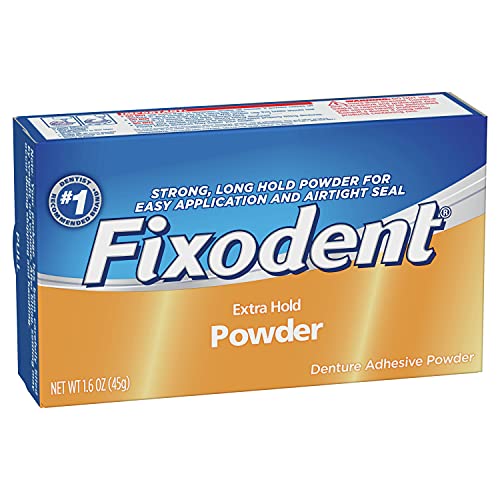
8. Fixodent Denture Adhesive Powder, Extra Hold — Best Easy-Cleanup Powder (Runner-Up)
For wearers who find cream adhesives too messy, powder is a genuinely different experience. Fixodent’s Extra Hold powder is sprinkled onto a lightly damp denture base in a thin even layer, and the single most common praise in its several thousand reviews is that it rinses off cleanly at the end of the day — no goopy residue to scrub off the denture or wipe from the gums. It comes from the #1 dentist-recommended denture-care brand and delivers a secure all-day fit from a once-daily application.
The important caveat is that this particular Fixodent powder contains zinc, unlike every cream on this list. That is not a reason to avoid it, but it is a reason to use it correctly: a thin layer as directed, not a heavy repeated application. If you already take a zinc supplement — the 80 mg/day AREDS2 regimen for macular degeneration is the common example — mention this adhesive to your dentist or physician, and consider the zinc-free Super Poligrip powder below instead. As with any powder, hold depends on saliva to activate, so it is less reliable for patients with significant dry mouth.
Fixodent Denture Adhesive Powder, Extra Hold
by Fixodent
The #1 dentist-recommended brand's extra-hold powder — a secure all-day fit that rinses off far more cleanly than cream, with the caveat that its formula still contains zinc.
Pros
- Powder rinses off the denture and gums far more easily than cream at the end of the day — the single most-cited reason wearers switch away from goopy tube adhesives
- Backed by the #1 dentist-recommended denture-care brand, with more than 5,800 Amazon reviews providing a deep reliability dataset
- Sprinkle-on thin-layer application removes the dosing guesswork of cream beads and is well-suited to first-time powder users
- Extra-hold formulation delivers a secure all-day fit from a single once-daily application
Cons
- Contains zinc — patients who overuse adhesive or already take zinc supplements should apply only a thin layer and confirm this is the right choice with their dentist
- Powder depends on saliva to activate, so it is less reliable for patients with significant dry mouth
9. Super Poligrip Extra Strength Denture Adhesive Powder — Best Zinc-Free Powder (Runner-Up)
Super Poligrip’s Extra Strength powder is the zinc-free answer for wearers who want powder convenience without the added-zinc question. It delivers a reliable 12-hour hold, the formulation is water-resistant so it resists washing out when you drink and eat, and the sprinkle-on application cleans up far more easily than cream. Across more than 4,500 reviews it is well-validated as a powder option, and its zinc-free profile matches the safety standard set by the cream adhesives higher on this list.
The tradeoffs are the ones inherent to any powder. Hold depends on saliva to activate the adhesive, so patients with meaningful dry mouth (xerostomia) — often a side effect of common antihypertensive, antidepressant, and antihistamine medications — will get more consistent results from a cream. Distributing a thin even layer also takes a little practice compared with a pre-measured strip or seal. For wearers with normal saliva production who prefer powder and want to avoid zinc, this is the clear pick.

Super Poligrip Extra Strength Denture Adhesive Powder
by Super Poligrip
The zinc-free powder pick — a water-resistant 12-hour hold with sprinkle-on convenience and easy cleanup, for wearers who want powder without added zinc.
Pros
- Zinc-free extra-strength powder delivers a reliable 12-hour hold without the copper-deficiency concern tied to zinc-containing adhesives
- Water-resistant formulation resists washing out when drinking and eating through the day
- Sprinkle-on application cleans up far more easily than cream and lasts across most of a waking day
- Highly rated across 4,500-plus reviews, giving powder users a well-validated zinc-free option
Cons
- Powder relies on saliva to activate, so hold can be less consistent in patients with dry mouth
- A thin even layer takes a little practice to distribute correctly compared with pre-measured formats
10. Super Poligrip Comfort Seal Denture Adhesive Strips — Best Mess-Free Strips (Runner-Up)
For wearers who dislike guessing at a cream squeeze, pre-cut strips remove the variable entirely. Super Poligrip Comfort Seal strips are zinc-free, apply cleanly with no ooze, and deliver a controlled, pre-measured dose every single time — which also removes the overuse risk that comes with free-hand cream application. They remove easily at the end of the day and are sized for uppers, lowers, and partials, making them one of the more versatile mess-free formats in the category.
The hold is a dependable all-day seal rather than a maximum-hold formulation, so wearers with very loose dentures may still prefer a strong-hold cream — and, as always, a chronically loose denture is a signal to see your dentist about a reline rather than to escalate adhesive. The pre-cut shape also cannot be trimmed or reshaped for unusually contoured dentures without compromising the seal. For most wearers who simply want a clean, consistent, no-mess application, these strips are an easy recommendation alongside the Sea-Bond seals.

Super Poligrip Comfort Seal Denture Adhesive Strips
by Super Poligrip
Zinc-free pre-cut strips that apply and remove cleanly with a controlled dose every time — the tidiest option for wearers who dislike guessing at a cream squeeze.
Pros
- Pre-cut zinc-free strips deliver a controlled, pre-measured dose with no ooze or squeeze-tube guesswork
- Apply cleanly and remove easily, which suits wearers who dislike the mess and cleanup of cream adhesives
- Consistent dose every time removes the overuse risk that comes with free-hand cream application
- Sized for uppers, lowers, and partials, making them a versatile mess-free format across denture types
Cons
- All-day hold is dependable but not as strong as a maximum-hold cream for very loose dentures
- Pre-cut strips cannot be trimmed or reshaped for unusually contoured dentures without compromising the seal
The Zinc Safety Question: What Every Denture Wearer Needs to Know
This is the single most important section of this guide. Patients who came of age before 2010 and have been buying denture adhesive intermittently for decades are sometimes unaware that the formulations changed. The brief history matters.
Pre-2010, two of the dominant US denture adhesive brands — Super Poligrip and Fixodent — used zinc as an active hold-enhancing ingredient. Zinc is essential for human health in normal dietary amounts (around 11 mg/day for adult men, 8 mg/day for adult women), but chronic exposure to large excess doses produces a copper deficiency through a well-characterized mechanism: chronic excess zinc upregulates intestinal metallothionein, a metal-binding protein that preferentially sequesters copper rather than releasing it for absorption. Copper is required for the enzyme cytochrome c oxidase and for normal myelin synthesis, so chronic copper deficiency produces a demyelinating peripheral neuropathy that can closely mimic vitamin B12 deficiency.
In 2008-2010, a Vanderbilt neurology group led by Dr. Peter Hedera published a case series describing this exact pattern in long-term denture adhesive users. The FDA issued a safety communication in 2011 explicitly identifying excessive use of zinc-containing denture adhesives as a potential cause of hyperzincemia and copper-deficiency neuropathy. GlaxoSmithKline reformulated Super Poligrip to remove zinc; Procter & Gamble followed with Fixodent. By 2026, every mainstream US-sold denture adhesive cream is zinc-free, and every product reviewed in this guide is zinc-free.
The remaining caution applies in two scenarios. First, off-brand or imported adhesives sometimes still contain zinc, particularly products purchased from international sellers without strict ingredient transparency — always verify the ingredient list before buying anything outside the brands reviewed here. Second, patients who are simultaneously taking zinc supplements (the 80 mg/day AREDS2 regimen for age-related macular degeneration is a common example, and many older adults take 15-25 mg/day for general immune support) face a higher cumulative exposure if they also use a zinc-containing adhesive. With modern zinc-free products this concern is no longer relevant for the cream itself, but it remains a useful prompt to verify your AREDS2 dosing with your ophthalmologist if you have a personal history of denture adhesive overuse.
The bottom line: stick with reformulated zinc-free products from established brands, and confirm zinc-free labeling on the package. Do not buy obscure imported adhesives without checking the ingredient list. If you have ever had numbness, tingling, or weakness in your hands or feet alongside a long history of heavy denture adhesive use, mention it to your physician — copper deficiency neuropathy is treatable when identified, and a serum copper and ceruloplasmin level is a low-cost screening test.
How to Apply Denture Adhesive Correctly (and How Much Is Too Much)
The most common mistake we see in new denture adhesive users is overapplication. The correct cream technique is straightforward: clean and dry the denture thoroughly, apply three or four pea-sized dabs spaced evenly along the denture base (do not apply along the rim, where the cream will ooze out and into your mouth when you seat the denture), seat the denture firmly into place, and bite down gently for approximately five seconds to distribute the adhesive evenly. A correctly applied 2.4 oz tube should last seven to eight weeks at one application per day. If you are going through a tube every two weeks, you are over-applying — and the underlying issue is almost always denture fit, not adhesive strength.
For powder adhesives, clean the denture, then wet the inner surface lightly (a quick rinse is enough), sprinkle a thin even layer of powder across the base, and tap off any excess before seating. The powder activates with saliva once the denture is in place; you do not need to apply more powder than will adhere to a lightly damp surface.
For strips and pads (Sea-Bond and similar products), moisten the side of the pad that will contact your gums — not the side bonded to the denture. Position the pad on the denture base, press the denture into place, and bite gently. The pads are pre-sized; do not trim them.
For thermoplastic (Cushion Grip), the process is fundamentally different. Soften approximately one-quarter inch of the compound in hot water for about a minute until it becomes pliable. Press the warm compound onto the denture base where the cushion is needed, smooth it with a wet finger, and seat the denture immediately while the compound is still warm. The compound cures in your mouth into a custom shape over the next several minutes. Do not eat or drink hot liquids for the first hour. Cushion Grip should be replaced every three to four days.
The “how much is too much” rule of thumb across all formats: if you find yourself buying replacement product more frequently than the manufacturer’s expected duration suggests, you are using too much. The clinical interpretation of overuse is almost never that the adhesive is failing — it is that the underlying denture fit has drifted enough that you are compensating with adhesive volume. That is the prompt for a dental visit.
How to Remove Denture Adhesive Properly
End-of-day removal matters as much as application. Failure to thoroughly clean adhesive residue from both the denture and your gums each night produces a moist, warm, nutrient-rich environment under the denture base that promotes Candida overgrowth (denture stomatitis) and can contribute to chronic gum inflammation.
To remove adhesive from the denture itself, soak the denture in warm water for several minutes to soften the residue, then scrub gently with a soft-bristled denture brush. For stubborn residue, a dilute white vinegar soak (one part vinegar to three parts warm water) for ten to fifteen minutes followed by thorough rinsing dissolves most accumulated buildup. Avoid hot water above 120°F, which can warp the denture base.
To remove adhesive from your gums, wipe with a warm wet washcloth and rinse with warm salt water (half a teaspoon of salt in a cup of warm water). Do not pick at residue with fingernails or hard implements — the gum tissue under denture wear is already mechanically stressed, and additional trauma promotes the kind of localized inflammation that drives further adhesive reliance. For patients who also use a mouth guard at night for bruxism or TMJ-related issues, remove the denture adhesive completely before inserting the mouth guard, since residual adhesive on the gum line can compromise the mouth guard’s fit.
Thermoplastic adhesives like Cushion Grip require a longer warm-water soak — typically ten to fifteen minutes — to soften the cushion before peeling it away from the denture base. Replace the cushion every three to four days as recommended; do not let it accumulate over weeks.
Best Zinc-Free Denture Adhesive
Zinc-free is the most-searched requirement in this category — chronic over-application of zinc adhesives has been linked to neurological problems, so the FDA notes zinc-free options exist. All three below hold well without added zinc.
| Product | Price | Buy |
|---|---|---|
| Poligrip Power Max Ultimate All-in-1 Denture Adhesive Cream, Zinc Free, 2.2 oz (4 Pack)Best zinc-free overall (max hold) A zinc-free cream engineered for the strongest all-day hold and food seal, for wearers with looser dentures who still want to avoid zinc | $23.48 | View on Amazon |
| Super Poligrip Zinc Free Denture Adhesive Cream (4-Pack, 2.4 oz each)Best value zinc-free A straightforward zinc-free everyday cream with a reliable 12-hour hold at the lowest cost per ounce of the three | $18.48 | View on Amazon |
| Secure Sensitive Denture Adhesive with Aloe Vera and Myrrh (1.4 oz)Best zinc-free for sensitive gums Zinc-free and waterproof with soothing aloe vera and myrrh — formulated for wearers with tender or easily irritated gums | $9.99 | View on Amazon |
Best Denture Adhesive Powder
Powders sprinkle on in a thin layer and rinse off far more easily than creams at the end of the day — the top reason wearers switch away from goopy tube adhesives.
| Product | Price | Buy |
|---|---|---|
| Super Poligrip Extra Strength Denture Adhesive PowderBest powder overall (zinc-free) Extra-strength zinc-free powder with a 12-hour water-resistant hold and thousands of ratings — sprinkle-on application that cleans up far easier than cream | $8.61 | View on Amazon |
| Fixodent Denture Adhesive Powder, Extra HoldBest-known powder brand The #1 dentist-recommended brand's extra-hold powder with the deeper review base of the two and effortless cleanup, though its formula does contain zinc | $9.99 | View on Amazon |
Strongest Denture Adhesive (Maximum Hold)
For loose or hard-to-hold dentures, hold strength and how long it lasts matter most. Remember that a chronically loose denture needs a professional reline — adhesive is a bridge, not a fix.
| Product | Price | Buy |
|---|---|---|
| Poligrip Power Max Ultimate All-in-1 Denture Adhesive Cream, Zinc Free, 2.2 oz (4 Pack)Strongest all-day hold Maximum-hold zinc-free cream with a heavy food seal — the pick when an ordinary adhesive isn't holding through meals | $23.48 | View on Amazon |
| Fixodent Complete Original Denture Adhesive Cream (3-Pack, 2.4 oz each)Best strong everyday cream The #1 dentist-recommended original cream — a dependable strong all-day hold that's easy to find and apply | $13.95 | View on Amazon |
| Cushion Grip Thermoplastic Denture Adhesive (1 oz)Longest-lasting (multi-day) A thermoplastic that refits and cushions the denture for up to several days per application, for the longest continuous wear | $13.99 | View on Amazon |
Best Denture Adhesive Strips and Seals
Strips and seals deliver a pre-measured dose with no ooze or guesswork — the tidiest option, and popular for lower dentures.
| Product | Price | Buy |
|---|---|---|
| Super Poligrip Comfort Seal Denture Adhesive StripsBest adhesive strips overall Zinc-free pre-cut strips that apply cleanly with no squeeze-tube mess and remove easily — a controlled, consistent dose every time | $11.67 | View on Amazon |
| Sea-Bond Secure Denture Adhesive Seals for Lower Dentures (30-count)Best seals for lower dentures Pre-cut cushioned seals sized for lower dentures, mess-free and zinc-free, for wearers who dislike creams entirely | $6.72 | View on Amazon |
Best Waterproof Denture Adhesive
A waterproof (water-insoluble) formula resists washing out when you drink and eat, holding longer through the day.
| Product | Price | Buy |
|---|---|---|
| Secure Sensitive Denture Adhesive with Aloe Vera and Myrrh (1.4 oz)Best waterproof for sensitive gums A waterproof, zinc-free cream with aloe and myrrh that stays put through drinks while staying gentle on tender gums | $9.99 | View on Amazon |
| Cushion Grip Thermoplastic Denture Adhesive (1 oz)Best waterproof long-wear A waterproof thermoplastic that holds for days and won't wash away with liquids or soaking | $13.99 | View on Amazon |
| Poligrip Power Max Ultimate All-in-1 Denture Adhesive Cream, Zinc Free, 2.2 oz (4 Pack)Best waterproof maximum hold A waterproof zinc-free cream built for the strongest hold when you need both water resistance and grip | $23.48 | View on Amazon |
How to Choose the Best Denture Adhesive
The buyer’s guide below covers the six most important variables. One additional consideration that does not fit cleanly into a single factor: think about who is applying the adhesive. A 55-year-old patient with full dexterity and no comorbidities can use any product on this list comfortably. A 78-year-old patient with arthritis, cataracts, and a tremor faces a different selection problem — for that patient, peel-and-apply seals or precision-tip cream applicators meaningfully outperform standard tubes. Selecting an adhesive for a parent or family member often involves a different optimization than selecting one for yourself.
For patients newly transitioning to dentures, start with Fixodent Complete Original. It is the most clinically familiar product, the easiest to dose correctly, and the most reasonable per-ounce price. Adjust upward to Power Max Ultimate if hold strength becomes the limiting factor, downward to Secure Sensitive if gum irritation is the limiting factor, or laterally to Sea-Bond if dexterity is the limiting factor. Older adults managing dentures alongside multiple chronic conditions often benefit from coordinated nutrition support — see our review of the best multivitamins for women for context on B12 and calcium requirements, both of which are particularly relevant for the denture-wearing demographic.
Buyer's Guide
Choosing the right denture adhesive means matching the format, hold strength, and ingredient profile to your specific denture fit, oral health, and daily routine — not simply buying the strongest product available.
Hold Strength and Duration
Adhesive marketing often emphasizes 'all-day hold' or 'extra-strength' claims, but the right strength depends on how well your dentures fit. A well-fitted denture only needs modest adhesive support to seal micro-gaps between the plate and the underlying gum ridge. A poorly fitting denture requires a stronger formulation like Poligrip Power Max Ultimate All-in-1 — but that high-hold reliance is itself a clinical signal that the denture should probably be relined or replaced rather than glued more aggressively. As a rule, choose the lightest hold formulation that consistently keeps your denture secure through your typical day.
Zinc vs. Zinc-Free
Every product reviewed here is zinc-free, and that is now the unambiguous default for any reputable US-sold denture adhesive cream. The 2010 FDA safety communication and subsequent reformulations by GlaxoSmithKline (Super Poligrip) and Procter & Gamble (Fixodent) effectively removed zinc from mainstream cream adhesives. The remaining caution applies to off-brand or imported products and to older inventory still circulating in some retail channels. Always confirm 'zinc-free' on the package, particularly if you are also taking zinc supplements such as the AREDS2 macular degeneration regimen, which contains 80 mg of zinc daily.
Adhesive Format
Cream is the most common and most flexible format — applied as small dabs along the denture base before insertion. Powder is a lower-mess alternative that depends on saliva to activate; it is less effective in patients with dry mouth. Strips and pads (such as Sea-Bond) are pre-cut peel-and-apply formats well suited to patients with arthritis or limited dexterity. Thermoplastic (Cushion Grip) is a fundamentally different category — a moldable cushion softened in hot water and shaped onto the denture for multi-day hold. Consider cleanup effort, dexterity, and saliva production when choosing a format.
Dry Mouth (Xerostomia) Compatibility
Reduced saliva production is common among older adults and is exacerbated by many widely prescribed medications — diuretics, ACE inhibitors, beta blockers, antidepressants, and antihistamines among them. In dry-mouth conditions, powder adhesives lose effectiveness because they depend on saliva to activate the adhesive polymer. Cream adhesives like Fixodent Complete and thermoplastic options like Cushion Grip perform more reliably with reduced saliva. If dry mouth is significantly affecting your daily comfort, an over-the-counter saliva substitute can complement your adhesive routine.
Ease of Application for Limited Dexterity
Hand strength, finger dexterity, and visual acuity all decline gradually with age, and arthritis can make tube-and-nozzle adhesive applications frustrating. Peel-and-apply seals like Sea-Bond eliminate dosing decisions and cleanup entirely. Precision-tip cream applicators (Power Max Ultimate, Fixodent Plus Scope) reduce the squeeze force needed to deliver a controlled bead. Powder dispensers with simple shake-out caps are another low-dexterity option. If you or a family member is selecting an adhesive for an aging parent, format ergonomics matter as much as hold strength.
Cost-Per-Day Reality and the Overuse Signal
Used at the manufacturer-recommended three to four pea-sized dabs per denture, a 2.4 oz cream tube should last seven to eight weeks. That works out to a few dollars per month at typical retail pricing — denture adhesive should never be a meaningful line item in a household budget. If you find yourself buying tubes monthly or weekly, you are using more adhesive than directions specify, which is itself a clinical sign that your denture fit is failing. Rather than escalating to stronger or more expensive adhesives, schedule a dental visit to evaluate whether your denture needs relining or replacement.
When Adhesive Isn’t Enough: Signs Your Dentures Need Relining or Replacement
This section is the single most clinically important takeaway from this guide. Adhesive is a useful tool for maintaining a secure denture seal in the face of normal day-to-day variability. It is not a substitute for proper denture fit, and patients who escalate adhesive use over months or years are almost always compensating for an underlying fit problem that warrants a dental visit.
The clinical flags that suggest your dentures need relining or replacement rather than more adhesive include: needing more adhesive than the manufacturer’s directions specify; sore spots that do not heal within several days; food repeatedly trapping under the denture during meals despite generous adhesive; dentures shifting visibly during normal speech; and, simply, age — most full dentures fit a meaningfully different jaw shape after five to seven years, and at ten years a properly fitting original denture is the exception rather than the rule. The physiologic reason is bone resorption: the alveolar ridge underlying the denture loses approximately 0.5 mm of vertical height per year on average in the mandible after extraction, with somewhat slower loss in the maxilla. Over a decade, that is 5 mm of vertical change, which is a lot for a thin denture base to bridge with adhesive alone.
A reline is a relatively modest dental procedure — the dentist takes an impression of the current ridge anatomy and relines the existing denture base to match. A new denture is a more involved process but is appropriate when the existing denture is more than seven to ten years old, when the original was poorly made, or when significant ridge change has accumulated. Insurance coverage varies; Medicare does not generally cover dentures, but Medicare Advantage plans often include limited dental benefits, and many patients find that a planned reline every three to five years is a manageable out-of-pocket expense that meaningfully reduces adhesive overuse.
If you have been using denture adhesive for more than a few years and your usage has been creeping upward, schedule a dental appointment specifically to discuss fit. The conversation does not need to lead to immediate intervention — sometimes the answer is that fit is fine and you simply need a slightly stronger adhesive. But the question is worth asking, because the alternative is the slow normalization of an increasingly poor fit that eventually produces sore spots, mucosal ulceration, or even denture-related stomatitis that requires antifungal treatment.
Final Verdict
For most denture wearers, Fixodent Complete Original is the right answer. It is the most clinically familiar zinc-free cream adhesive, it delivers reliable all-day hold, the standard tip applicator is easy to dose correctly, and the 3-pack configuration keeps the per-ounce cost among the lowest here. More than 13,000 Amazon reviews provide a real-world reliability dataset that smaller competitors cannot match, and the brand is the one US dentists are most likely to recommend by name.
For maximum hold strength — public speakers, lecturers, anyone whose work depends on reliably confident articulation — step up to Poligrip Power Max Ultimate All-in-1. For the strongest fresh-breath benefit, choose Fixodent Plus Scope. For sensitive gums, Secure Sensitive with aloe and myrrh is the right runner-up. For lower dentures specifically, or for patients with limited dexterity, Sea-Bond Secure Seals offer an exceptionally easy peel-and-apply format at a budget-friendly per-day cost. And for patients waiting on a dental appointment to address an ill-fitting denture, Cushion Grip thermoplastic provides a useful temporary cushion that lasts up to four days per application.
A final note: denture adhesive should be a confidence accessory, not a daily struggle. If you are reading this guide because your current adhesive routine has become increasingly elaborate, your dentures fit increasingly poorly, or you are spending more than a few dollars per month on replacement product, the appropriate next step is a dental visit rather than a stronger product. As always, consult your dentist or physician for personalized recommendations — and verify zinc-free labeling on any adhesive you are considering, particularly if you take zinc supplements as part of an AREDS2 or general wellness regimen.
Frequently Asked Questions
Is zinc in denture adhesive dangerous?
What is the strongest denture adhesive you can buy?
How do you remove denture adhesive completely?
What denture adhesive works best if you have dry mouth?
How do you know when your dentures need relining instead of more adhesive?
Related Articles
About the Reviewer

Dr. David Taylor, MD, PhD
Drexel University College of Medicine (MD), Indiana University School of Medicine (PhD)
Dr. David Taylor is a licensed physician and medical researcher who founded BestRatedDocs in 2016. With an MD from Drexel University and a PhD from Indiana University School of Medicine, he combines clinical expertise with a passion for health technology to provide evidence-based product recommendations. Dr. Taylor specializes in health informatics and regularly evaluates medical devices, diagnostic equipment, and therapeutic products to help healthcare professionals and patients make informed decisions.